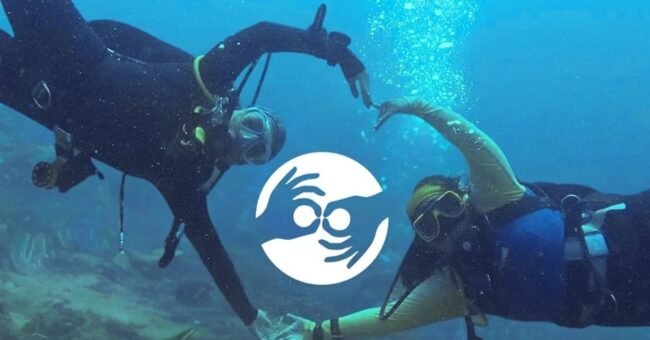
Marine Conservation Philippines is a non-profit organization dedicated to protecting coral reef ecosystems through science, education, and community engagement. Volunteers are (or become through the program) scientific scuba divers that assist with marine surveys, reef monitoring, data collection, and environmental outreach activities. We provide accommodation and meals, along with structured training in marine conservation techniques and access to a supportive international team. Volunteers are expected to follow safety protocols, respect local culture, and contribute positively to a shared living environment. In-water activities are supervised by trained staff. The campus is an environmental hub, with multinational staff and volunteers.
Visualizza questo post su Instagram
What category best describes your hosting arrangement? 🏡
- Organization / NGO
Location (city/town, region, country) 📍
What are you looking for help with?
- Research 🔬
Sensitive activities clarification (only if relevant)
At some point during the year, volunteers may assist with educational outreach activities such as environmental presentations in local schools or communities. We host a number of free youth camps as well. These activities are always supervised by experienced staff, and volunteers do not take sole responsibility for teaching or working independently with children. No medical or health-related responsibilities are assigned to volunteers.
What’s the mission of your community? 🎯
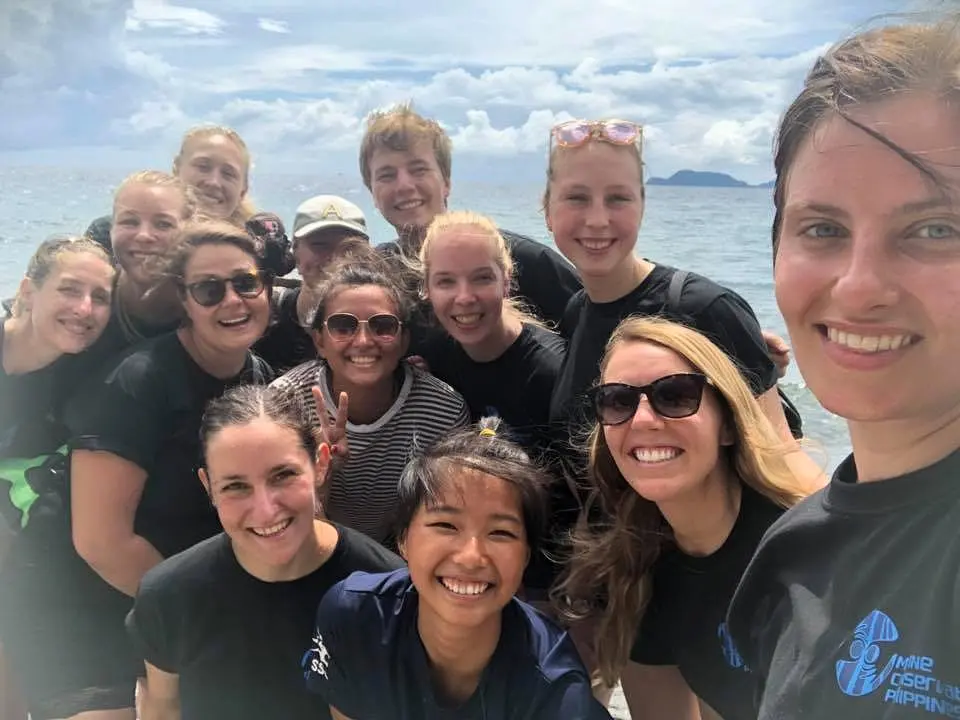
Our mission is to protect and restore coral reef ecosystems in the Philippines through scientific research, capacity building, and community engagement. We work closely with local stakeholders, including fishers and government agencies, to improve marine protected area management and promote sustainable practices. The project addresses critical issues such as reef degradation, overfishing, and lack of local monitoring capacity.
Volunteers contribute to data collection and education efforts that directly support long-term conservation outcomes.
Notes about requirements and accessibility ✍
We try to be as inclusive as we can possibly be, but due to the inherent risk associated with scuba diving and the relatively hard physical activity levels that carrying scuba tanks in the heat and swimming longer distances require, we unfortunately cannot accept everyone. Volunteers must be able-bodied and aged 18-60, (For participants close to sixty we always conduct extra pre-screening so everyone feel assured they can participation is both possible and safe. Additionally, certain illnesses and health concerns may mean scuba diving is not safe. (Asthma, pregnancy and some previous surgeries for example). As such, volunteers are asked to fill out a medical health questionnaire before being accepted on the program. Volunteers are required to have travel insurance that covers them both for normal travel issues, but also scuba diving related incidents. We have a perfect safety record in the ten years the organization has been operation, but the knowledge that there is insurance coverage if anyone were to suffer an accident is reassuring. Lastly, we offer some suggestions on which vaccinations people should have, but we do not require it of participants.
How many volunteers could you host? 🎎
- 3–5 volunteers
When do you usually need volunteers? 📅
- All year round
How many hours of help per day? ⏱
- It depends (read the Notes below)
How many days of help per week? 🌒
- 6 days/week
Notes about the work, schedule, and house rules (optional)
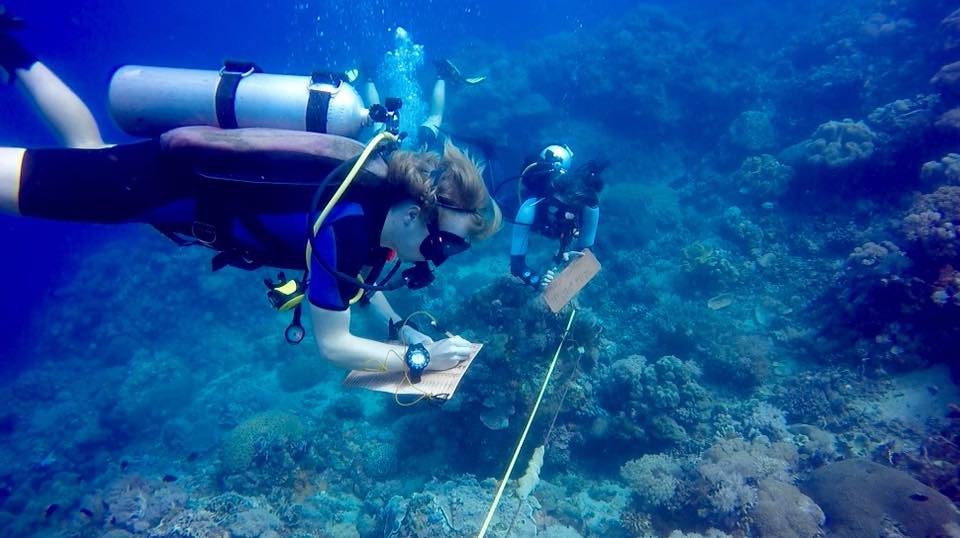
Volunteers have breakfast every day at 7 am, and then head out to the dive sites where we will be working around 8 am. Here, they conduct two scuba dives each day, six days a week. We work with municipalities on a stretch of coastline of about 150km in length. The time we finish work and head home depends to a large degree on how far away we go for the day. Some days we are back before noon, other times it’s 1 or 2 pm. There can be weeks where the total participation is less than 30 hours, but there are probably weeks where it’s closer to 40, too. (Especially considering that the normal workweek in the Philippines is six days, instead of five.) With this said, it is not a problem if a volunteer wishes to take extra days off, as long as we know in advance, so we can try to schedule around it.
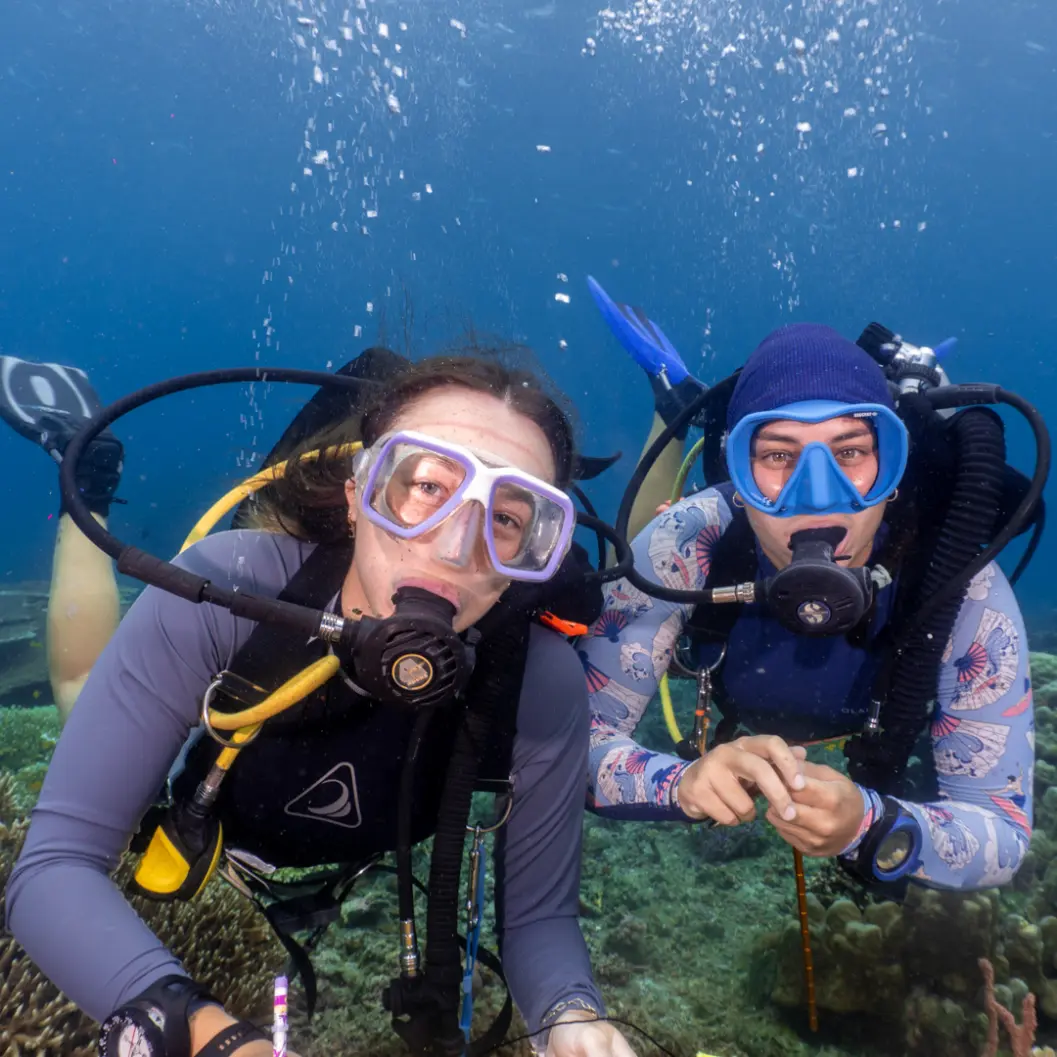
The program involves scientific scuba diving, and volunteers first have to learn the exact protocols and procedures before they can help take part in the work. This means they train with our scuba instructors and marine biologists for 2-4 weeks, before they are ready to join the working program. The daily schedule for these first weeks is the same as otherwise (with two scuba dives a day,) but typically also have workshops and classroom sessions in the afternoons too.
Volunteering is for people who like getting their hands dirty – no one is making your bed or cleaning your room, there’s long days in the water, and it might be your turn to lend a hand in the kitchen washing some dishes or sweeping a floor. We all bunk in together, and it really is a bit like camping out. Campfires and storytelling included.
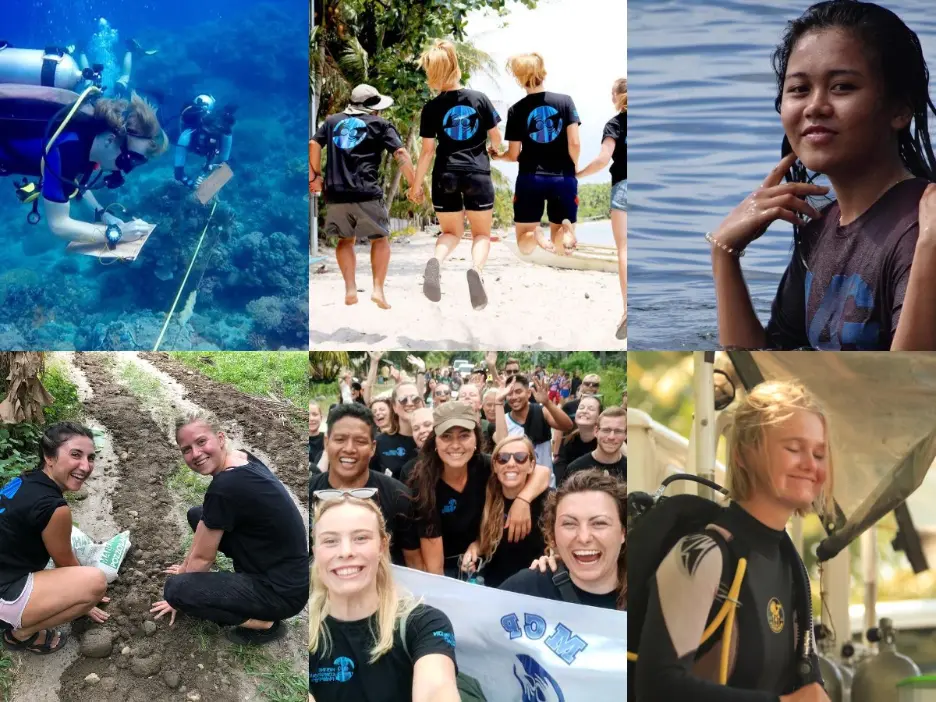
The Filipinos are generally enormously friendly and considerate, and they have their own culture and customs. We ask our foreign volunteers to remember that they are the guests in the Philippines and to behave accordingly, same as you would expect anyone to behave in your own home. Generally speaking, with a little enthusiasm, a willingness to learn new things, and a consideration for people and culture, you’ll have no issues whatsoever. Upon arrival at the expedition base, foreign volunteers are briefed on local culture and customs.
Various beverages, including alcoholic ones can be purchased on site. We’re fine with people unwinding over a drink or two at night, and there will certainly be local fiestas and birthdays now and then. This is all good-natured and fine, but we expect volunteers to exercise a sensible moderation, especially when scuba diving the next day. Loud drunken behaviour that may annoy others on base is not acceptable. Marine Conservation Philippines has a zero-tolerance policy against violence and drug use.
Marine Conservation Philippines reserves the right to terminate the stay of any volunteer whose behavior is deemed to be offensive to other volunteers, staff, or the surrounding community.
Are accommodation and food included? 🏠🍜
- Food and accommodation are included in the fees
What type of accommodation can you provide? 🏕
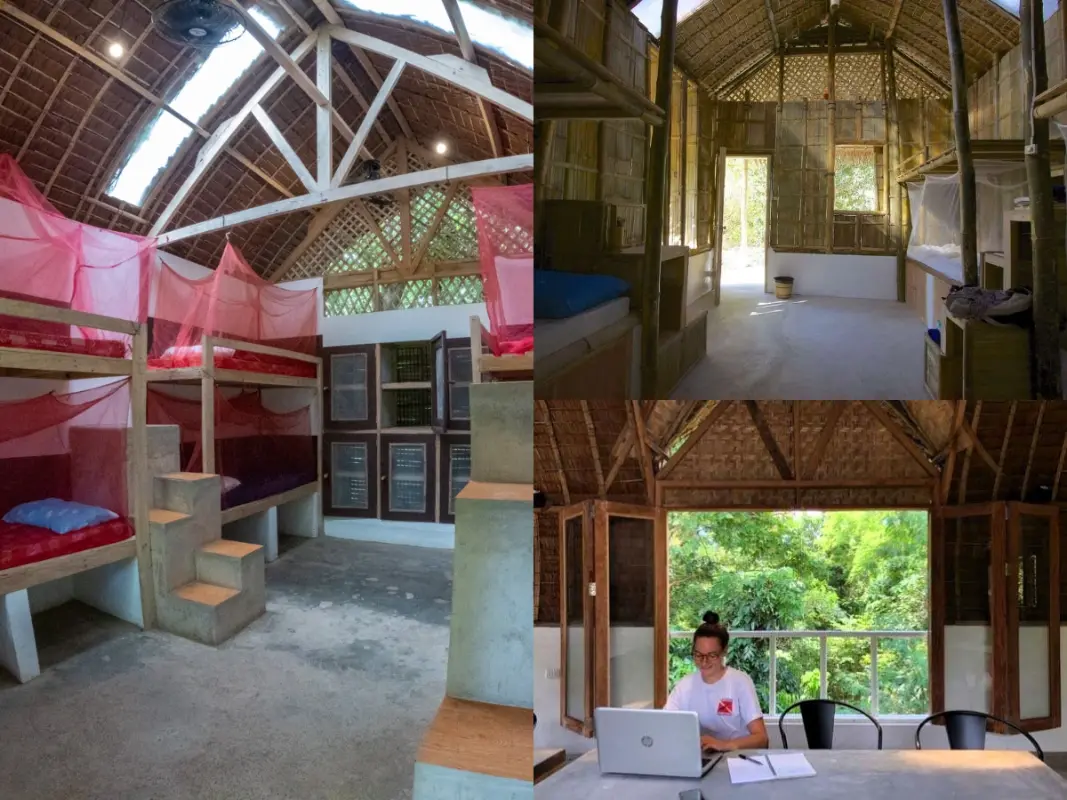
- Dormitory/shared rooms 🛌
- Private room for a couple 🎎
Diet – nutrition information 🥗🥤
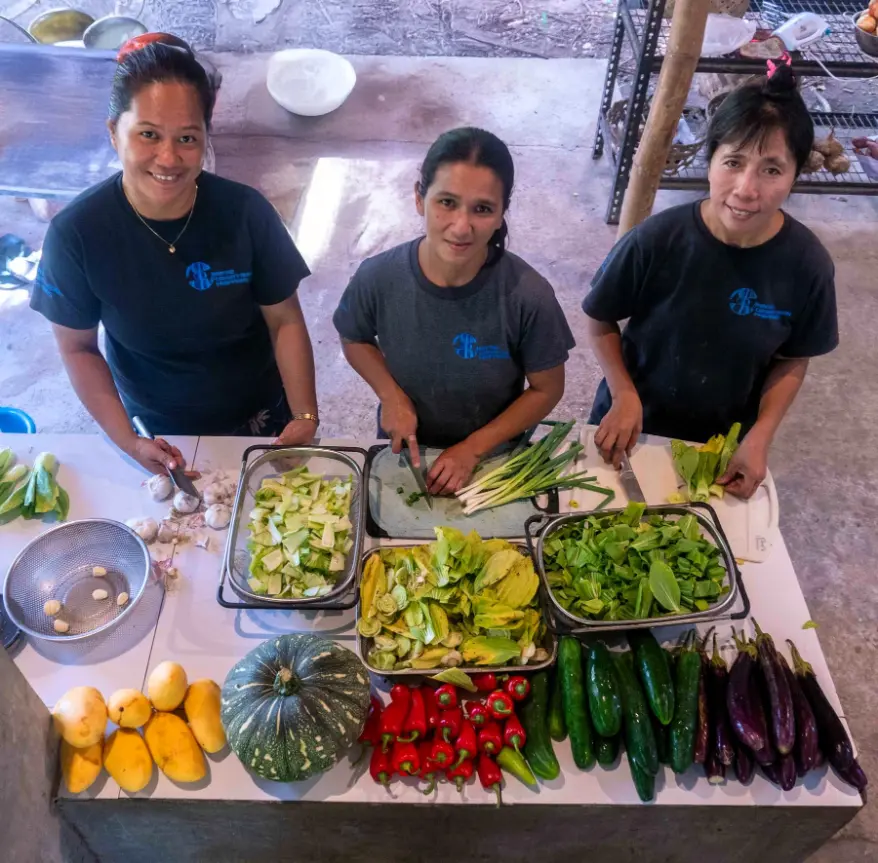
The volunteer fee covers three daily meals, free water, tea and coffee, as well as seasonal fruits and snacks. Aside from the normal meals, we have an open kitchen policy so anyone can help themselves outside of regular meal times. We have professional staff who cook all meals Monday to Saturday. On Sundays, many volunteers go out to eat, but if you wish to eat at campus, you will have to do your own cooking.
We serve a predominantly vegetarian diet, and are happy to make fully vegetarian and vegan meals for volunteers. Gluten-free meals is possible too.
Fee transparency 💳
We live very remotely, so by necessity we have to provide food and accommodation to volunteers. The Scuba diving also requires training, gear, marine park fees and lots of logistical support.
The volunteer fee we ask participants to cover is 550 USD weekly, but with progressive discounts to encourage people to stay a long time. Weeks 1-12 are 550 USD, weeks 13-16 are 440 USD, weeks 17-20 are 330 USD, and weeks 21-24 are completely free.
The volunteer fee covers three daily meals as detailed above.
The fee also covers basic accommodation. (We live in a lovely old botanical garden on a hill close to the sea, with the huts nestled under mango and Nara trees) Also covered are all scuba diving, including full and complete scuba gear rental (including computer, etc. You do not need to buy or bring anything), marine park fees and transportation. It covers supervision, instruction and participation in all activities, airport pickup, Wi-Fi, utilities and some small niceties, such as a t-shirt and a certificate of recognition. Pretty much everything except pocket money and insurance. For many volunteers is also very valuable that the fee also covers any PADI recreational scuba diver training they wish to enroll in. (except the manual and PADI certification, which is 65-85 USD.) Apart from that, the scuba courses are free.
VISA SUPPORT – Are you able to assist with visa support, information, or provide invitation letters? 🛂
- We can share general information (not legal advice) ✅
What volunteers receive (in addition to food/accommodation) 🏆🏅
Volunteers can do free scuba courses, including entry-level, and receive hands-on training in coral reef monitoring techniques, including fish and benthic surveys, as well as experience in conservation project work. They gain insight into marine protected area management, community engagement, and reef ecology. This is a structured learning experience suitable for those interested in marine biology or conservation careers.
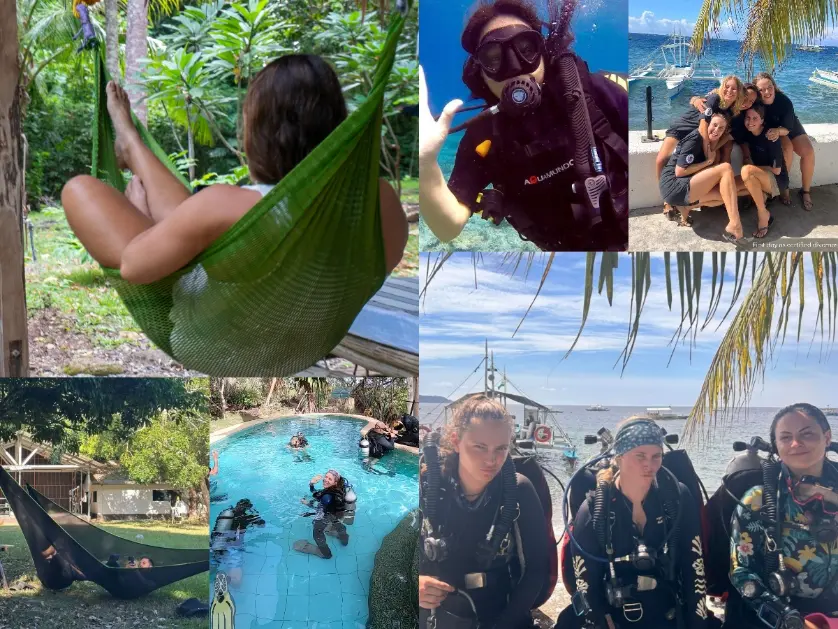
Volunteers generally do 12 dives a week, and occasionally we offer (at no extra charge) night diving for recreational purposes.
What are the available activities during free time? 🚴🚣🦒
Visiting nearby Apo Island, exploring local markets and towns, beach activities, and experiencing Filipino culture. The area is known for its biodiversity and relaxed coastal lifestyle. There’s waterfalls, lakes and hot springs to visit, and nearby islands have faith healers and witches!
Languages spoken on site 🗣 🗣🇬🇧
The staff is multinational, and volunteers are typically from 12+ countries. The shared base language is English.
Geography 🌳
Coastal tropical environment with coral reefs directly offshore. The area is warm year-round, with a mix of dry and rainy seasons. The camp is in a lush forest setting, but it is easy getting to nearby Dumaguete (there’s public busses and other modes of transportation.)
- You can see our exact location on this map: https://marineconservationphilippines.org/getting-here/
- You can see what the campus looks like on our YouTube Channel: https://www.youtube.com/watch?v=SNyaUJU5xHo
How to get to your site ✈ 🗺
We are happy to offer airport and port pickup in Dumaguete (DGT is the airport code.) We accept volunteers every second Monday, and participants are asked to stay for at least four weeks, and always for an even number of weeks (So 4, 6, 8 etc.)
Is there internet access? 🌐
Yes, reliable Wi-Fi
Paying guests (if relevant) 🎎
Yes, we also host paying guests 👌
CONTACT DETAILS 🔍📧
Official website: http://www.marineconservationphilippines.org
Hostname 📛 Marine Conservation Philippines
Host Email ✉ team@mcp.email
Voluntouring promotes opportunities rooted in cultural exchange and mutual learning. Before you apply, check that the exchange is fair, realistic, and well supervised.
Local rules: visa conditions and requirements vary. Please check what applies to your destination before confirming an exchange. Learn more.
About this type of listing: Browse non-profit listings
Useful links: Report a listing or unsafe content