What is Extinction Rebellion? The name often appears in news stories about climate protests, roadblocks, public actions and civil disobedience. Extinction Rebellion, often shortened to XR, is an international climate movement that began in the United Kingdom in 2018. Its stated aim is to push governments and institutions to respond more quickly to climate change, biodiversity loss and the wider ecological crisis.
Extinction Rebellion is a global climate movement that uses public protest, symbolic actions and nonviolent civil disobedience to call for faster and stronger action on the climate and ecological emergency.
What is Extinction Rebellion and why did it start?
Extinction Rebellion emerged at a time when climate science was becoming harder to ignore in public debate. In 2018, activists in the United Kingdom launched a “Declaration of Rebellion” against government inaction. The movement then grew quickly, first in London and then in many other countries.
The name is deliberately direct. “Extinction” refers to the risk of species disappearing because of habitat loss, global heating, pollution, ecosystem destruction and other human pressures. “Rebellion” refers to a public form of civil resistance aimed mainly at political and economic institutions that the movement considers too slow in responding to the environmental crisis. In Extinction Rebellion’s language, the ecological crisis is broader than rising temperatures. It includes soil degradation, deforestation, pressure on oceans, the loss of insects and pollinators, and the wider decline of the living systems that support human life.
This is why the movement often speaks about the climate crisis and the nature crisis together.
What does Extinction Rebellion ask for?
To understand what Extinction Rebellion is, it helps to look at its main demands. These are usually expressed in simple language and adapted to different national contexts.
The first demand is to “tell the truth”.
Extinction Rebellion argues that governments, media and public institutions should communicate the seriousness of the climate and ecological crisis more clearly, instead of presenting the situation as manageable through small or delayed adjustments.
The second demand is urgent action.
The movement calls for rapid policies to reduce greenhouse gas emissions. Greenhouse gases are gases such as carbon dioxide and methane that trap heat in the atmosphere and contribute to global warming.
The third demand is a different way of involving citizens in climate decisions.
Extinction Rebellion often calls for citizens’ assemblies on climate and ecology. These assemblies are usually imagined as groups of ordinary people selected by sortition, informed by independent experts and asked to discuss difficult collective choices in a structured way.
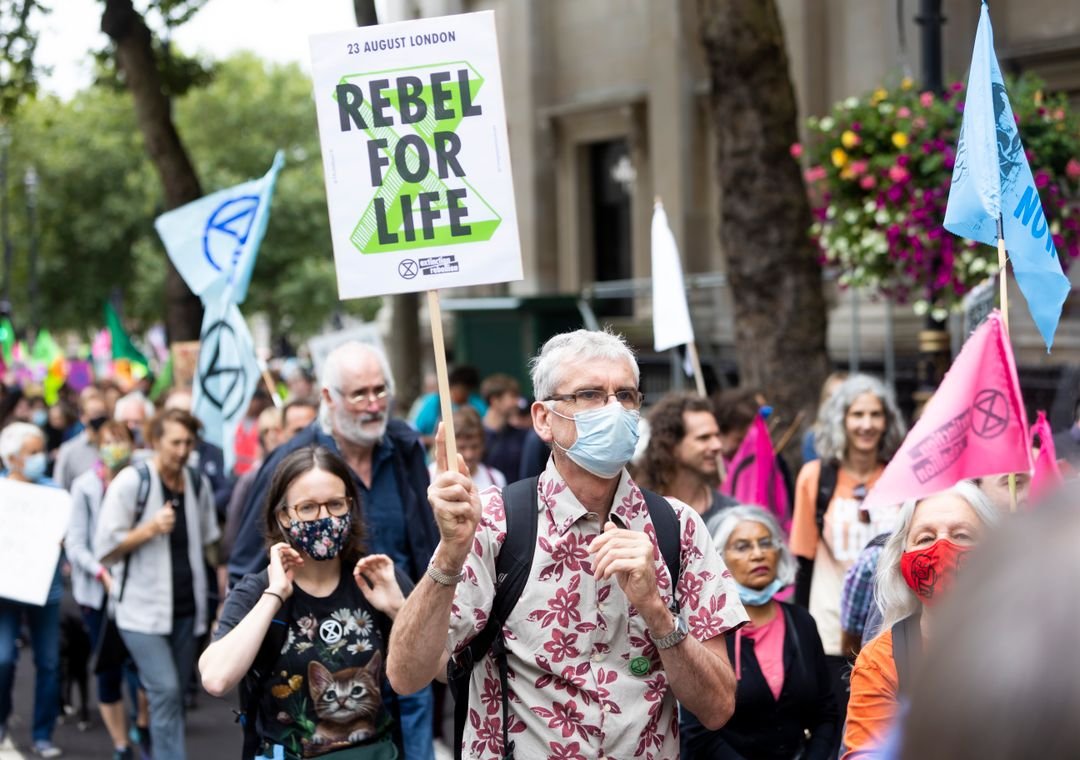
Extinction Rebellion describes itself as a nonviolent and non-party-political movement. Its actions can be disruptive and highly visible, but its stated strategy is to create public pressure without physical violence against people.
Why does Extinction Rebellion use civil disobedience?
The most recognisable feature of Extinction Rebellion is its use of nonviolent civil disobedience. This means public actions that may break rules or temporarily interrupt normal daily life in order to draw attention to an urgent issue. Roadblocks, sit-ins, symbolic performances, peaceful occupations and demonstrations outside public institutions are all part of this repertoire.
According to the movement, traditional forms of protest have not produced change quickly enough. Civil disobedience is therefore used to gain visibility, create public debate and force climate and ecology higher up the political agenda. This strategy also has consequences for activists, including fines, arrests, court cases and strong public criticism.
Reactions to Extinction Rebellion
Some people see the movement as an important response to political delay on climate change. Others criticise its disruptive tactics, especially when protests affect workers, public transport or people who do not directly control environmental policy. This tension has followed the movement since its early days and is part of the wider debate about protest, democracy and public space.
Extinction Rebellion is also known for a very recognisable symbol: an hourglass inside a circle.
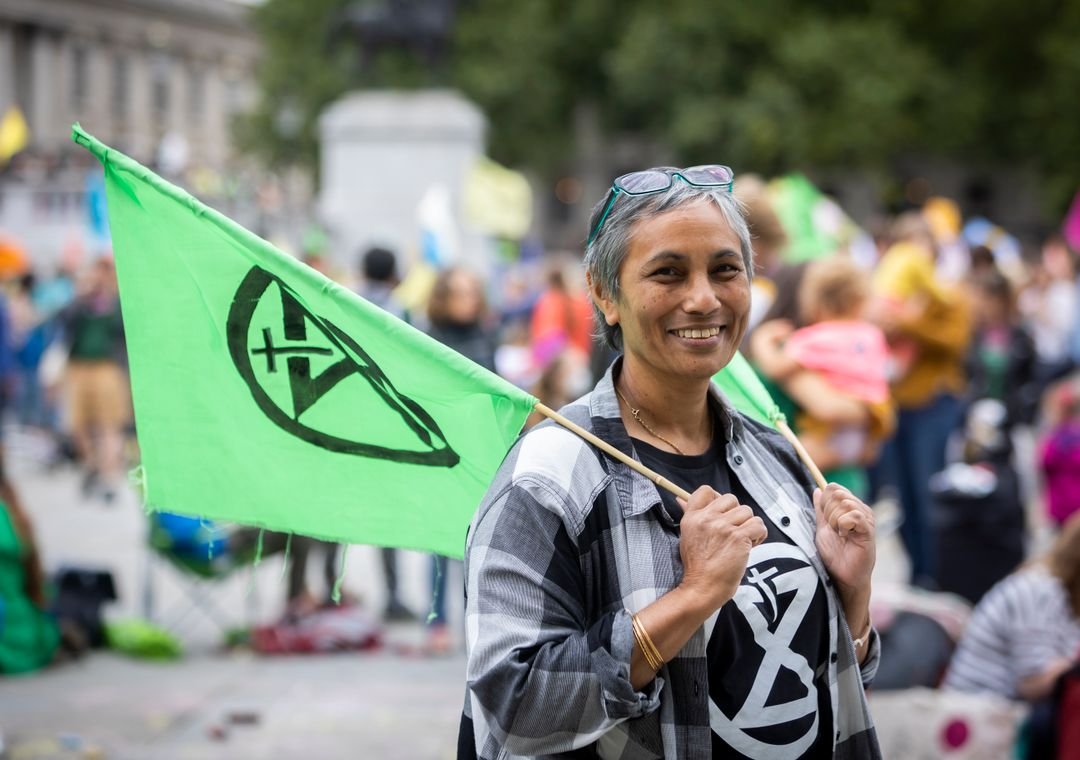
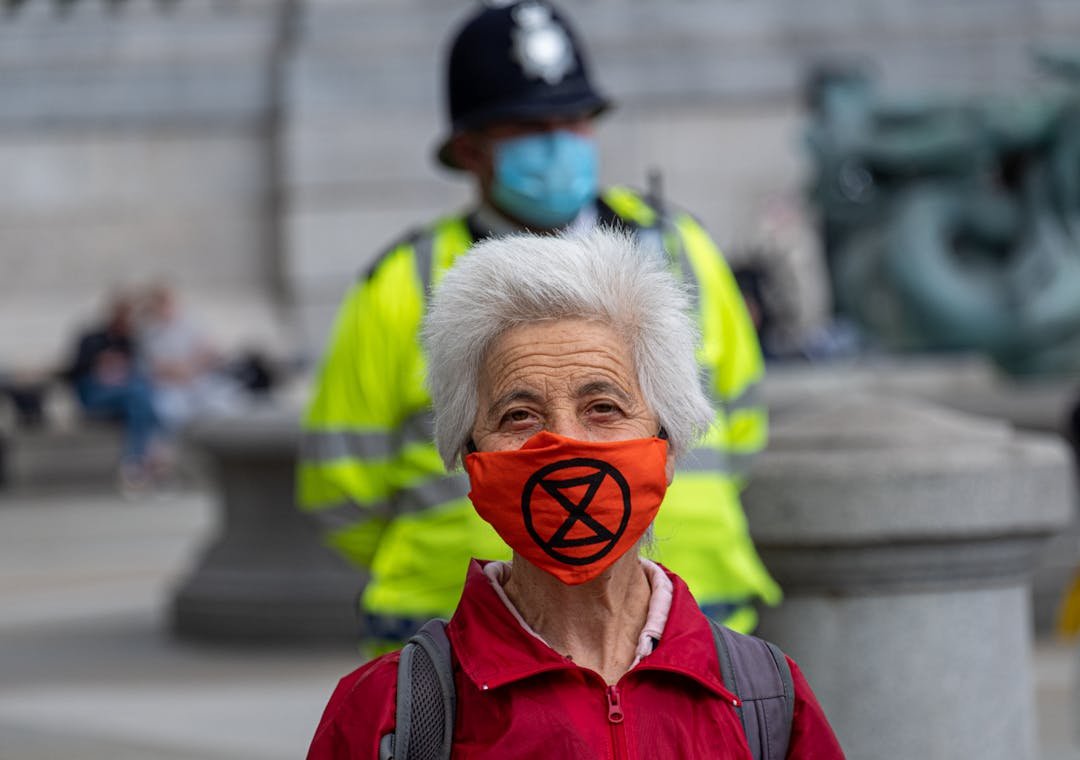
The circle represents the Earth, while the hourglass suggests that time is running out for many species and ecosystems. The symbol is simple, easy to draw and visible from a distance, which is why it appears on flags, banners, masks, posters and protest signs. The symbol existed before Extinction Rebellion became widely known, but it is now strongly associated with the movement.
In public demonstrations, it’s a quick visual message: the ecological crisis is urgent, and delay has consequences.
The Extinction Rebellion symbol is an hourglass inside a circle. ⏳
The circle points to the planet, while the hourglass is a warning about time running out for species, ecosystems and climate stability.
Why this matters for slow travellers and volunteers
Climate change affects the places people travel through, the communities that host them and the landscapes they come to appreciate: farms, forests, coastlines, mountains, rivers, villages and rural regions. Changing seasons, extreme heat, droughts, floods, fires, damaged crops and pressure on local ecosystems are already shaping many travel and volunteering contexts. People who spend time in small communities or environmental projects often see these changes closely. This does not mean every traveller must agree with Extinction Rebellion’s tactics, but understanding the movement helps explain why climate protests have become so visible in recent years.
Volunteering and travel can sometimes create a closer relationship with land, food, water and local livelihoods. That closeness can make environmental questions more concrete. Climate policy may seem far away when discussed in conferences, but its effects are felt in gardens, farms, forests, shelters, paths, rivers and homes.
A debated movement in a real crisis
Extinction Rebellion is a debated movement because it chooses tactics that are designed to interrupt routine. Its actions have helped bring climate and biodiversity loss into public conversation, but they have also raised questions about the limits of protest, the rights of ordinary citizens and the effectiveness of disruption.
A balanced view should recognise both sides. The climate and ecological crisis is supported by a large body of scientific evidence, and the loss of biodiversity is a serious global concern. At the same time, democratic societies can and should discuss how protest is organised, who it affects and which strategies create lasting change.
The central question raised by Extinction Rebellion remains difficult:
how much time is left to act, and what kind of democratic pressure is needed when political systems move too slowly?
People may agree or disagree with the movement’s methods, but the context in which it emerged deserves attention. Climate change, species loss and ecological degradation are already shaping the world in which we travel, volunteer, work and live.
How to get involved with Extinction Rebellion
People who want to join Extinction Rebellion (XR) usually start by contacting a local group. The official global XR website has a search page where you can look for national and local groups, connect with activists in your area, learn about introductory meetings and find training opportunities: https://rebellion.global/groups/.
In some countries, Extinction Rebellion also has dedicated pages for joining actions, finding a community group or taking on a volunteer role. The United Kingdom website, for example, offers a “Get involved” section where people can register for an introductory session, join an action, find a local community or help with practical tasks such as communication, outreach, art, logistics, wellbeing and event support: https://extinctionrebellion.uk/join-us/.
If you are interested in attending a protest, it is better to start with an official local group or a public training session rather than arriving without context. XR actions can be peaceful and symbolic, but some forms of civil disobedience may involve legal consequences. Before taking part, read the local information carefully, understand the level of risk, follow nonviolence principles and make sure the action is organised through official or trusted XR channels.
You can also support the movement without taking part in disruptive protest. Many groups need people for welcoming newcomers, writing, translation, social media, photography, accessibility, legal support, food, transport, public talks and community outreach. For upcoming actions, meetings and training in the United Kingdom, the XR events page is a useful starting point: https://extinctionrebellion.uk/act-now/events/.
Further reading
- https://rebellion.global/about-us/
- https://extinctionrebellion.uk/about/
- https://rebeltoolkit.extinctionrebellion.uk/books/design/page/extinction-symbol
- https://www.ipcc.ch/report/ar6/syr/
- https://www.unep.org/resources/emissions-gap-report-2025
- https://www.un.org/sustainabledevelopment/blog/2019/05/nature-decline-unprecedented-report/