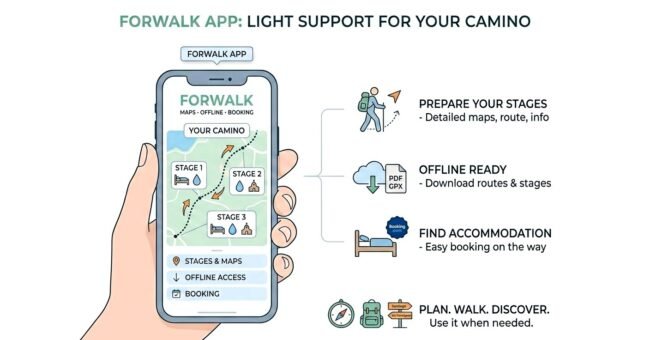
If you travel through Europe by work exchange or volunteering, moving slowly can be part of the point. A long walk between two places can feel like a clean reset: fewer transfers, less scrolling, more time to notice where you are. The Forwalk app (and the Forwalk route pages you use on your phone) can help you plan these walking days without turning them into a military schedule.
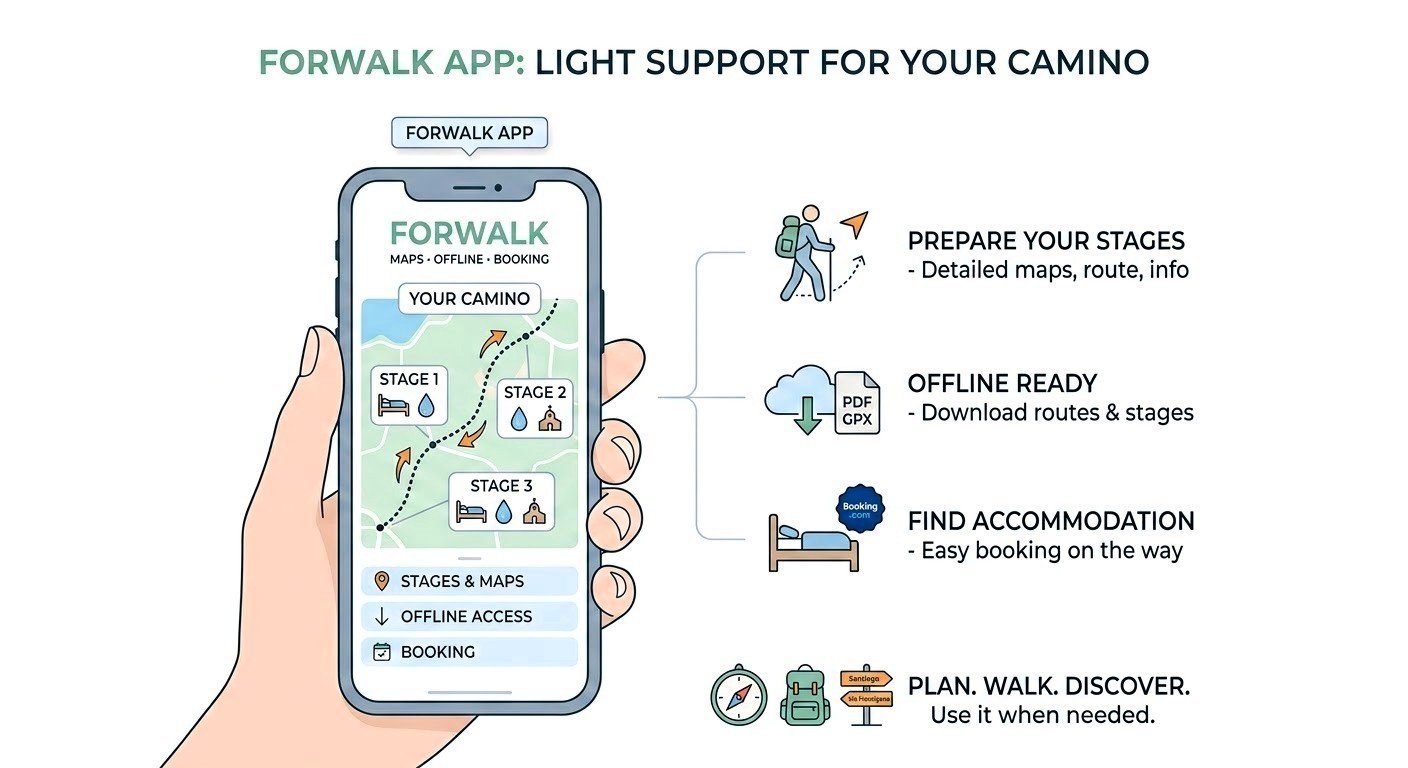
Forwalk focuses on long-distance routes broken into stages, with practical details that matter on the road: distances, elevation, estimated time, services along the way, and accommodation options. Forwalk also highlights that you can book accommodation via its site through a partnership with Booking.com. If you use that feature, it is still worth checking local pilgrim hostels, small guesthouses, and direct booking options when available, especially in rural areas where every booking supports a fragile local economy.
Why this is useful for volunteers and work exchange travellers
Volunteering often comes with fixed start dates, “arrival windows”, and a need to show up rested. Walking in between can be a smart middle path: it keeps costs down, it gives you recovery time after a demanding placement, and it lets you see a region at human speed. The Forwalk app is especially helpful for three moments: choosing a realistic daily distance, understanding elevation changes (so you do not underestimate a “short” day), and keeping a shortlist of places to sleep if your plans shift.
This matters even more when you travel in shoulder season. Weather changes fast, daylight is shorter, and some small businesses close mid week. Having stage based information on your phone is a simple safety net.
A practical way to use it
Pick one stage that fits your body and your deadline, then plan only the essentials: water points, a lunch stop, and where you could sleep.
Keep a second option for the afternoon in case you walk slower than expected.
Check your stage the evening before, then keep phone checks rare during the day.
Offline matters: PDF and GPX files
Coverage is still patchy on many trails. That is why it helps when a service offers downloadable files. On its Camino pages, Forwalk makes route files available as PDF (Portable Document Format) documents and GPX (GPS Exchange Format) tracks, including points of interest like shops, water sources, and lodging. You can save these before you leave Wi Fi and open them later even with no signal.
If you use GPX tracks, you will usually open them in a separate navigation app or device that uses GPS (Global Positioning System). That gives you a clean backup: if one app is slow or crashes, you still have the route line and key points.
Battery plan for walking days
Put your phone in airplane mode when you do not need signal.
Lower screen brightness and close background apps.
Carry a power bank and a cable you trust, and test the setup once at home.
Camino specific notes: follow official rules for certificates
Many volunteers add a Camino segment before or after a placement. If you care about the pilgrim credential and the Compostela certificate, treat apps as logistics helpers, not rule books. The Pilgrim’s Reception Office explains what the Credencial is for and the basic conditions for the Compostela, including minimum distances and the requirement to follow routes recognised as official.
If you are walking only the minimum qualifying section, the same official site also notes the need for at least two stamps per day on those final kilometres. That can affect how you plan stage starts and stops, especially in quieter areas where stamping points are less frequent.
There is also a “digital pilgrim credential” initiative presented by the Cathedral of Santiago, described as a complement to the traditional paper version, using QR (Quick Response) codes for stamps. Availability and real-world adoption can vary by route and season, so read the official details before relying on it.
Safety and respect, especially when walking solo
Volunteering and long walks often mean solo days, sometimes on remote stretches. That can be peaceful, but it also calls for basic safety habits: share your rough plan with someone, keep enough water, avoid pushing into darkness, and trust your instincts if a situation feels off. Reports from women on popular pilgrimage routes have also highlighted harassment risks in isolated areas, so it is sensible to plan your day around places where you can pause, refill, and be around other people when needed. :contentReference[oaicite:0]{index=0}
If you are travelling as a volunteer, this is part of responsible travel too: look out for other walkers, respect privacy in shared accommodation, and keep boundaries clear with strangers you meet on the road.
Low-impact travel fits the spirit
Many people drawn to work exchange also care about low-impact travel. Walking can be one of the lightest ways to move, but only if you keep your footprint small. The Leave No Trace framework is a solid reference, even on well-travelled paths, because it turns good intentions into concrete habits.
Used well, the Forwalk app becomes a quiet support: you plan the essentials, save what you need for offline use, and then spend most of the day looking up instead of down.
Useful link
- Forwalk official site
- Forwalk Camino Francés route page (PDF and GPX downloads)
- Pilgrim’s Reception Office FAQ (stamps)