Cat shelters 🐈⬛
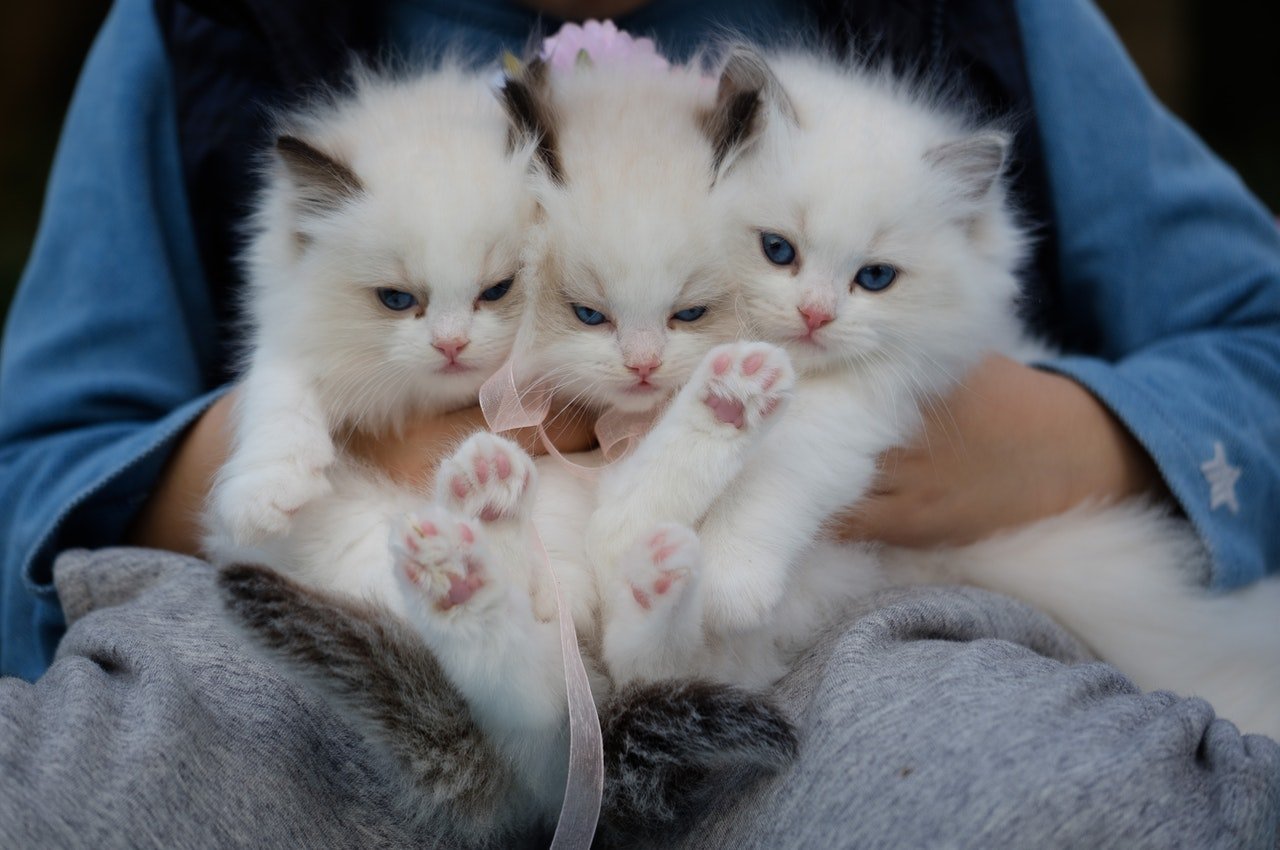
Explore cat shelter volunteering opportunities around the world, including rescue centres, shelters and organisations caring for abandoned, stray, surrendered, injured or vulnerable cats.
Depending on the organisation, volunteers may help with feeding, cleaning, socialisation, enrichment, adoption support, fundraising, community outreach and other practical activities connected with the daily care of cats.
Some listings may be seasonal, archival or no longer active. Always check the publication date and confirm current volunteer activities, animal-care practices, accommodation and availability directly with the organisation before making travel plans.
Animal welfare notice
Shelter volunteering should support the welfare and normal care of the cats. Volunteers should respect each animal’s temperament, need for rest and appropriate social contact, and follow the organisation’s procedures for hygiene, handling and working with frightened, injured or sick animals.
What can volunteering at a cat shelter involve?
Activities vary according to the shelter, the number of cats and the volunteer’s experience. Participants may help with:
- preparing food and providing fresh water;
- cleaning litter trays and animal areas;
- changing bedding and washing blankets;
- socialising suitable cats and kittens;
- providing play and appropriate enrichment;
- cleaning carriers, bowls and equipment;
- photography and adoption promotion;
- fundraising and administrative activities;
- community outreach and responsible adoption initiatives;
- general shelter maintenance.
The listing should explain which activities are actually expected. Veterinary procedures, diagnosis, prescription medication and specialist animal handling should remain with appropriately qualified or experienced people where required.
What is a cat shelter?
A cat shelter generally provides temporary care for cats that have been abandoned, surrendered, rescued or otherwise need a safe place while a longer-term solution is found.
Some organisations focus primarily on adoption, while others also provide rehabilitation, foster care, sterilisation programmes or support for community and stray cats.
The terms shelter, rescue centre and sanctuary can overlap and their meaning varies between organisations and countries. A sanctuary may provide permanent or long-term care for cats that are unlikely to be adopted, while a shelter may place greater emphasis on temporary care and rehoming.
Evaluating a cat shelter
The name of an organisation does not by itself demonstrate good animal welfare. Before volunteering, consider the actual conditions in which the cats live and how the organisation manages its animal population.
Useful questions include:
- how many cats are currently housed;
- how new arrivals are assessed and introduced;
- whether sick animals can be separated when necessary;
- what veterinary support is available;
- how food, water and litter facilities are managed;
- whether cats have appropriate resting and hiding spaces;
- how enrichment and socialisation are provided;
- how adoption or long-term care decisions are made;
- what training volunteers receive before handling animals.
Overcrowding can make hygiene, disease control and stress management particularly difficult. Ask how the organisation responds when it reaches its practical capacity.
Socialising shelter cats
Human interaction can be useful for many shelter cats, but not every animal wants or benefits from the same level of contact.
Some cats may actively approach volunteers, while newly rescued, feral, traumatised or frightened animals may need quiet spaces and considerably more distance. Follow staff instructions and allow the individual cat’s behaviour to guide interaction.
Do not assume that volunteering should involve constantly holding, cuddling or photographing cats. Animal interaction should be based on welfare and the organisation’s care plan rather than on providing an experience for volunteers.
Stray cats and TNR programmes
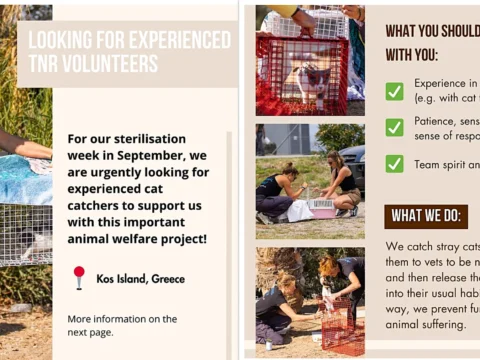
Some cat shelters also support free-roaming or community cats outside the shelter. Activities may include feeding colonies, monitoring animals, fostering kittens, assisting adoption networks or supporting trap-neuter-return programmes.
Capturing and handling feral cats can involve considerable stress and injury risk. Volunteers without appropriate experience should not independently trap or restrain animals.
Sterilisation, surgery, vaccination and other veterinary procedures must be carried out by appropriately qualified and authorised professionals.
Health, hygiene and safety
Shelter environments can involve scratches, bites, animal waste, cleaning products and infectious diseases. Follow the organisation’s procedures concerning handwashing, footwear, litter trays, protective clothing and movement between different animal areas.
Ask what should happen if you are scratched or bitten and where appropriate first-aid or medical assistance can be obtained.
Health risks vary between destinations, particularly when working with stray or free-roaming animals. Check whether the organisation recommends any specific health precautions or vaccinations and obtain appropriate travel health advice when necessary.
Make sure your insurance covers volunteering and animal handling where applicable.
How to use this page
Open the opportunity that interests you and read the complete announcement. Check the publication date first, because older shelters may have changed their volunteer programme or may no longer be accepting participants.
Look for the contact details or application procedure at the end of the listing. Some announcements provide direct contact information, while others may explain how to request protected host details through Voluntouring.org.
Before applying, confirm:
- the number and type of cats currently cared for;
- the exact volunteer responsibilities;
- whether previous animal-care experience is required;
- training and supervision;
- weekly hours and days off;
- accommodation and meals;
- minimum stay;
- health or vaccination requirements;
- insurance requirements;
- any fees, donations, deposits or other financial arrangements.
Some opportunities may provide accommodation or food in exchange for help, while others may request a contribution or programme fee. If a mandatory fee applies, ask for the exact amount, what it covers and the applicable payment, cancellation and refund conditions before making a commitment.
Voluntouring does not organise placements, select participants, arrange visas or mediate between volunteers and host organisations. It does not process participant payments between travellers and hosts. Publication on Voluntouring.org does not in itself constitute verification, endorsement or a recommendation of a shelter or organisation.
For additional guidance, read Voluntouring’s information about safety and legality in volunteering and work exchanges.
Related opportunities
- Volunteer opportunities with cats
- Animal shelter volunteering opportunities
- Animal rescue centre volunteering opportunities
- Animal welfare volunteering opportunities
- Animal care volunteering opportunities
- Pet sitting opportunities
Important: shelter conditions, animal-care practices, volunteer availability, fees and requirements can change. Confirm current information directly with the organisation before making travel or financial commitments.
Last reviewed: September 2026.
Browse cat shelter volunteering opportunities 🐈🐈⬛
Browse the projects below and use the “Older Posts” navigation if available to continue exploring previous opportunities. Always check the publication date and current shelter arrangements before applying.
Do you represent a cat shelter or rescue organisation looking for volunteers? You can submit your opportunity to Voluntouring.org for editorial review.