Alternative living 🌿🏡

Explore alternative living projects, volunteer opportunities, stories and ideas about people experimenting with different ways of organising everyday life, housing, work, community, consumption and their relationship with nature.
Alternative living can include off-grid homes, intentional communities, eco-villages, tiny houses, cohousing, simple living, self-sufficiency, vanlife, rural lifestyles and many other approaches.
The word alternative is relative. A lifestyle is alternative only in relation to the social, cultural or economic norms around it. There is no single model and no reason to assume that an unconventional lifestyle is automatically more sustainable, healthier, freer or more fulfilling than a conventional one.
Some opportunities in this archive may be seasonal, experimental or archival. Always check the publication date and the current practical conditions directly with the host before making travel or lifestyle decisions.
Alternative living on Voluntouring
We use this tag when a different approach to everyday living is genuinely central to the project, story or experience. A rural location, ecological activity or unusual accommodation does not automatically make something alternative living.
What is alternative living?
Alternative living is a broad expression for ways of organising everyday life that differ meaningfully from the dominant or conventional model in a particular society.
The difference might involve housing, work, ownership, mobility, community, food production, energy, consumption or the amount of independence people seek from conventional systems.
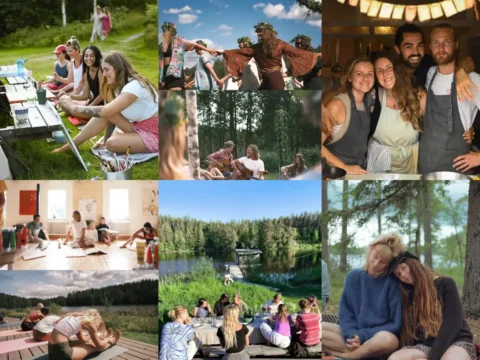
For one person, alternative living may mean sharing land and resources with an intentional community. For another, it may mean living in a tiny house, reducing consumption, travelling in a van, growing food or developing an off-grid homestead.
These choices can also be combined in many different ways.
Off-grid living
Off-grid living generally describes homes or projects that do not rely fully on the conventional electricity grid and may also manage their own water, sanitation, heating or food systems.
Off-grid does not necessarily mean isolated, primitive or completely self-sufficient. A project may use solar power while still purchasing food, fuel, materials and services from nearby communities.
Voluntouring has a dedicated Off-grid living section for projects where these practical systems are a meaningful part of the experience.
Intentional communities
Intentional communities are groups of people who choose to live together or cooperate closely around shared values, goals or ways of life.
Their approaches to property, income, work, meals, decision-making, privacy and shared responsibilities can differ considerably.
Some intentional communities are ecological, spiritual or political, while others focus on mutual support, shared housing or a particular social model.
Explore communities more specifically in the Intentional communities section.
Eco-villages
Eco-villages are usually intentional settlements or communities where ecological sustainability or regeneration plays a significant role.
They may experiment with renewable energy, ecological building, community governance, food production, shared resources or other approaches to reducing environmental impact.
Not every intentional community is an eco-village, and a project should not receive the Eco-village tag simply because it is rural or environmentally minded.
Browse more specific projects in the Eco-villages section.
Simple living and minimalism
Some alternative lifestyles focus primarily on reducing possessions, expenses, consumption or complexity.
Simple living can involve deciding that fewer material demands provide more room for other priorities, while minimalism may focus more specifically on reducing possessions or unnecessary consumption.
Neither approach requires moving to the countryside or abandoning modern technology.
These themes overlap with alternative living but can also exist independently in conventional urban life.
Slow living
Slow living focuses more specifically on the relationship with time, pace and everyday priorities.
It may involve reducing constant hurry, giving more attention to relationships, food, practical activities, community or rest and questioning the assumption that faster is always better.
An alternative lifestyle can be extremely busy, so alternative living and slow living should not be treated as synonyms.
Explore this theme in the Slow living section.
Downshifting
Downshifting is more specifically associated with reducing the importance or intensity of paid work and consumption in order to create more time for other priorities.
This can involve changing jobs, reducing working hours, lowering expenses or reorganising daily life around different values.
It is one possible form of alternative living rather than a requirement.
Related stories and projects can be found in the Downshifting section.
Tiny houses and small-space living
Tiny houses and other small homes can form part of an alternative lifestyle when people deliberately reduce living space, housing costs or material needs.
Small homes can also create practical challenges involving planning permission, land ownership, sanitation, heating, storage and access to utilities.
A tiny house should not automatically be described as environmentally sustainable simply because it is small. Construction materials, land use, energy and transport still matter.
Vanlife and mobile living
Some people choose vans, campers or other vehicles as temporary or long-term homes.
This can provide mobility and reduce some housing costs, but it also involves practical issues such as legal parking, water, sanitation, repairs, fuel, insurance and access to services.
Vanlife can belong to Alternative living when the focus is the lifestyle itself. When the article primarily concerns travelling by van, route planning or travel apps, Alternative travel may be the more appropriate classification.
Cohousing and shared living
Cohousing combines private living spaces with shared facilities and deliberate interaction between residents.
Other collective housing models may involve cooperatives, shared houses, communal land or different combinations of private and collective ownership.
These arrangements can create stronger everyday cooperation, but they also require clear agreements about privacy, money, decision-making, maintenance and shared responsibilities.
Self-sufficiency
Some projects aim to produce more of their own food, energy, water or other necessities.
Complete self-sufficiency is unusual. Most households and communities remain connected to surrounding economies and depend on outside materials, healthcare, transport, tools or specialised services.
It is often more accurate to speak about reducing dependency or increasing resilience rather than becoming entirely self-sufficient.
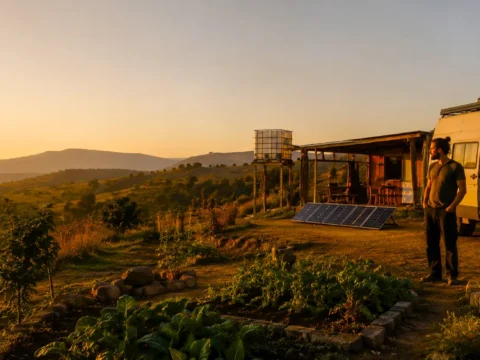
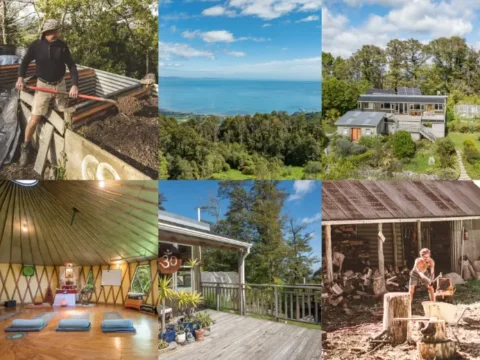
The Wildlanders project featured by Voluntouring illustrates this gradual approach, with gardens, solar power, water systems, repairs and practical skills developed over time rather than immediate independence.
Alternative living is not automatically sustainable living
An unconventional lifestyle may reduce some environmental impacts while increasing others.
Living in a van, remote cabin or tiny house does not automatically reduce energy use or transport emissions. An intentional community can still consume significant resources, while someone in a conventional apartment can live with a relatively low environmental footprint.
Sustainability should therefore be evaluated through actual practices rather than through lifestyle labels.
Projects where environmental sustainability is itself central can also appear in the Sustainable living section.
Alternative does not automatically mean better
Alternative living is sometimes romanticised as an escape from consumerism, work pressure or modern society.
Different lifestyles can offer real advantages, but they also have costs, compromises and responsibilities.
Living remotely may reduce rent while increasing dependence on a vehicle. Growing food can provide satisfaction and resilience while requiring substantial time and physical work. Community living can provide companionship while requiring compromise and collective decision-making.
A useful account of alternative living should include practical realities as well as attractive ideals.
Trying alternative living through volunteering
Volunteer exchanges can allow travellers to experience a different lifestyle temporarily before considering larger personal changes.
Examples on Voluntouring include off-grid projects, eco-villages, permaculture farms, community homes, natural building projects and other places experimenting with different approaches to daily life.
A volunteer stay can provide useful first-hand experience, but living somewhere for two weeks is not necessarily equivalent to being a permanent resident responsible for finances, maintenance, governance and long-term decisions.
Community membership and volunteering are different
Some intentional communities welcome short-term volunteers, visitors, trial residents and permanent members under different arrangements.
Helping for a few weeks does not automatically create membership rights or obligations.
If you are interested in staying longer, ask separately about:
- membership processes;
- trial periods;
- financial contributions;
- property ownership;
- income and shared expenses;
- governance and decision-making;
- private and communal space;
- responsibilities of permanent residents.
Remote living and practical independence
Alternative-living projects are often located in rural or isolated areas.
Before joining, ask about:
- access to public transport;
- the nearest shops and medical facilities;
- electricity and drinking water;
- heating and cooking facilities;
- internet and mobile phone coverage;
- waste and sanitation systems;
- whether a vehicle is necessary;
- how volunteers can leave independently if plans change.
A remote lifestyle can be rewarding, but volunteers should understand how much they will depend on the host for transport and basic services.
Building and land regulations
Alternative housing does not exist outside ordinary laws simply because it is unconventional.
Tiny houses, earthbag buildings, yurts, composting toilets, wells, solar installations and long-term vehicle habitation can be subject to planning, building, sanitation, land-use or residency rules.
Volunteers should not assume that an experimental structure is legally authorised. Specialist construction and electrical work may also require qualified professionals.
Fair volunteer arrangements
A project promoting alternative values should still provide clear and fair exchange conditions.
Before travelling, confirm:
- the actual volunteer activities;
- weekly hours and days off;
- accommodation;
- food arrangements;
- minimum stay;
- shared household or community responsibilities;
- fees or contributions;
- transport and access to services;
- insurance requirements;
- visa or immigration considerations.
Words such as community, freedom, simple, sustainable or alternative should not replace practical information about what participants are expected to do.
How to use this section
Browse the projects, stories and articles below and check the publication date before relying on practical details.
For volunteer listings, read the complete announcement and confirm current conditions directly with the host.
For editorial articles, remember that one person’s lifestyle choice is not a universal recommendation. Costs, laws, personal needs and practical possibilities vary widely between people and places.
Voluntouring does not certify lifestyles, communities or projects as sustainable, ethical or suitable for a particular person. Publication on Voluntouring.org does not itself constitute endorsement.
For broader practical guidance, read Voluntouring’s information about safety and legality in volunteering and work exchanges.
Related sections
Important: project conditions, community rules, accommodation, infrastructure and legal arrangements can change. Confirm current information directly with the host before making travel, financial or lifestyle commitments.
Last reviewed: September 2026.
Explore alternative living projects and stories 🌿🏡
Browse the projects and articles below and use the “Older Posts” navigation to continue exploring the archive.
Do you host a project where volunteers can genuinely experience an alternative way of living, or do you have a personal story about building a different lifestyle? You can submit your project or story to Voluntouring.org for editorial review.