Slow living 🌿🐌

Explore slow living stories, volunteer projects and alternative lifestyles centred on living with greater attention to time, daily routines, relationships, nature and the things that genuinely matter to us.
Slow living does not simply mean doing everything slowly. It is a broad approach to everyday life that questions constant hurry, productivity and consumption and encourages people to use their time more intentionally.
On Voluntouring, this section can include rural and off-gridOff-grid refers to a place or lifestyle operating partly or fully independently from public utilities, often using its own systems for electricity, water or waste. projects, intentional communitiesAn intentional community is a group of people who deliberately choose to live or organise together around shared values, goals or practices. It may or may not be an ecovillage., simple living, self-sufficiency, gardening, natural buildingNatural building is an approach to construction that emphasises locally available, minimally processed and lower-impact materials and techniques. and other experiences where volunteers or travellers have an opportunity to experience a different rhythm of daily life.
The term should not be treated as a guarantee that a particular lifestyle, project or community is sustainable, healthy or suitable for everyone. Each experience has its own practical realities and conditions.
Slow living on Voluntouring
We use this tag when a slower, more intentional approach to everyday life is genuinely part of the project, story or experience. Living in the countryside, volunteering on a farm or being off-grid does not automatically make something slow living.
What is slow living?
Slow living is an approach to everyday life that gives greater attention to how we use our time rather than assuming that faster and more productive is always better.
It can mean creating more space for relationships, cooking, growing food, crafts, nature, rest, community life or practical activities that are difficult to appreciate when everything is organised around speed and constant efficiency.
The wider slow movement developed partly from Slow Food and later expanded into areas such as cities, travel, education and other aspects of daily life.
There is no single formula. Someone can practise slow living in an apartment in a city just as another person might experience it on a rural farm or in an intentional community.
Slow does not mean doing nothing
Slow living is sometimes presented online as an idyllic life of quiet mornings, gardens and unlimited free time. Real life can be considerably less romantic.
A slower lifestyle may still involve demanding work, responsibilities, childcare, farming, maintenance, deadlines and difficult decisions. The difference is not necessarily the absence of activity, but a more deliberate relationship with time and priorities.
Voluntouring’s article about The Wildlanders and off-grid living in Portugal illustrates this well: building a more independent life can involve years of gardening, repairs, water systems, practical skills and repeated work rather than simply escaping responsibility.
What can slow living look like?
Depending on the person or community, it may involve:
- spending more time outdoors and in nature;
- growing or preparing food;
- cooking and sharing meals rather than rushing them;
- gardening and seasonal activities;
- learning practical skills and crafts;
- reducing unnecessary consumption;
- repairing and reusing things;
- creating more time for family, friends and community;
- reducing constant digital distraction;
- working differently or reconsidering work-life priorities;
- living more closely with seasonal and natural rhythms;
- making everyday choices with greater attention rather than speed.
These are possible expressions of slow living rather than requirements. There is no checklist that certifies someone as a slow-living person.
Slow living and volunteering
Some volunteer and cultural exchange projects offer participants a temporary experience of a slower everyday rhythm.
This may happen on a small farm, in an eco-project, intentional community, rural household, retreat or natural building project where daily activities follow weather, seasons, meals, gardens or shared community routines.
For example, a self-sufficient farm exchange in Sicily describes its philosophy as taking things easily while doing them well, with activities changing according to the weather and daily needs. :contentReference[oaicite:2]{index=2}
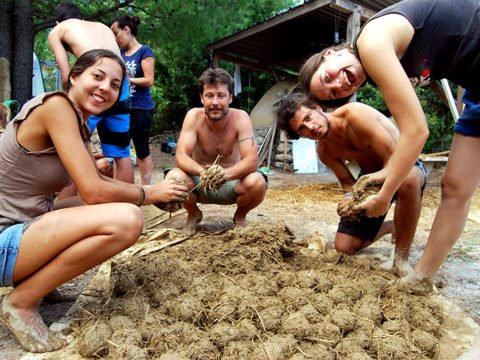
A natural building project in Romania similarly combines work with gardening, forest living and learning practical skills in a rural environment. :contentReference[oaicite:3]{index=3}
However, the words slow living should not be used to romanticise an exchange with excessive workloads, unclear responsibilities or unsuitable accommodation. The normal conditions of volunteering still need to be evaluated separately.
Slow living and slow travel
The two concepts are closely related but not interchangeable.
Slow travel concerns the pace and experience of a journey. It may involve staying longer in fewer places, walking, cycling or travelling overland.
Slow living concerns everyday life, including how people organise their time, work, consumption, relationships and routines.
A traveller can experience slow living by staying for several weeks with a rural community, but someone can also practise slow living without travelling anywhere.
Explore journeys based more specifically on pace and place in the slow travel section.
Slow living and simple living
Slow living also overlaps with simple living, but the emphasis is slightly different.
Simple living often involves reducing possessions, consumption, expenses or unnecessary complexity. Slow living focuses more directly on time, attention and pace.
Someone may practise both by living with fewer possessions, growing food, working fewer hours and creating more time for meaningful activities, but neither automatically requires the other.
Browse related projects and articles in the simple living section.
Slow living and downshifting
Downshifting is more specifically associated with reducing the intensity of work or consumption, often by accepting a lower income or different career structure in exchange for more time and autonomy.
That decision can support slow living, but someone can choose a slower daily rhythm without leaving a career or substantially changing income.
For stories and projects connected with that transition, explore downshifting.
Slow living and alternative living
Alternative living is the broader category. It can include ecovillagesAn ecovillage is an intentional or traditional community that aims to integrate ecological, social, cultural and economic sustainability into everyday life., communal living, vanlife, tiny homesA tiny house is a very small dwelling designed to provide essential living functions within a compact space, sometimes built on wheels., off-grid households, nomadic lifestyles and other ways of organising everyday life outside more conventional patterns.
Some of these lifestyles may be slow, while others can actually be extremely busy or demanding.
An intentional community that grows food and shares meals may offer a slow-living environment, but community meetings, maintenance, income generation and land care can still create a very full schedule.
Explore more examples in the alternative living section.
Slow living and sustainability
Slow living is frequently associated with environmental sustainability because practices such as consuming less, repairing items, growing food, buying locally and reducing unnecessary travel can reduce some environmental impacts.
The relationship is not automatic. A slow lifestyle can still involve high energy consumption, frequent flights or other resource-intensive choices.
Likewise, people can make environmentally sustainable choices while living busy urban lives.
It is therefore better to evaluate actual practices rather than assuming that a slow-living label proves environmental sustainability.
Rural life is not automatically slow living
The countryside is often associated with slower lifestyles, but agricultural and rural life can involve early mornings, long working days, seasonal pressure and significant physical labour.
A farm should therefore not receive the Slow living tag simply because it is rural.
The listing or article should actually communicate something meaningful about a slower rhythm, intentional lifestyle, reduced consumption, community routines or a conscious relationship with time.
Off-grid living is not automatically slow living
Off-grid projects frequently appear in this section because they can involve simpler systems, food growing, practical skills and closer attention to everyday resources.
But living without conventional utilities can also require considerable work. Water collection, solar systems, gardens, repairs, heating and food production do not maintain themselves.
The Wildlanders project featured by Voluntouring is a useful example of this distinction: its slower approach is connected with progressively reducing dependency and building skills, not with avoiding work. :contentReference[oaicite:4]{index=4}
Intentional communities and shared rhythms
Some intentional communities deliberately organise everyday life around shared meals, gardening, community meetings, collective work and time in nature.
These environments can offer an opportunity to experience different rhythms from conventional work and consumer routines.
Community living also involves responsibilities and compromise. Before joining, ask how decisions are made, which shared duties exist, how much private time participants have and what level of participation is expected outside the advertised volunteer hours.
Avoid romanticising other people’s lifestyles
A traveller may experience rural, traditional or low-consumption lifestyles as refreshing precisely because they are different from their everyday life.
That does not mean those lifestyles should be described as inherently purer, simpler or more authentic.
People living in rural communities may want better transport, technology, healthcare, income or infrastructure. Slow living should be a personal or community choice, not an expectation visitors impose on other people.
Technology and slow living
Slow living does not require abandoning smartphones, computers or the internet.
Technology can support communication, learning, remote work and community organisation. The relevant question is how it affects attention, time and daily routines.
Some people choose periods without screens or notifications, while others simply try to use digital tools more deliberately. There is no universal rule.
Living slowly in a city
Slow living is not restricted to farms, mountains or remote communities.
An urban version might involve walking more, shopping locally, cooking at home, reducing unnecessary commitments, participating in neighbourhood activities, spending time in parks or creating routines that leave more room for rest and relationships.
The academic discussion of slow living has also examined people adopting slower lifestyles in urban settings, reinforcing that it is an approach to everyday life rather than a particular landscape. :contentReference[oaicite:5]{index=5}
Trying slow living through a volunteer exchange
A volunteer placement can offer a temporary opportunity to experience a different daily rhythm before considering larger lifestyle changes.
Before applying, confirm:
- the actual volunteer activities;
- weekly hours and days off;
- daily routines and shared responsibilities;
- accommodation and meals;
- minimum stay;
- whether community meetings or shared duties are expected;
- internet and transport access;
- how remote the project is;
- any fees or other financial arrangements;
- insurance and visa considerations.
Do not choose a project based only on attractive descriptions such as peaceful, simple, mindful or slow. Read the practical conditions and decide whether the actual experience matches what you are looking for.
For additional guidance, read Voluntouring’s information about safety and legality in volunteering and work exchanges.
Related sections
Important: lifestyles, community arrangements and volunteer conditions can change. Confirm current information directly with the host before making travel or financial commitments.
Last reviewed: September 2026.
Explore slow living projects and stories 🌿🐌
Browse the projects and articles below and use the “Older Posts” navigation to continue exploring the archive. Some older volunteer opportunities may no longer be active, so always check their publication date and current conditions.
Do you live differently, host a project centred on a slower and more intentional lifestyle, or have a slow-living experience you would like to share? You can propose your story to Voluntouring.org for editorial review.