The word “sanctuary” can sound reassuring, but the name alone does not tell you how animals are treated. Wildlife attractions, rescue centres, rehabilitation projects and genuine sanctuaries can operate in very different ways, even when they use similar language.
For volunteers and responsible travellers, the most useful question is not simply “Does this place call itself a sanctuary?” but “What are the animals expected to do for visitors, and can they choose not to participate?”
Not every place called a sanctuary meets sanctuary standards
Terms such as sanctuary, rescue centre, retirement home and ethical wildlife experience are used by many different organisations. Their use alone is not evidence of high animal-welfare standards.
Regulation also varies between countries. Rather than relying on the name, look at what the facility actually does: how animals are acquired, whether breeding or commercial trade takes place, what contact visitors are allowed to have, how much choice animals have, and whether their physical, behavioural and social needs come before the visitor experience.
The Global Federation of Animal Sanctuaries (GFAS) provides one useful independent benchmark. Facilities eligible for GFAS accreditation or verification are expected to operate on a nonprofit or non-commercial basis, avoid commercial trade in animals, prevent intentional breeding except in specific rehabilitation or reintroduction circumstances, and prevent direct public contact with wildlife.
GFAS accreditation is not the only possible indicator of responsible work, and lack of accreditation does not automatically mean that a project is unethical. It is simply one useful standard that travellers can check.
Wild animals do not need tourist contact
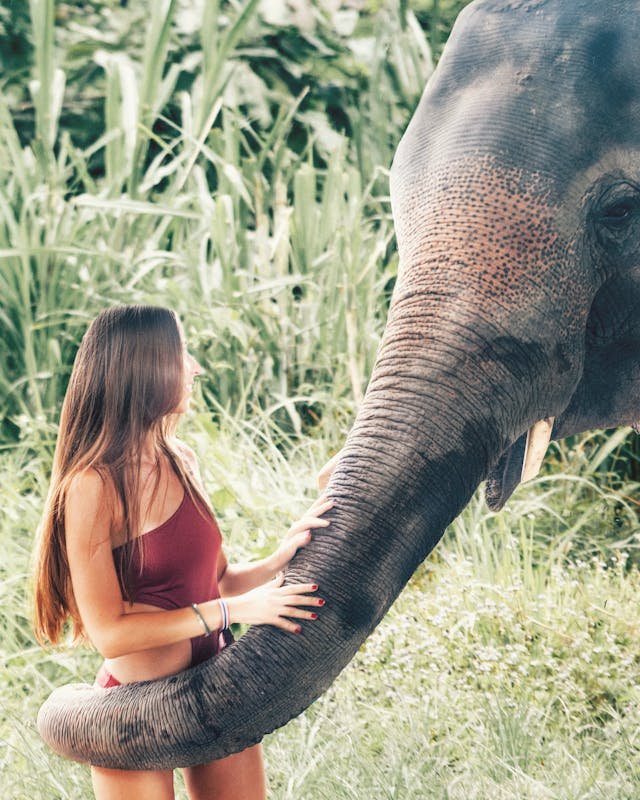
For captive wildlife, one of the clearest warning signs is an experience built around touching, holding, hugging, riding or posing with animals.
Choice matters. Animals should have space to move away, rest, socialise and behave naturally without being continuously available for visitors.
This does not mean that responsible sanctuaries never handle animals. Veterinarians, keepers, mahouts and trained wildlife professionals may need to approach or handle an animal for medical care, husbandry, transport or safety. That is very different from creating physical contact as an attraction for tourists or short-term volunteers.
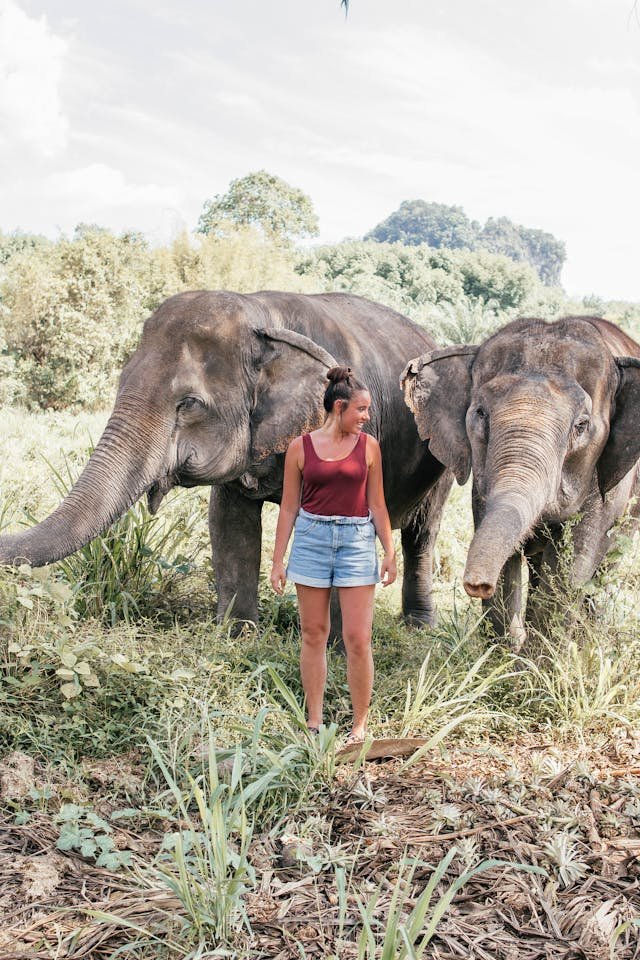
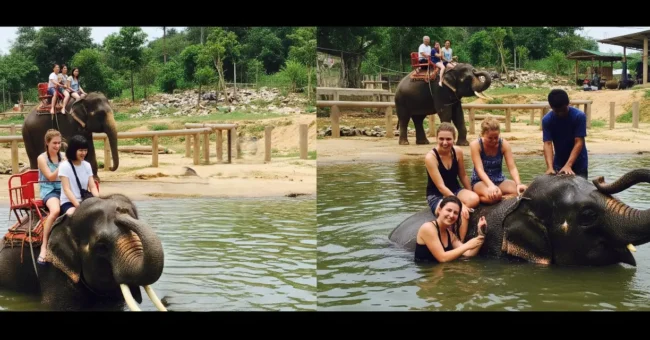
For elephants, these activities are major red flags
Current guidance from World Animal Protection recommends observation-led elephant experiences where visitors look rather than touch. Its 2026 assessment encourages venues to give elephants greater autonomy and opportunities to forage, socialise and behave naturally.
ABTA’s animal-welfare guidance likewise classifies several common elephant tourism activities as unacceptable.
- Elephant riding ❌
- Tourist bathing or washing sessions ❌
- Shows and performances, including painting, football or staged tricks ❌
- Touching or feeding elephants without a barrier ❌
- Photo opportunities where the animal cannot choose to move away ❌
The decline of elephant riding has not solved the problem. Research published in 2025 found that some elephant tourism businesses have shifted towards experiences marketed as more ethical, including washing and feeding, without necessarily eliminating the underlying welfare concerns associated with close visitor interaction.
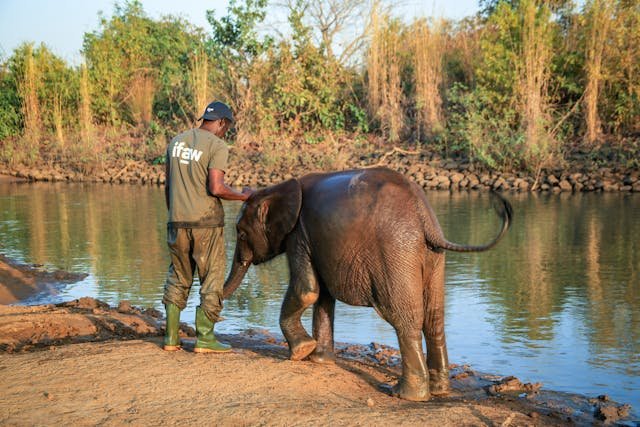
What about feeding animals?
Feeding deserves a little more nuance than a simple yes-or-no rule.
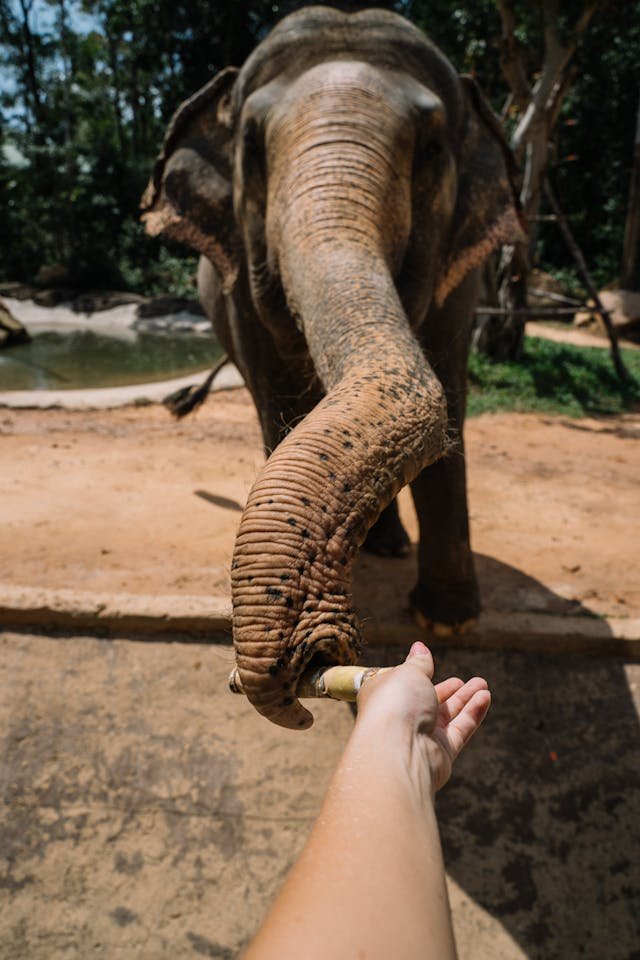
For elephants, ABTA considers tourist feeding without a barrier unacceptable. GFAS-accredited wildlife sanctuaries generally do not allow members of the public to feed wildlife directly. World Animal Protection’s 2026 elephant guide also distinguishes fully observation-led venues from some facilities that still allow hand-feeding across a barrier.
So the presence of feeding should prompt questions. Who is doing it? Is there a barrier? Is it necessary for animal care, or is it being sold as an attraction? Does it affect the animal’s normal diet, behaviour or ability to move away?
Food preparation can, however, be a perfectly reasonable volunteer task when food is prepared behind the scenes and distributed according to the animal-care team’s feeding plan.
What a genuine wildlife sanctuary should show ✅
A responsible sanctuary places the long-term needs of its animals before entertainment value. Visitors, volunteers, donations and educational tours may still be part of the organisation’s model, but animals should not have to perform or accept unnecessary interaction in order to generate support.
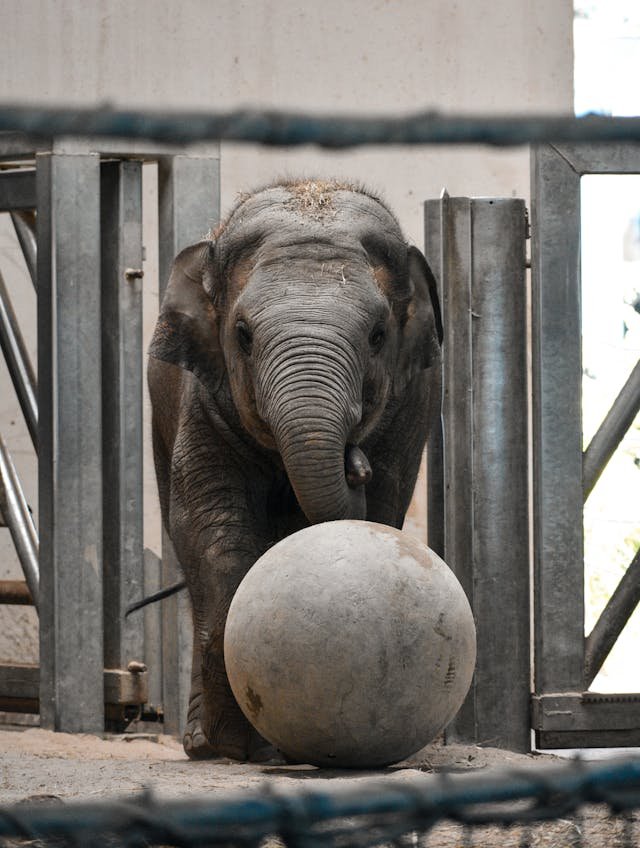
A sanctuary can also legitimately use enclosures, fences, gates or protected-care areas. Some rescued animals cannot safely be released, and rehabilitation centres may need controlled environments. A photograph of an animal behind a fence therefore does not tell you whether the facility is good or bad.
Useful signs to look for
- Animals are not used for rides, performances or staged entertainment ✔️
- Wild animals are not routinely touched, held or used for visitor selfies ✔️
- Animals can retreat from public view and are not continuously available to visitors ✔️
- Housing and habitat allow species-appropriate movement and behaviour ✔️
- Social species have appropriate opportunities for social interaction ✔️
- Qualified professionals oversee veterinary care and animal management ✔️
- The organisation can explain where its animals came from and why they cannot be released ✔️
- There is no commercial breeding or trade presented as rescue work ✔️
- Volunteer activities support care, maintenance, enrichment, habitat, research or conservation rather than entertainment ✔️
- Fees, donations and visitor activities are explained transparently ✔️
A genuine sanctuary should still make sense as a sanctuary even after rides, selfies, touching and performances are removed from the visitor experience.
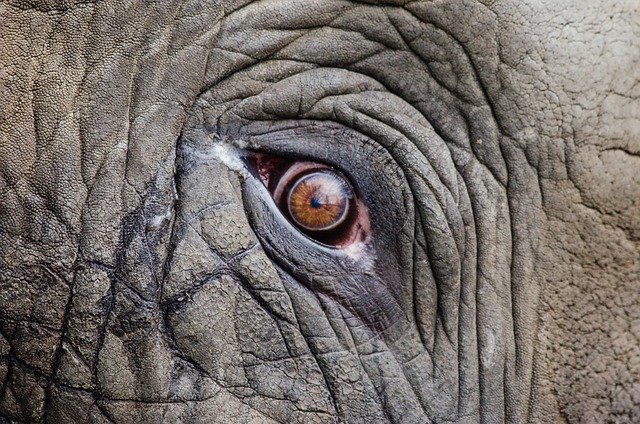
Necessary care is different from entertainment
This distinction is especially important for volunteers.
Being called a volunteer does not automatically make someone qualified to handle wildlife. Short-term volunteers should be cautious if a project quickly promises opportunities to cuddle orphaned animals, walk predators, wash elephants or perform tasks that normally require professional animal-care training.
At the same time, genuine rescue and rehabilitation work can require human intervention. Veterinary examinations, medication, emergency treatment, protected-contact training and rehabilitation procedures may involve trained staff working closely with animals.
The question is not whether a human is ever near the animal. The question is whether the contact exists because the animal needs it or because the visitor wants it.
What responsible volunteers and travellers can do 🙋♀️
- Research the organisation before applying, donating or booking
- Ask exactly what physical contact volunteers and visitors are allowed to have
- Check whether animals can move away from visitors
- Ask where rescued animals came from and whether new animals are purchased
- Check whether breeding takes place and why
- Research the organisation’s staff, legal status and animal-care professionals
- Look for independent accreditation or published welfare standards where available
- Be cautious with places whose marketing focuses heavily on selfies, cuddling, bathing or feeding
- Check what volunteer fees cover and what work volunteers actually perform
- Prefer programs focused on welfare, rehabilitation, habitat protection, conservation and education rather than access to animals
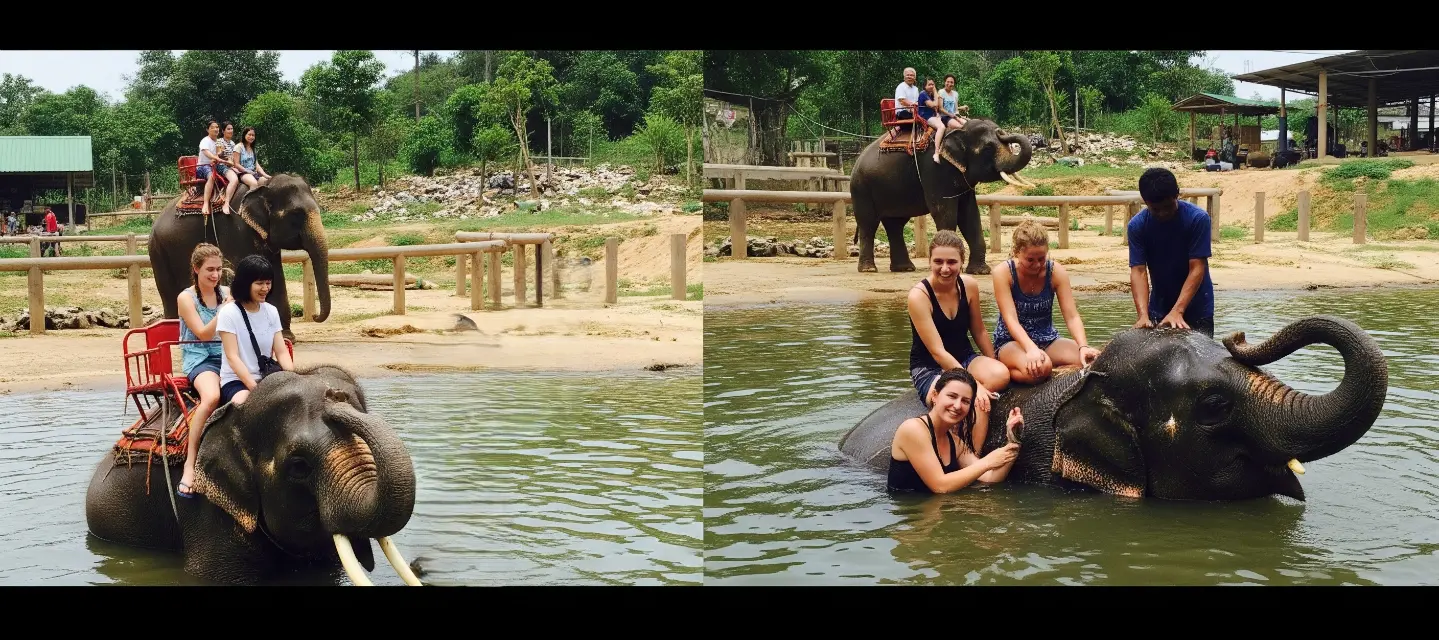
Elephant sanctuaries are a useful case study 🐘
Elephant tourism shows particularly clearly how an activity can be rebranded without necessarily solving the underlying welfare problem.
World Animal Protection’s 2026 research assessed 236 elephant tourism venues holding 2,849 elephants and reported that around two thirds of the elephants observed were living in poor conditions. Elephant riding and shows have declined in parts of the industry, but close-contact experiences such as washing and hand-feeding have grown and are often marketed as ethical alternatives.
Its current recommendation for travellers is simple: where captive elephants are involved, favour observation-led venues that provide space for elephants to socialise, forage and express natural behaviour without forced interaction with visitors.
The best place to observe elephants remains the wild, provided that viewing is managed responsibly and at an appropriate distance.
Research before choosing a wildlife sanctuary 🔍
No single checklist can replace proper research. These resources provide useful standards, welfare guidance and current information:
- World Animal Protection – Elephant-friendly tourist guide 2026
- ABTA – Animal Welfare Guidelines
- Global Federation of Animal Sanctuaries – Accreditation criteria
- Global Federation of Animal Sanctuaries – Standards of Excellence
- Save Elephant Foundation – Asian elephant rescue and care
- The Sanctuary Gap – research review on captive wildlife sanctuary tourism
Policies and practices can change. Check the most recent information rather than relying only on old reviews, social media posts or the word “sanctuary” in an organisation’s name.
🐾 Animal sanctuary volunteering on Voluntouring.org
Voluntouring.org publishes animal sanctuary and rescue volunteering opportunities, but publication on our website should not be interpreted as certification or a guarantee of an organisation’s welfare standards.
When reviewing new host submissions, animal welfare, volunteer safety and transparency are important considerations. We may decline or remove opportunities when serious concerns emerge, but volunteers should still carry out their own checks and confirm current conditions directly with the organisation before travelling.
If you notice a listing on Voluntouring.org that raises a concrete animal-welfare or volunteer-safety concern, please contact us and include the relevant information or evidence so that we can review it.
Responsible volunteering also means questioning organisations that use emotionally powerful words such as rescue, charity or rehabilitation to discourage scrutiny. Similar due-diligence principles apply in other sensitive volunteering sectors. See our guide: Orphanage: how to detect when it’s a scam ⚠️.