What if six weeks in Germany could help you bring fresh ideas to the future of our oceans?
The Alexander von Humboldt Foundation is inviting applications for its 2027 Residency Programme, bringing together 12 international participants from research, journalism, the arts and civil society. The programme provides accommodation, financial support and a travel allowance, with no participation fee. Applications are open until 14 December 2026.
Ocean conservation is not only a question for marine biologists: protecting coastal communities, communicating scientific discoveries, addressing pollution and rethinking how we use marine resources also require people who can connect science with society. That is the idea behind Oceanic Horizons: Navigating the Future of Our Blue Planet, the theme of the Humboldt Residency Programme 2027. Organised by the Alexander von Humboldt Foundation, this six-week international residency will take place in Brandenburg and Berlin, with planned excursions to northern Germany and the North Sea and Baltic Sea coasts.
Participants will work together across different disciplines, develop ideas and find creative ways to share them with wider audiences.
Humboldt Residency 2027 at a glance 🔍
12 participants will be selected for a funded six-week residency in Germany from 2 August to 10 September 2027. Accommodation, an allowance or honorarium and a contribution towards travel are provided. There is no participation fee. Applications close on 14 December 2026.
Why focus on the future of our oceans?
The ocean regulates the climate, supports biodiversity, provides resources and shapes the lives of millions of people. Yet marine ecosystems face increasing pressure from pollution, overfishing, rising temperatures and habitat destruction. Coastal communities must also adapt to rising sea levels and changing environmental conditions. Rather than concentrating on a single scientific problem, the residency invites participants to explore the connections between ocean health, human activity and the future of our planet. Possible subjects include sustainable marine resources, the blue economy, renewable energy, coastal adaptation, environmental governance and the cultural importance of the sea.
Participants will bring different experiences to the discussion. A marine researcher might contribute scientific evidence, while a filmmaker or journalist could explore ways to make complex environmental issues understandable to the public. An NGO professional might add experience from campaigns or conservation initiatives.
What will participants actually do?
This is a collaborative residency, not a conventional employment contract, tourism programme or marine conservation volunteering placement. Participants are expected to contribute their expertise and work together on ideas that can reach people beyond academia. During the six weeks, the group will meet regularly in shared working spaces, exchange perspectives, connect with relevant organisations and develop public communication activities.
Possible outcomes include workshops, public discussions, media contributions, publications, online content or other formats chosen by the participants.
The official programme also includes planned excursions to institutions in northern Germany and to the North Sea and Baltic Sea coasts. These visits are intended to support the group’s learning and collaboration, although the final itinerary is not yet specified. According to the organisers’ FAQ, meetings generally take place from Monday to Thursday, approximately 9 am to 3 pm. Participants are encouraged to dedicate substantial time to the residency, while retaining some flexibility for other professional responsibilities.
Who can apply for the 12 places?
The Humboldt Residency Programme is international and interdisciplinary, but it is designed for people who already have relevant academic, creative or professional experience. The 12 places are divided into three categories:
- Five Humboldt Foundation alumni
Former fellowship or award recipients with relevant expertise, an academic position and a current base outside Germany, who are not receiving another Humboldt programme’s funding when the residency begins.
- Three early career researchers
Candidates currently pursuing a PhD or who completed one less than four years before the residency begins, with relevant research and science communication experience. They must hold an academic position outside Germany.
- Four civil society, journalism and arts professionals
Journalists, writers, filmmakers, artists, designers, NGO representatives, social entrepreneurs and other practitioners with a clear professional connection to the ocean theme. These candidates must not currently hold an academic position.
The foundation welcomes applicants from different countries and disciplines. There is no general requirement to hold German or US citizenship. However, eligibility depends on the category and, for researchers, where they are based. The FAQ confirms that civil society, journalism and arts applicants may apply even if they live in Germany. Participants need strong English communication skills, including the ability to discuss scientific and interdisciplinary subjects.
This is not an introductory experience for people with no relevant background: applicants must demonstrate what they can contribute to the chosen theme.
Is the Humboldt Residency really free?
Yes. The Alexander von Humboldt Foundation explicitly confirms that selected participants are not charged any fee for taking part. The programme is fully funded, although the amount of individual financial support depends on the participant’s category. The funding arrangements include:
- Accommodation
Two weeks at Schloss Wiepersdorf and four weeks at an aparthotel in Berlin, fully covered by the organisers.
- Financial support
A monthly allowance for researchers based on the foundation’s usual fellowship rates, or an honorarium for participants from civil society, journalism and the arts.
- Travel
A travel allowance for the journey to and from Germany.
- Project activities
A budget for selected public events or final communication outputs.
- Visa arrangements
The foundation provides supporting invitation documentation, and the travel grant covers eligible visa-related expenses.
The exact stipend or honorarium is not published in the call. The foundation also does not list free meals as a separate guaranteed benefit. Applicants should therefore clarify the allowance amount, meal arrangements and any personal expenses before accepting an invitation. The programme can accommodate participants travelling with dependent family members where needed, subject to arrangements made in advance.
However, it does not provide a separate travel grant or family allowance for accompanying dependants.
Where will the six-week residency take place?
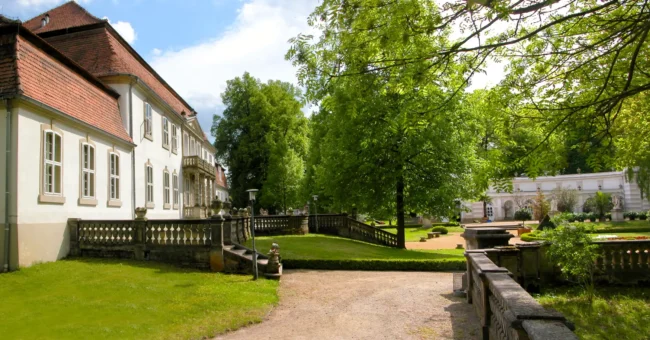
The first two weeks, from 2 to 13 August 2027, are scheduled at Schloss Wiepersdorf, a cultural residency centre in the German state of Brandenburg. This initial period offers a setting away from the centre of Berlin where the international group can begin working together. From 13 August to 10 September 2027, participants will be based in Berlin, staying in accommodation arranged by the foundation. During this phase, the programme will involve collaborations, public-facing activities and planned visits to northern German institutions and coastal areas.
The full programme begins with a virtual meeting on 29 June 2027 and continues after the in-person residency with remote work on the group’s outputs. A final online event is scheduled for 26 October 2027.
Attendance throughout all six weeks in Germany is compulsory. Applicants should make sure they can commit to the entire period before submitting an application.
An international opportunity for people working towards healthier oceans
Humboldt Residency stands out because it brings together people whose work might otherwise remain in separate professional worlds. Ocean scientists, communicators, artists and civil society professionals will have time to exchange knowledge and develop new ways to engage the public with environmental challenges. For applicants with relevant experience, this is an opportunity to contribute to an international conversation about marine conservation while spending six funded weeks in Germany. It is highly selective and requires a serious professional commitment, but the absence of participation fees and the provision of financial support make it a distinctive alternative to conventional self-funded residencies.
How to apply for the Humboldt Residency 2027 📧🔍
Applications are submitted exclusively through the Alexander von Humboldt Foundation’s online application system. Candidates must select the appropriate participant category and provide:
- A CV of no more than three pages, in PDF format.
- A short introduction video of no more than 60 seconds, explaining their motivation and suitability for the programme.
The video should be recorded in horizontal format and uploaded through the file-sharing service specified in the application instructions. A smartphone recording is acceptable, and professional video production is not required. Letters of recommendation are not requested.
The foundation evaluates applications on a rolling basis, with final selection decisions expected towards the end of February 2027. The published application deadline is 14 December 2026.
For candidates who would like to ask questions first, an online information session is scheduled for 24 November 2026, from 2 pm to 3 pm Central European Time.
What if you discover this opportunity too late? The Humboldt Residency Programme runs with a different theme each year. You can continue following the foundation’s official website for future calls, although the topic, eligibility criteria and funding arrangements may change.
The Humboldt Residency Programme 2027, titled Oceanic Horizons: Navigating the Future of Our Blue Planet, is organised by the Alexander von Humboldt Foundation.
- Programme: Humboldt Residency Programme 2027.
- Theme: Oceanic Horizons.
- Organisation: Alexander von Humboldt Foundation, Germany.
- Locations: Schloss Wiepersdorf, Brandenburg, and Berlin, Germany.
- Places: 12 across three participant categories.
- In-person dates: 2 August to 10 September 2027.
- Accommodation: Fully covered.
- Funding: Monthly allowance or honorarium and travel allowance; exact amounts depend on the applicant’s category.
- Meals: Not separately confirmed as included.
- Participation fee: None.
- Language: Proficient English.
- Application deadline: 14 December 2026.
- Contact email: residency@avh.de.
Before applying: Read the official call for applications and the 2027 FAQ document, particularly the eligibility conditions for your category. Applications must be submitted online.
Missed the application deadline? Follow the Humboldt Residency Programme for future annual calls.
Sources and further reading
- Alexander von Humboldt Foundation: Humboldt Residency Programme 2027, official call for applications.
- Alexander von Humboldt Foundation: 2027 frequently asked questions, funding, eligibility and programme conditions (PDF).
- Alexander von Humboldt Foundation: Humboldt Residency Programme overview and previous editions.
Editorial review: 18 November 2026. This is an independent informational article based on the foundation’s public call. It is not a partnership or recruitment request. Applicants should verify current eligibility, funding amounts, visa arrangements and application details directly with the organiser.