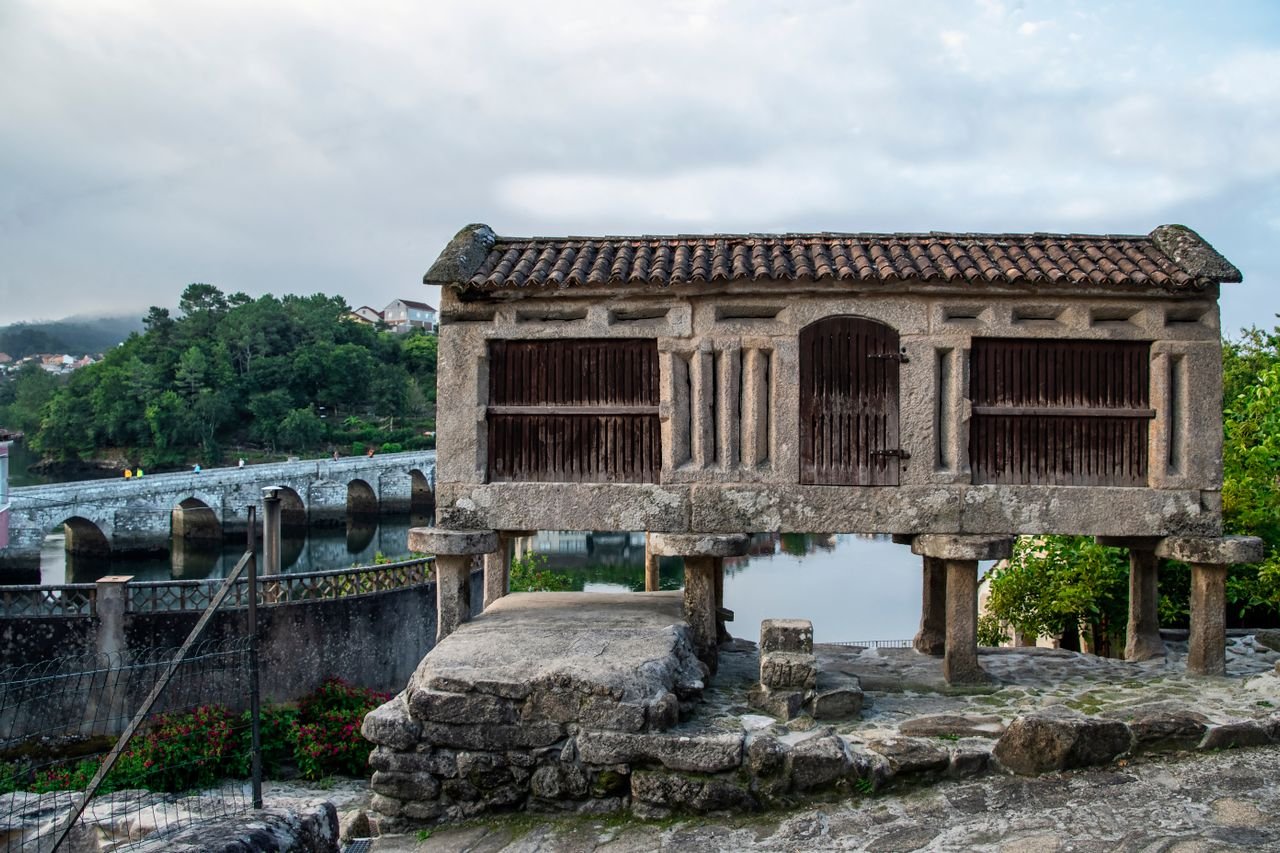
A traditional Galician hórreo is one of the most recognisable features of the countryside in northwestern Spain. These small, raised buildings were traditionally used to store grain and other harvested crops, protecting them from damp conditions and animals.
In this photograph, a stone hórreo with wooden panels stands beside a river, with an old arched stone bridge in the background. It is a glimpse of the agricultural architecture that can still be found in villages and rural areas across Galicia.
What is a Galician hórreo? 🌽🏡
An hórreo is a traditional granary built above ground level on stone or wooden supports. Its elevated structure helps keep stored crops away from moisture and rodents, while openings in the walls allow air to circulate. Hórreos vary in size, shape and materials, reflecting local building traditions. Some are still associated with working farms, while others survive as part of the region’s architectural heritage.
The official Galicia tourism website introduces several well-known examples, including those in Combarro, Carnota and A Merca.
Discovering rural life in Galicia
Beyond its historic buildings, Galicia is a region of small villages, farmland, forests, rivers and coastal communities. For travellers interested in spending more time in the countryside, some local hosts offer volunteer exchanges involving gardening, renovating old houses, animal care and everyday practical help.
These arrangements are independent of the heritage site shown in the photograph. Activities, accommodation and other conditions depend on each host.
Interested in volunteering in Galicia? 🇪🇸
Browse rural work exchangesA work exchange is an arrangement in which a traveller contributes an agreed amount of help to a host in return for benefits such as accommodation, meals or learning opportunities. Conditions vary by host. and other opportunities shared on Voluntouring.org. Check each listing for current availability and practical arrangements.