What would it be like to spend a whole week living beside an alpine lake, surrounded by mountains, far from ordinary city life? In New Zealand’s Nelson Lakes National Park, the Department of Conservation is looking for volunteer hut wardens to help run Angelus Hut, a remote mountain refuge at 1,650 metres above sea level. Volunteers receive free accommodation in the staff quarters and spend a week welcoming hikers, looking after the hut and experiencing life in one of the country’s most remarkable alpine landscapes. But reaching the refuge requires serious hiking experience, and the role involves real responsibilities.
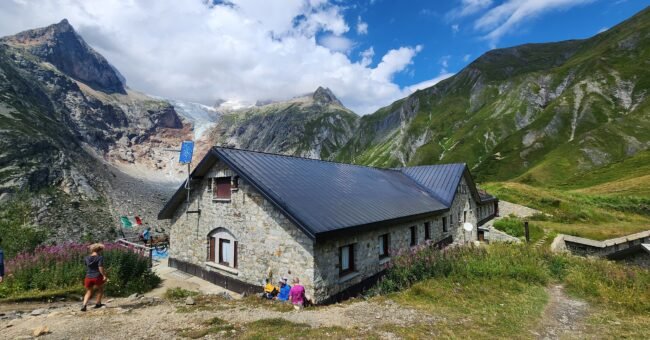
Information reviewed: 11 November 2026. The opportunities described below refer to the 2026/27 summer season. The Department of Conservation currently has applications open for Angelus Hut. Available dates and selection conditions may change. The header image does not show Angelus Hut or the volunteer location in New Zealand.
At 1,650 metres above sea level, beside the clear waters of Rotomaninitua/Lake Angelus, stands a mountain hut reachable only after a demanding hike through New Zealand’s alpine landscape. No roads lead to the building, no ordinary commute, and no shops around the corner. The surrounding mountains, rocky ridges and changing weather shape everyday life. For most people, Angelus Hut is a destination for an overnight hiking trip. But a small number of volunteers get to experience the place in a completely different way.
Instead of staying just one night, they become volunteer hut wardens for a full week, helping the New Zealand Department of Conservation (DOC) welcome visitors and look after the refuge. The programme offers an unusual chance to spend time in nature while making a practical contribution to the country’s network of mountain huts. It is not a paid job or a free mountain holiday. Participants must be experienced hikers, physically prepared and willing to take responsibility for the daily running of a remote alpine refuge.
Applications for the 2026/27 season are open
As of 11 November 2026, DOC is accepting applications for one-week volunteer hut warden placements at Angelus Hut, between November 2026 and April 2027. Several weekly periods are listed on the official DOC volunteer page. Places are subject to availability and selection. Applicants should verify the latest dates directly with DOC before making travel arrangements.
Angelus Hut: a remote refuge beside an alpine lake
Angelus Hut is located in Nelson Lakes National Park, in northern New Zealand’s South Island; the refuge stands beside Rotomaninitua/Lake Angelus, a mountain lake surrounded by rocky peaks and steep alpine slopes. The area lies above the natural treeline, where exposed ridges and open tussock-covered landscapes replace the forests found at lower elevations. The hut provides 28 bunk beds for hikers exploring this part of the national park.
It is one of the most popular overnight destinations in the Nelson Lakes area, particularly among experienced trampers (in New Zealand, tramping commonly refers to hiking, especially multi-day backcountry walks). The hut and its nearby campsite operate year-round with a booking system, and visitors must reserve their places before arriving. For hikers, the refuge offers shelter after a demanding day in the mountains, for volunteer wardens, it becomes a temporary home and workplace.

What does a volunteer hut warden actually do?
A hut warden’s main responsibility is to help visitors enjoy their stay while keeping the refuge clean, organised, and functioning properly. According to the Department of Conservation, volunteers are expected to:
- Welcome hikers and provide information about the hut and surrounding area.
- Check booking receipts for visitors staying at the refuge.
- Share important information, including weather forecasts.
- Keep the hut, toilets and surrounding areas clean and tidy.
- Carry out minor maintenance when required.
- Make radio contact with DOC staff at the Nelson Lakes National Park Visitor Centre twice daily at specified times.
- Be available to assist search and rescue personnel if required.
- Check and clean Bushline Hut and Relax Shelter when returning to St Arnaud, if requested.
Some responsibilities may sound simple, but their importance becomes clearer when considering the location. Visitors may arrive tired after several hours of walking, sometimes in changing weather conditions. A friendly welcome, accurate information and a well-maintained building can make a real difference to their experience. Twice-daily radio contact also provides an important link between the remote refuge and DOC staff outside the mountains.
Wardens are not recruited as professional mountain rescue workers. However, they must be responsible, able to follow procedures and prepared to cooperate with trained personnel if an incident occurs.
Can you enjoy the mountains during the placement?
Yes, the location is an important part of the experience. You may have opportunities to appreciate the surrounding landscape between responsibilities, observe the changing light over the lake, or enjoy quieter moments when visitors are out hiking. However, DOC does not advertise the placement as a recreational retreat or guarantee a fixed amount of free time. The volunteer’s primary responsibility is to look after the hut and its visitors throughout the agreed period.
For someone who enjoys mountain environments, this mix of practical work and everyday outdoor life may be exactly what makes the opportunity interesting.
Where do volunteers sleep and what do they eat?
The Department of Conservation provides free accommodation in the staff quarters at Angelus Hut. These quarters are separate from the main visitor sleeping area and contain two bunks and their own cooking facilities. However, they do not have separate washing or toilet facilities. Wardens use the hut’s shared facilities. DOC also provides free shared accommodation in St Arnaud for the nights immediately before and after the volunteering period.
This allows volunteers to attend their induction and prepare for the journey to and from the refuge.
Are meals included?
Volunteers are asked to bring enough food for eight days, along with suitable personal hiking equipment and clothing for alpine conditions. Emergency food supplies are available at the hut, but they are not intended for everyday use. DOC also mentions food reimbursement arrangements and will provide further information to successful applicants. However, the official announcement does not specify the amount or conditions of any reimbursement. Interested volunteers should clarify these details directly with DOC before accepting a placement.
This is an unpaid volunteer opportunity.
Accommodation is provided free of charge, and participants contribute to the refuge’s daily management while living in a remote alpine environment.
Reaching Angelus Hut is part of the challenge 🥾🏞️
Prospective volunteers need to understand that Angelus Hut cannot be reached by car. 🛻🚫
Reaching the building involves a demanding mountain hike, with several possible routes through Nelson Lakes National Park. The popular route via Pinchgut Track and Robert Ridge is approximately 12.2 kilometres one way and takes around six hours in suitable conditions. It climbs from the Mount Robert area, follows an exposed alpine ridge, and descends towards the Angelus basin.
DOC expects volunteer applicants to walk for about six hours over uneven terrain while carrying a heavy backpack and managing around 1,000 metres of ascent.
This level of fitness matters because volunteers must carry their food and personal equipment for the placement. The organisation also requires previous backcountry hiking experience in New Zealand.

Can it snow in summer?
Although the placement takes place during the New Zealand summer, Angelus Hut sits in a genuine alpine environment. Weather can change rapidly, and snow may fall even in midsummer. Robert Ridge is particularly exposed to strong winds, poor visibility, and sudden weather changes.
In a whiteout, even experienced hikers can struggle to follow the route.
DOC advises visitors to carry appropriate clothing, navigation equipment, spare food, and emergency communication equipment. Mobile phone reception is very limited on parts of the mountain routes, and a personal locator beacon is strongly recommended. In addition to the weather, volunteers should be aware of insects such as wasps, which can become particularly troublesome later in summer. Applicants with serious allergies must bring their own necessary medication. All these considerations explain why DOC requires substantial hiking experience rather than simply enthusiasm for the outdoors.
Why mountain safety matters: a real incident near Angelus Hut
Preparation and communication became especially important during a rescue near Angelus Hut in January 2025. According to a Department of Conservation report published on 17 January 2025, a hiker became stranded near Maniniaro/Mount Angelus after poor weather and thick fog affected the area. Two DOC rangers working nearby heard calls for help and began searching.
Meanwhile, another hiker staying at Angelus Hut noticed an empty bunk and remembered seeing a woman on the mountain ridge. The visitor informed the hut warden.
The rangers, the warden and the visitor then coordinated their efforts to locate the missing person. Fog and difficult terrain complicated the search, which continued the following morning. The rangers eventually reached the woman, who was cold and wet but not injured, and helped her return safely to the hut. The incident illustrates the value of communication and cooperation in remote mountain environments. It does not mean that volunteer wardens are expected to undertake dangerous rescue operations independently. Their role is to follow DOC procedures and assist trained personnel when appropriate.
Mountain safety and preparation
People interested in volunteering at Angelus Hut should carefully review DOC’s official guidance on alpine routes, weather conditions, equipment and emergency planning.
- Angelus Hut tracks and routes, including access options and potential hazards.
- DOC report on the January 2025 rescue, explaining the incident and its safety lessons.

Who can apply to become an Angelus Hut warden?
The Department of Conservation has specific applicant requirements. According to its official announcement, volunteers must:
- Be at least 20 years old.
- Be physically fit.
- Have experience hiking in the New Zealand backcountry.
- Be comfortable walking for six hours with a heavy backpack.
- Have appropriate personal hiking equipment and clothing.
- Speak English fluently.
- Be friendly, responsible and comfortable providing information to visitors.
- Have practical outdoor skills.
- Be willing to follow DOC health and safety procedures.
Preference is given to people who already know Nelson Lakes National Park. A first aid certificate is helpful, although the announcement does not describe it as compulsory. Applications are assessed individually, and not everyone who applies will necessarily be selected.
Can international visitors apply?
DOC welcomes international volunteers, including visitors who are already in New Zealand and legally entitled to remain for the period of their placement. Immigration New Zealand’s current rules specifically exclude volunteer work undertaken for the Department of Conservation from the immigration definition of work. However, international applicants still need appropriate permission to enter and remain in New Zealand. They should check their visa or travel authorisation conditions before making arrangements.
DOC also recommends comprehensive travel insurance and extensive medical cover, as it does not accept responsibility for volunteers’ personal medical expenses, lost equipment or other associated costs.
For more information, consult the DOC guidance for international volunteers and Immigration New Zealand.
When are the volunteer placements available?
The 2026/27 programme is organised into one-week placements between November 2026 and April 2027. At the time of this review, DOC lists several periods beginning in late November and December 2026, followed by additional weeks in January, February, March and April 2027. For example, the official schedule includes placements from 26 November to 3 December 2026, 7 to 14 January 2027, several dates in February and March, and 8 to 15 April 2027.
The dates shown on the website may change as the Department selects suitable applicants.
Prospective volunteers should therefore consult the official announcement for the latest roster rather than assuming that a particular week remains available.
How does the application process work?
Submit applications through the Department of Conservation’s online volunteer application form. Applicants provide personal information, preferred dates, fitness details and relevant outdoor or conservation experience. The selection process may include:
- Reviewing applications against available placements.
- Completing DOC safety checks.
- An interview with a DOC staff member.
- Reference checks.
- A Ministry of Justice criminal record check.
- Confirmation of suitable dates and participation in an induction.
Successful applicants receive additional information about equipment, responsibilities, accommodation arrangements and food reimbursement requirements. Before heading to Angelus Hut, volunteers attend an induction with a DOC ranger to review their role, equipment and health and safety procedures. DOC also asks applicants to take their commitment seriously. Last-minute cancellations can create difficulties because the organisation relies on selected volunteers to cover their assigned periods.
Why New Zealand’s mountain huts depend on volunteers
Angelus Hut is part of a much larger network of backcountry shelters spread across New Zealand. These huts are an important part of the country’s outdoor culture, providing places where walkers, climbers and other visitors can rest, cook and find shelter during their journeys. Some are relatively easy to reach, while others sit in remote valleys or mountain ranges and require many hours of walking to reach.
Maintaining such a large network is a considerable challenge.
In February 2026, The Guardian published a report on volunteers helping care for New Zealand’s backcountry huts. The article described the Love our Huts campaign, organised by the Federated Mountain Clubs, in which volunteers travel into remote areas to clean and maintain huts. According to the report, New Zealand has more than 950 backcountry huts, and volunteers had helped clean more than 500 of them during the summer campaign. Some participants travelled for several hours carrying cleaning supplies, while others brought their families to help look after the places they enjoyed visiting.
The Guardian’s report highlights an important aspect of New Zealand’s outdoor culture: caring for shared places is often understood as part of enjoying them.
The Love our Huts campaign is separate from DOC’s formal volunteer hut warden programme at Angelus Hut. However, both demonstrate how volunteers contribute to keeping remote shelters usable for future visitors. In many cases, these contributions involve ordinary tasks such as cleaning, providing information and reporting problems. But when those tasks take place several hours from the nearest road, they become part of a wider responsibility towards the landscape and the people travelling through it.
Other volunteer hut warden opportunities in New Zealand
Angelus Hut is not the only location where the Department of Conservation recruits volunteer wardens. Another programme operates on the Banks Peninsula, near Christchurch, where volunteers can help look after two different refuges.
Packhorse Hut
Packhorse Hut is located along the Te Ara Pātaka walkway on Banks Peninsula. The historic refuge has nine bunks and a separate hut for the volunteer warden. Access takes about 1.5 to 3 hours from the Kaituna Valley car park, making the approach shorter than the journey to Angelus Hut. Wardens help clean the building, check bookings, welcome visitors, and explain the hut rules.
Ōtamahua Hut on Quail Island
The second opportunity is Ōtamahua Hut, located on Ōtamahua/Quail Island in Lyttelton Harbour. The hut provides 12 bunks for visitors, with private quarters for the volunteer warden at the rear of the building. Unlike Angelus Hut or Packhorse Hut, you reach the island by ferry from Lyttelton. DOC covers the ferry fare for selected wardens. Volunteers must bring their own food and cooking equipment.
Duties include cleaning, checking reservations, welcoming guests, and maintaining regular contact with DOC.
Applications for Banks Peninsula are currently closed
Although DOC describes the roles at Packhorse Hut and Ōtamahua Hut on its website, the official programme page states that applications for the 2026/27 season are closed. These opportunities are included here for general information and for readers interested in future recruitment rounds. Check the official Banks Peninsula volunteer page for updates.
The Banks Peninsula programme generally requires applicants to be at least 18 years old and to have previous multi-day hiking experience. Its commitments and access arrangements differ from those at Angelus Hut, so interested candidates should read each official programme description carefully.
A week away from ordinary life
Spending a week at Angelus Hut offers something different from a conventional hiking holiday. Instead of arriving, taking photographs, and leaving the next morning, volunteers stay long enough to experience some of its everyday rhythms. Some mornings the lake is completely calm, some afternoons clouds gather around the surrounding peaks, and some evenings tired hikers arrive at the door. Small tasks become part of the routine: checking bookings, sharing information, cleaning communal areas, and staying in touch with DOC staff.
There is no salary, and participants need to bring their own food and equipment. The approach requires genuine physical effort, and the weather can be unpredictable. Yet for experienced hikers who enjoy remote places, caring for an alpine refuge can be rewarding in its own right. It also offers a different relationship with the landscape.
For one week, the mountains become the setting of everyday life and practical responsibilities. Living at Angelus Hut may be memorable not only because of the mountains, the lake, or the isolation, but also because you can help look after a place thousands of people come to experience.
See Angelus Hut on Google Maps 📍
Sources and further reading
- Department of Conservation: Angelus volunteer hut wardens, official 2026/27 recruitment information.
- DOC: Nelson Lakes volunteer application form.
- DOC: Angelus Hut facilities, location and visitor information.
- DOC: Angelus Hut access routes, equipment and mountain safety.
- DOC: Well-placed rangers rescue tramper in trouble, 17 January 2025.
- DOC: Information for international volunteers.
- Immigration New Zealand: Definition of work and Department of Conservation volunteering exemption.
- The Guardian: Leave things better than you find them, the volunteer army cleaning New Zealand’s remote hiking huts, February 2026.
- DOC: Banks Peninsula volunteer hut wardens, Packhorse Hut and Ōtamahua Hut.
- Wikimedia Commons: Angelus Hut and Lake Angelus by oh_jojojo, CC BY 2.0.
- Wikimedia Commons: Lake Angelus approach by Mark Anderson, CC BY-SA 4.0.
- Wikimedia Commons: Angelus Hut in winter by Michal Klajban, CC BY-SA 4.0.
Editorial review: 11 November 2026. Angelus Hut recruitment information refers to the 2026/27 season. Volunteer vacancies, available dates, entry requirements and programme conditions may change. Applicants should verify all details directly with DOC before travelling.
How to apply 📧🔍
The Angelus Hut volunteer warden programme is organised by the New Zealand Department of Conservation (DOC).
Interested applicants can apply directly through the official DOC volunteer application system. The programme is intended for experienced hikers who can commit to a full week in the mountains.
- Organisation: Department of Conservation, Te Papa Atawhai.
- Location: Angelus Hut, Nelson Lakes National Park, New Zealand.
- Season: November 2026 to April 2027.
- Duration: One week per placement.
- Accommodation: Free staff quarters at Angelus Hut, with shared accommodation in St Arnaud before and after the placement.
- Food: Volunteers must bring sufficient provisions for eight days.
- Contact: Nelson Lakes volunteer coordinator.
- Email: nelsonlakesvolunteers@doc.govt.nz.
Official announcement: Angelus volunteer hut wardens.
Before applying, confirm the availability of your preferred dates, your suitability for the physical demands of the placement, and any applicable travel, visa, insurance or personal equipment requirements.
This is an independent informational article based on publicly available sources. It is not an official recruitment announcement or a partnership with the Department of Conservation. Voluntouring.org does not organise the programme, select volunteers or verify individual participation arrangements.