The world is now expected to temporarily exceed 1.5°C of global warming above pre-industrial levels. After years of climate conferences, promises and targets, it is reasonable to ask what this threshold actually means, what has already changed and whether there is still time to influence what happens next.
On 21 October 2026, the United Nations Environment Programme (UNEP) presented its Emissions Gap Report 2026: The Point of Return. The report examines greenhouse gas emissions, government policies and possible warming pathways over the coming decades.
Its conclusion is serious: keeping global warming within 1.5°C without a significant overshoot is now considered out of reach. What happens after that point, however, still depends heavily on the choices made during the coming years.
Understanding this requires separating observed temperatures from long-term warming, looking at the difference between 1.5°C and higher levels of warming, and examining what governments, communities, organisations and individuals can still change.
🌍 Three numbers to keep in mind
The 2024 observation
The global average temperature recorded in 2024 compared with the 1850–1900 pre-industrial reference period.
The lowest overshoot pathway
The approximate peak warming in the lowest possible 1.5°C overshoot scenario examined by UNEP.
Under current policies
The level of warming that could be reached within this century if current government policies continue.
The first figure is an observed annual temperature. The other two are conditional projections, not certain predictions. Sources: WMO and UNEP. [1] [2]
What does 1.5°C of global warming actually mean?
A difference of one and a half degrees can sound small. In everyday life, temperatures may change by much more than that between morning and afternoon.
But 1.5°C refers to the average temperature of the entire planet, measured through long-term observations covering land, oceans and different seasons.
When climate scientists compare today’s temperatures with pre-industrial conditions, they generally use 1850–1900 as the reference period.
The additional heat comes mainly from the accumulation of greenhouse gases in the atmosphere, particularly carbon dioxide and methane. Burning coal, oil and gas, together with land-use changes and other human activities, has altered the Earth’s energy balance.
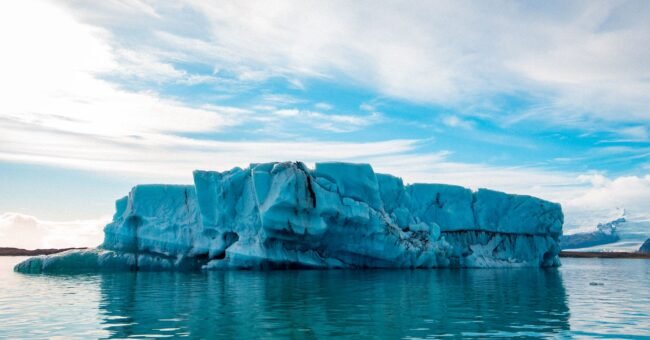
The consequences do not appear simply as slightly warmer weather everywhere. They include warmer oceans, glacier and ice loss, rising sea levels and changes in the frequency or intensity of different climate-related hazards.
Didn’t the world already cross 1.5°C in 2024?
Yes, if we look at the average temperature of that individual year.
The World Meteorological Organization estimated that the global average temperature in 2024 was around 1.55°C above the 1850–1900 average, with an uncertainty of ±0.13°C.
In 2025, the figure was around 1.43°C. It was still one of the hottest years ever recorded.
These figures are not contradictory.
Temperatures vary from one year to another because of natural variability, including phenomena such as El Niño and La Niña.
The temperature objective of the Paris Agreement refers to long-term global warming, rather than a single exceptionally hot year. [2]
An important distinction: one year above 1.5°C does not by itself mean that the long-term Paris temperature threshold has been crossed. The latest UNEP assessments nevertheless indicate that a sustained overshoot in the coming decades has become extremely difficult to avoid.
Some useful questions
Select a question to open the explanation.
📏 Why is 1.5°C so important? Does everything suddenly change at that point?
The 1.5°C level became an important scientific and political reference because research shows that keeping warming close to it would reduce many climate risks compared with higher levels.
It is not a cliff where every ecosystem suddenly changes at the same moment.
Risks generally increase progressively as the planet becomes warmer, although some natural systems can have critical thresholds of their own.
The practical message is that every additional fraction of a degree matters. The difference between 1.5°C and 2°C can have important consequences for ecosystems, human health, water, food production and coastal communities. [3]
❄️ If the planet is warming, why do cold winters still happen?
Weather describes atmospheric conditions at a particular place and time. Climate is studied through patterns and trends over much longer periods.
A cold winter, heavy snowfall or an unusually cool week can therefore still occur on a warming planet.
Understanding climate change requires looking at sufficiently long data series and multiple indicators, including ocean temperatures, glaciers, sea level and atmospheric greenhouse gas concentrations.
🌍 Does 1.5°C mean that every place becomes 1.5°C warmer?
No.
Global warming is not distributed evenly. Land areas generally warm faster than oceans, and some regions experience much larger temperature changes than the global average.
Local conditions also depend on altitude, proximity to the sea, vegetation, urbanisation and regional climate patterns.
This is one reason why a single global average cannot describe the experience of every community.
🌧️ Can every flood, wildfire or drought be attributed to climate change?
No.
Climate change can alter the probability or intensity of some extreme events, but individual disasters usually result from several interacting factors.
Scientists use attribution studies to estimate how human-caused warming may have changed the likelihood or severity of a particular event.
Land management, infrastructure, vegetation, settlement patterns, emergency preparedness and local weather conditions can all influence the consequences.
What changes between a world at 1.5°C and one at 2°C?
Half a degree may sound modest, but at the scale of the global climate system it can make an important difference.
IPCC assessments show increasing risks at 2°C compared with 1.5°C for heat extremes, ecosystems, water availability, sea level and many human activities. [3]
Warm-water coral reefs provide one striking example. Even at 1.5°C, projected losses are extremely high. At 2°C, the risk of almost complete loss becomes greater.
Sea-level rise is another example. Earlier IPCC comparisons estimated that limiting warming to 1.5°C rather than 2°C could mean around 10 centimetres less global mean sea-level rise by 2100 under comparable assumptions.
Ten centimetres may sound small, but for low-lying coasts, islands, storm surges and infrastructure near the sea, relatively small differences can affect exposure to risk.
Climate impacts therefore cannot be understood from temperature alone. We also need to ask who is exposed, what resources communities have and how quickly they are able to adapt.

The same warming does not create the same risk everywhere
Climate change is global, but its consequences are highly uneven.
The IPCC identifies regions and populations facing disproportionately high risks, including Arctic ecosystems, drylands, small island developing states and many of the world’s least developed countries. [3]
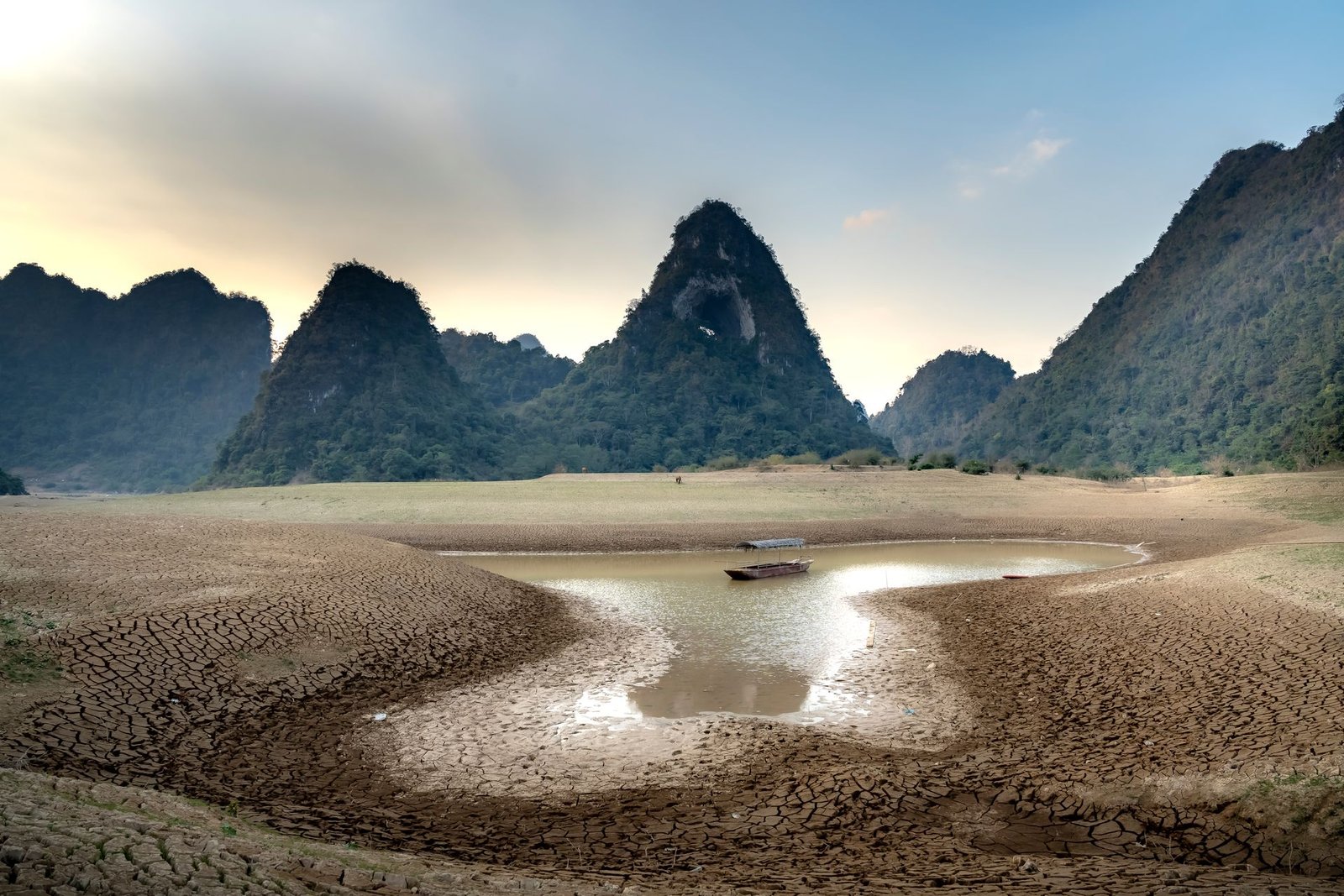
Some coastal communities face sea-level rise and saltwater intrusion. Other regions are particularly exposed to heat, water scarcity, changing rainfall or wildfire conditions.
Mountain communities may experience changes in glaciers, snow cover and seasonal water availability. Farming communities can face shifts in rainfall, temperatures, pests and growing seasons.
The effects also depend on income, infrastructure, healthcare, housing, access to water, political stability and the ability of institutions to prepare for hazards.
Climate risk is also a question of inequality
Countries and communities have contributed very different amounts to historical greenhouse gas emissions and have very different resources available for adaptation. Some of the populations facing severe climate risks have contributed relatively little to the problem. This is one reason why climate discussions also involve adaptation finance, technology, cooperation and questions of fairness.
What happens next? Three possible pathways
The 2026 UNEP report compares different climate pathways based on future policies and emissions.
They are not descriptions of a future that has already been decided. They show how different choices can lead to different outcomes.
| Scenario | Warming | What it means |
|---|---|---|
| Policies currently in place | About 2.8°C | A level that could be reached within this century, with further warming afterwards. |
| Full implementation of current national commitments | About 2.6°C | Assumes countries fully deliver their Nationally Determined Contributions and continue similar efforts. |
| Lowest possible overshoot pathway | Peak around 1.7–1.8°C | Requires very rapid emissions cuts and increasing carbon dioxide removal. In UNEP’s scenario, returning to 1.5°C or below by 2100 has roughly a 50% chance. |
Source: UNEP, Emissions Gap Report 2026. These are conditional scenarios rather than certain predictions. UNEP also examines a pathway of around 2.1°C if national commitments and additional net-zero targets are achieved. [1]
How quickly would emissions have to fall?
According to UNEP, following the lowest possible 1.5°C overshoot pathway would require global greenhouse gas emissions to fall, relative to 2025 levels, by approximately:
- 18% by 2030;
- 45% by 2035;
- 69% by 2040.
Full implementation of current national commitments would produce much smaller reductions: around 5–8% by 2030 and 11–15% by 2035 compared with 2025.
The difference between the reductions required and those currently expected is the emissions gap.
What does overshoot mean?
The term describes a temporary exceedance of a temperature threshold.
In the lowest overshoot pathway considered by UNEP, global warming would rise above 1.5°C, reach a maximum around the middle of the century and later decline.
Achieving this would require much lower emissions together with the removal and permanent storage of large quantities of carbon dioxide already present in the atmosphere.
Returning below 1.5°C would not automatically reverse everything that happened during the warmer period. Some ecosystem changes, glacier loss and sea-level consequences may be irreversible on human timescales.
Can we really remove enough CO₂ from the atmosphere?
Natural ecosystems already absorb carbon dioxide, and different technologies are being developed to capture and store it.
The challenge is the scale.
UNEP estimates that the lowest overshoot pathway would require the removal and permanent storage of roughly 320 billion tonnes of CO₂ over the course of this century. [1]
That creates technological, economic, environmental and social challenges.
Land, water, energy, monitoring, storage durability and cost all matter.
Carbon removal can therefore be part of climate strategies, but it cannot be treated as a guarantee that allows emissions to continue indefinitely at current levels.
What is already working?
The climate situation is serious, but that does not mean nothing has changed.
Renewable energy has expanded rapidly, and climate policies have already produced measurable emissions reductions in a range of countries and sectors.
According to the International Energy Agency, around 800 gigawatts of renewable electricity capacity were added worldwide in 2025, a new annual record.
Solar power represented around three quarters of the new renewable capacity.
The deployment of clean energy technologies has also reduced the amount of fossil fuel that would otherwise have been consumed.
At the same time, global energy-related CO₂ emissions still increased by around 0.4% in 2025.
This combination is important to understand: clean technologies are growing rapidly, but the overall transition is not yet happening fast enough to produce the reductions required globally. [4]

🌱 What can we learn from progress that has already happened?
Climate policies and technologies can produce measurable results. The challenge is no longer simply proving that alternatives exist. It is expanding effective solutions quickly enough, while considering their environmental and social consequences.
Mitigation and adaptation have to happen together
Climate discussions often use two important terms.
Mitigation
Actions that reduce greenhouse gas emissions or increase durable carbon removal.
Examples: replacing fossil fuels, increasing energy efficiency, reducing methane emissions and protecting ecosystems that store carbon.
Adaptation
Actions that reduce harm from climate changes that are already occurring or expected.
Examples: early-warning systems, protection from extreme heat, better water management, safer infrastructure and disaster-risk planning.
The two approaches solve different parts of the problem and need to progress together.
A city can protect residents from heat through shade, trees, better buildings and prepared health services. But limiting future warming still requires emissions reductions.
Similarly, renewable energy can reduce dependence on fossil fuels, while water management and better land planning can help communities cope with climate impacts that can no longer be completely avoided.
What does this mean for volunteering and meaningful travel?
For a website about volunteering and travel, climate change raises an additional question: how can people contribute without assuming that travelling somewhere to help is automatically beneficial?
Voluntouring.org publishes opportunities connected with organic farming, permaculturePermaculture is a design approach that applies ecological principles to land use, food production and human settlements, aiming to create resilient and resource-efficient systems., conservation, ecovillagesAn ecovillage is an intentional or traditional community that aims to integrate ecological, social, cultural and economic sustainability into everyday life., regenerative agricultureRegenerative agriculture is a broad set of farming approaches intended to restore or improve soil, ecosystems and ecological functions while producing food or other agricultural products., natural buildingNatural building is an approach to construction that emphasises locally available, minimally processed and lower-impact materials and techniques., environmental education and community projects.
These activities may contribute to environmental goals, but the label alone tells us very little about their actual climate impact.
A project described as ecological can still involve poor practices. A modest local initiative may sometimes produce meaningful long-term results.
The useful question is not simply whether an activity is called green, sustainable or regenerative, but what it actually does, who designed it, who benefits and what happens after the volunteers leave.
Travel itself also has an environmental impact
Transport is part of the environmental footprint of volunteering abroad.
For some journeys, trains, buses or shared transport may offer alternatives to flying. For intercontinental travel, choices can be much more limited.
Longer stays may reduce the frequency of international journeys and can allow volunteers to understand a project more deeply, but staying longer does not automatically make a trip sustainable.
Distance, mode of transport, accommodation, consumption and local resource use all matter.
This does not mean that people should never travel. It means that the environmental value of the activity and the environmental cost of reaching it are separate questions worth considering.
Environmental volunteering can help, but quality matters
Volunteers can support activities such as habitat restoration, ecological monitoring, environmental education, community gardens, regenerative agriculture, waste reduction and conservation work.
But good intentions alone do not guarantee useful results.
For example, planting trees can be valuable when species, location, land ownership, ecological objectives and long-term maintenance have been properly considered.
Planting inappropriate species or creating projects without a plan for survival and maintenance can achieve much less than expected.
The same principle applies to wildlife projects, agriculture, water management and natural building.
Skills and local knowledge matter.
🌿 Questions worth asking before joining an environmental project
- What environmental problem is the project trying to address?
- Who designed the activities and what local knowledge is involved?
- What happens to the work after volunteers leave?
- Are results monitored in any way?
- Are volunteers carrying out appropriate tasks for their skills?
- Could the activity replace work that should reasonably be performed by paid local workers?
- How does the project use water, energy, land and other local resources?
Climate adaptation is also about communities
Not every useful climate project involves renewable energy or carbon removal.
A community adapting to changing rainfall may need better water storage, healthier soils or restored wetlands.
A town exposed to extreme heat may benefit from shade, vegetation, public information and support for vulnerable residents.
A coastal community may be working on mangrove restoration, erosion control or monitoring local ecosystems.
Volunteers can sometimes support this work, but local priorities should come first.
Projects dealing with vulnerable communities, disasters or specialised environmental work may require professional expertise rather than untrained outside help.
What can we do concretely?
Climate action does not depend on a single perfect lifestyle.
People have different incomes, transport options, housing conditions, responsibilities and opportunities.
It is therefore useful to distinguish between personal choices, participation in useful projects and broader collective action.
🚆 Travel more thoughtfully
When practical, choosing trains, buses, cycling, walking or shared transport can reduce dependence on fossil fuels.
Combining several purposes into one longer trip may sometimes make more sense than taking repeated short journeys.
Travellers can also pay attention to water availability, waste systems and pressure on local infrastructure, particularly in destinations already experiencing drought, heat or ecosystem stress.
🌱 Support projects with clear local value
Look beyond words such as eco, green or sustainable.
Ask what the project is trying to achieve, what methods it uses, who is responsible for the work and how activities continue over time.
A volunteer placement can also be an opportunity to learn practical skills and understand how environmental problems are experienced locally.
🏡 Act in your own community too
Climate action does not necessarily require travelling abroad.
People can participate in habitat restoration, citizen science, community gardens, repair initiatives, local environmental groups, energy communities and projects that improve public spaces.
They can also ask local institutions how emissions, water, heat, biodiversity and climate risks are being managed.
Working locally avoids the assumption that meaningful action must always happen somewhere far away.
💻 Remember that useful volunteering can also happen remotely
Environmental organisations may also need help with translation, communication, research, mapping, data management, fundraising, web development or educational materials.
Not every contribution requires an international journey.
In some situations, specialist remote support can be more useful than an additional short-term visitor on site.
The role of governments and institutions
Personal behaviour and volunteering are only part of the picture.
Energy systems, public transport, urban planning, industrial rules, agriculture, building standards and infrastructure are shaped by policies and investments that individuals cannot change alone.
This is why climate action also involves public institutions, companies, researchers, civil society and democratic participation.
The Paris Agreement, adopted in 2015, aims to keep the increase in global average temperature well below 2°C and pursue efforts to limit it to 1.5°C. Countries periodically submit national climate commitments known as NDCs.
The central problem highlighted by UNEP is that current policies and commitments remain insufficient to deliver the reductions required for the lowest warming pathways. [1] [5]
As of the publication of this article, COP31 is scheduled to take place in Antalya, Türkiye, from 9 to 20 November 2026.
Its results cannot yet be known.
International conferences alone do not determine the climate’s future, but they are one of the places where national commitments, finance, adaptation and international cooperation are negotiated.
Is it too late to make a difference?
That depends on what we mean by “too late”.
Some global warming has already happened.
Some impacts are already visible, and some changes will continue for decades or longer. UNEP now considers an overshoot of 1.5°C effectively unavoidable.
But climate scenarios still show a very large difference between a world that limits peak warming to around 1.7–1.8°C and one that reaches 2.8°C or more.
Those differences affect human health, water, ecosystems, agriculture, infrastructure and the ability of future generations to adapt.
Every sustained reduction in emissions helps limit additional greenhouse gas accumulation.
Every well-designed adaptation measure can reduce some of the harm experienced by communities.
This is also why environmental volunteering should not be presented as a way to “save the planet” through isolated individual actions.
Its most useful role may be more practical and modest: supporting credible local work, learning from communities, sharing skills, contributing time and helping strengthen projects that continue after a volunteer has gone home.
Crossing 1.5°C tells us that considerable time has already been lost. It does not mean that all future outcomes are the same. The decisions made during the coming years will influence how much additional warming, damage and adaptation the world will face.
💬 A question for travellers and volunteers
Have you taken part in a volunteer or community project connected with conservation, regenerative agriculture, renewable energy, environmental education or climate adaptation? What made the project feel genuinely useful, and what would you advise other volunteers to check before joining?
Sources and further reading
Editorial check: 25 October 2026. This article distinguishes observed temperatures from conditional climate projections and political targets. Climate projections depend on future emissions, policies and other assumptions and can change as new information becomes available.
- UNEP, Emissions Gap Report 2026. Full report and 21 October 2026 press release. Warming scenarios, emissions reductions, climate policies and the lowest possible 1.5°C overshoot pathway.
- World Meteorological Organization. State of the Global Climate 2025 and WMO analysis of global temperature in 2024.
- Intergovernmental Panel on Climate Change. Climate Change 2023: Synthesis Report, Summary for Policymakers and Global Warming of 1.5°C, Chapter 3. Climate risks, differences between warming levels, adaptation and overshoot impacts.
- International Energy Agency. Global Energy Review 2026, Key Findings. Renewable energy deployment, energy demand and energy-related CO₂ emissions in 2025.
- UN Climate Change. The Paris Agreement and COP31. International climate goals and information about the November 2026 conference.
Before using these figures for operational decisions or repeating projections in the future, check for updates from the organisations responsible. National commitments, climate policies and international negotiations can change after the editorial review date.