When a disaster is unfolding, the wish to help can be immediate. Useful help, however, is rarely improvised. The flash floods that struck northern Nepal on 26 August 2026 have caused devastating loss, damaged homes and essential infrastructure, and cut off communities. The situation is still changing. For people outside Nepal, the most responsible first response is to support trusted, coordinated organisations and to avoid adding pressure to roads, accommodation, health services and local responders.
This article explains how to help Nepal after the floods from home, when an international volunteer may genuinely be useful, and why recovery must be led by affected communities. It is not an invitation to visit a disaster area. It is a framework for solidarity that protects dignity, safety and local decision-making.
Situation note, verified 28 August 2026
The flood response is active and assessments are continuing. On 27 August, IFRC estimated that around 93,000 people might have been affected, while UNICEF reported that at least 17,000 children needed humanitarian assistance. These figures are preliminary and may change. Check current updates before donating, travelling or sharing statistics.
Check verified response updates
What happened in Nepal
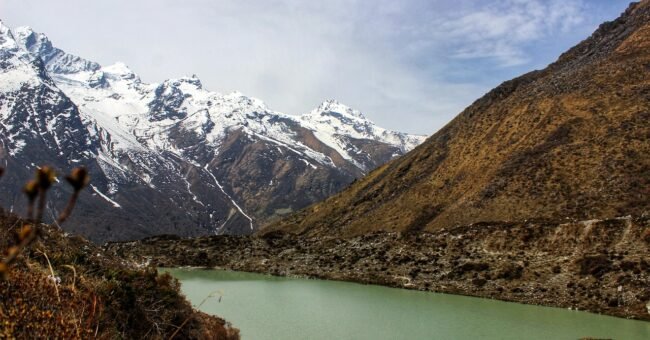
On the morning of 26 August, a sudden surge of water, mud and debris travelled down the Bhote Koshi river system from the border area with Xizang or Tibet into Rasuwa district. Nepal Red Cross reported major impacts in Timure, Rasuwagadhi and Syabrubesi, while the broader response also covers communities along the corridor through Rasuwa, Nuwakot and Dhading. Roads and bridges were destroyed or damaged, communications and power were interrupted, and some settlements became difficult to reach. Health facilities, schools, water systems and livelihoods were also affected.
Early reports have used different descriptions for the trigger, including a glacial lake outburst, an ice and rock avalanche, and another high-altitude outburst mechanism. The exact sequence is still being investigated. It is therefore responsible to distinguish between what is visible, the destructive flood and debris flow, and what science has not yet conclusively established. Climate change is increasing several long-term risks in the Hindu Kush Himalaya, but attributing one rapidly evolving event requires careful analysis.

Why some communities face greater risk
A hazard becomes a disaster through exposure and vulnerability. In northern Nepal, steep slopes, narrow valleys and fast-moving rivers can turn a sudden upstream event into a destructive flood with little warning. Remote terrain, damaged roads and limited alternative routes can delay rescue and assistance. Families may lose a home, land, livestock, tools, documents and income at the same time.
Risk is not shared equally. Children, older people, pregnant women, people with disabilities, people with chronic illness, migrants, workers far from home, and households already living on low or unstable incomes may face additional barriers to evacuation and support. Floods can also increase risks of family separation, unsafe water, disease, interrupted education, exploitation and gender-based violence. A responsible response identifies these barriers without treating people only as victims.
Nepalese communities are also first responders. Local residents, municipal authorities, health workers, security services, community groups and Nepal Red Cross branches bring language, relationships, local knowledge and access that an international visitor cannot quickly acquire. International assistance should reinforce this capacity, not displace it.

How humanitarian response works after a flood
Humanitarian response is a coordinated process led by national and local authorities, with support from organisations that assess needs, share information and work to common standards. The phases below overlap, and priorities can differ from one community to another.
Immediate emergency response
Priorities include search and rescue by trained teams, urgent health care, safe water, emergency shelter, food, sanitation, protection, family tracing, access restoration and rapid assessments. In this phase, extra unrequested people and goods can obstruct operations.
Early recovery
As access improves, assistance may include cash, temporary learning spaces, repairs to water and health systems, debris management, replacement documents, livelihood support, mental health and psychosocial care, and safe temporary housing. Listening to affected people becomes even more important as needs diversify.
Long-term recovery and resilience
Recovery can take years. It includes safer rebuilding, restoring schools and clinics, supporting local economies, improving early warning systems, reducing environmental risk, and ensuring that marginalised groups help shape decisions. A project is not successful merely because a foreign team has finished its visit.
IFRC’s 24-month emergency appeal reflects this continuum. It supports Nepal Red Cross work in shelter, cash assistance, health, water and sanitation, relief items, psychosocial support and restoring family links. WHO is supporting the national health response, while UNICEF is working across health, nutrition, water and sanitation, education, child protection and social protection.
What you can do from home
Donate money through a verified channel
For most people abroad, a financial contribution is more useful than a plane ticket or a box of donated items. Flexible funds let responders purchase what assessments identify, adapt as needs change and, where markets are functioning, buy locally. Cash and voucher assistance can also give affected households greater choice and dignity while supporting local businesses.
At the time of publication, the IFRC Nepal Flash Floods 2026 appeal, the official Nepal Red Cross Society donation portal and the UNICEF Nepal Floods 2026 Flash Appeal provide direct, accountable routes. Recheck that an appeal is open and correctly designated before paying.
Before you donate
- Start from the organisation’s official website, not a copied payment link in a post.
- Look for legal registration, recent reporting, clear contact information, safeguarding policies and an explanation of how funds are used.
- Prefer organisations working through Nepalese partners, branches and community structures.
- Give unrestricted or flexible funding when you trust the organisation. Needs change faster than highly specific donations can.
- Keep the receipt, and never send money or identity documents to an unverified individual.
Do not send unsolicited goods
Clothing, food, medicines and equipment sent without a formal request can create customs, transport, storage, sorting and disposal costs. Medicines require regulated supply chains and appropriate handling. Donate goods only when a recognised responding organisation publishes a precise request and provides an approved logistics route. Otherwise, donate funds.
Share accurate information, not urgency for its own sake
Use dated updates from Nepalese authorities, Nepal Red Cross, IFRC, UN agencies and ReliefWeb. Check when a figure was published, because early casualty and needs estimates often change. Do not repost graphic images, names of missing people, private phone numbers or identifiable images of children without a clear protection purpose and consent. Correct misinformation calmly and link to the original source.
Offer useful skills remotely
Translation, accessible communications, data cleaning, mapping, research, fundraising support and digital administration can sometimes be done remotely, but only through a defined assignment. The UN Volunteers Online Volunteering service publishes screened, task-based opportunities from eligible organisations. Apply to an advertised role rather than contacting overstretched field teams with a general offer.
Explore verified UNV opportunities
Support climate resilience without oversimplifying the disaster
Climate action matters, but responsible advocacy should not claim more certainty than the evidence allows. Support investments in glacial monitoring, flood forecasting, community warning systems, safe infrastructure, watershed protection and locally designed adaptation. UNDP and the Government of Nepal are already working to reduce glacial flood risk through monitoring, early warning, nature-based measures and community preparedness. These efforts need attention long after emergency coverage fades.
What you can do on the ground
Important: do not self-deploy
Do not travel to Rasuwa or other affected districts to look for a way to help. Damaged routes, limited accommodation, unstable terrain and pressure on essential services make uninvited arrival dangerous for you and burdensome for responders. Go only if a recognised organisation recruits you for a specific role and manages your deployment.
International volunteers can be useful when they fill a verified gap that cannot be met locally or remotely. This may include accredited emergency medicine, water and sanitation engineering, structural engineering, certified search and rescue, logistics, humanitarian information management, geospatial analysis, cash programming, protection, or specialised mental health support. Credentials must be recognised, and technical skill alone is not enough.
A responsible deployment should include a written role, selection based on competence, references, safeguarding checks where relevant, insurance, visas and permits, security training, local supervision, a code of conduct, suitable accommodation, health arrangements, data protection and a clear exit or handover plan. The host should explain how the role was requested by local partners and how it complements Nepalese expertise.
Questions to ask before accepting a field role
- Who identified this need, and were affected communities or local organisations involved?
- Could a qualified Nepalese professional perform the role more effectively if funding were available?
- What qualifications, language ability and disaster experience are required?
- Who provides supervision, safety management, insurance and psychological support?
- What safeguarding, complaints and data protection systems are in place?
- Will my presence use housing, transport, fuel or medical capacity needed by local people?
- How will knowledge, responsibility and resources be handed back to local partners?
- Can the same contribution be made remotely or by funding a local position?
If an organisation cannot answer these questions, do not deploy with it. A legitimate emergency response does not use urgency to bypass safeguarding or professional standards.
How to avoid voluntourism during a crisis
A disaster zone is not a place to seek adventure, access or a transformative personal experience. Voluntourism becomes harmful when the volunteer’s journey is prioritised over community needs, when unqualified people perform skilled work, or when suffering is used to market trips.
Warning signs include programmes that promise immediate access without assessing skills, charge large fees without transparent budgets, encourage disaster sightseeing, arrange unsupervised contact with children, ask volunteers to distribute aid independently, or focus their publicity on visiting foreigners rather than local leadership. Be equally cautious of requests to film survivors, fly drones, collect sensitive personal data or publish before-and-after stories without meaningful consent.
A responsible volunteering test
The organisation should be able to show that the role is needed, the volunteer is qualified, local people retain decision-making power, risks are managed, safeguarding applies, and the work remains useful after the volunteer leaves.
Photography and storytelling deserve particular care. Ask whether an image serves a clear public-interest or accountability purpose, whether the person understands where it will appear, and whether saying no is genuinely possible. Avoid images that expose grief, injury, children, medical information or identifiable locations that could create risk. Dignity is not a communications accessory. It is part of humanitarian quality.
How to support Nepal after the emergency
Public attention often falls just as recovery becomes complex. Families may still need safe housing, income, health care, education, legal documents and psychosocial support months after the flood. Roads, water systems, schools and clinics take time to rebuild. Flexible monthly donations, even small ones, can help organisations plan beyond the first response.
Long-term solidarity can support locally led reconstruction, grants for small businesses and farmers, disability-inclusive services, school continuity, community health, safer water systems, risk mapping, early warnings and training for local responders. It should also fund community participation and feedback, so that people affected by the disaster can challenge decisions and shape what recovery means.
Travel may eventually support livelihoods, but only when authorities and communities say that areas are safe and ready. Future visitors should use locally owned accommodation and guides, respect route closures, avoid disaster sites, and never treat damaged communities as attractions. Recovery is not a backdrop for content.
A responsible way forward
The most helpful response to Nepal’s floods may feel less dramatic than boarding a plane. It may be a verified donation, careful information sharing, a remote professional assignment, or steady support for local recovery and climate resilience. These choices respect the people already responding and reduce the chance of causing additional harm.
Help should be measured by whether it expands the choices, safety and leadership of affected communities. In the immediate emergency, support coordination. During recovery, stay engaged. If a genuine field role emerges, bring the exact skills requested and work under local and professional leadership. Solidarity is not about arriving first. It is about being useful, accountable and willing to remain after attention moves elsewhere.
International sources and further reading
- Current response: ReliefWeb: Nepal Flash Floods, August 2026; IFRC: Nepal Flash Floods 2026; Nepal Red Cross Society situation report, 27 August 2026; UNICEF Nepal Floods 2026 Flash Appeal; WHO Nepal statement on the Rasuwa floods.
- Responsible assistance: IFRC guidance on cash and voucher assistance; UN Volunteers Online Volunteering; Core Humanitarian Standard 2024 resources; Sphere humanitarian standards.
- Recovery and climate resilience: UNDP and Green Climate Fund support for glacial flood risk reduction in Nepal; UNDP: Where every minute matters; ICIMOD research on changing glaciers in the Hindu Kush Himalaya.
Editorial note: Operational information and appeal status can change quickly. This article was fact-checked on 28 August 2026. Review the linked sources before publication and update time-sensitive figures if the article is published later.