


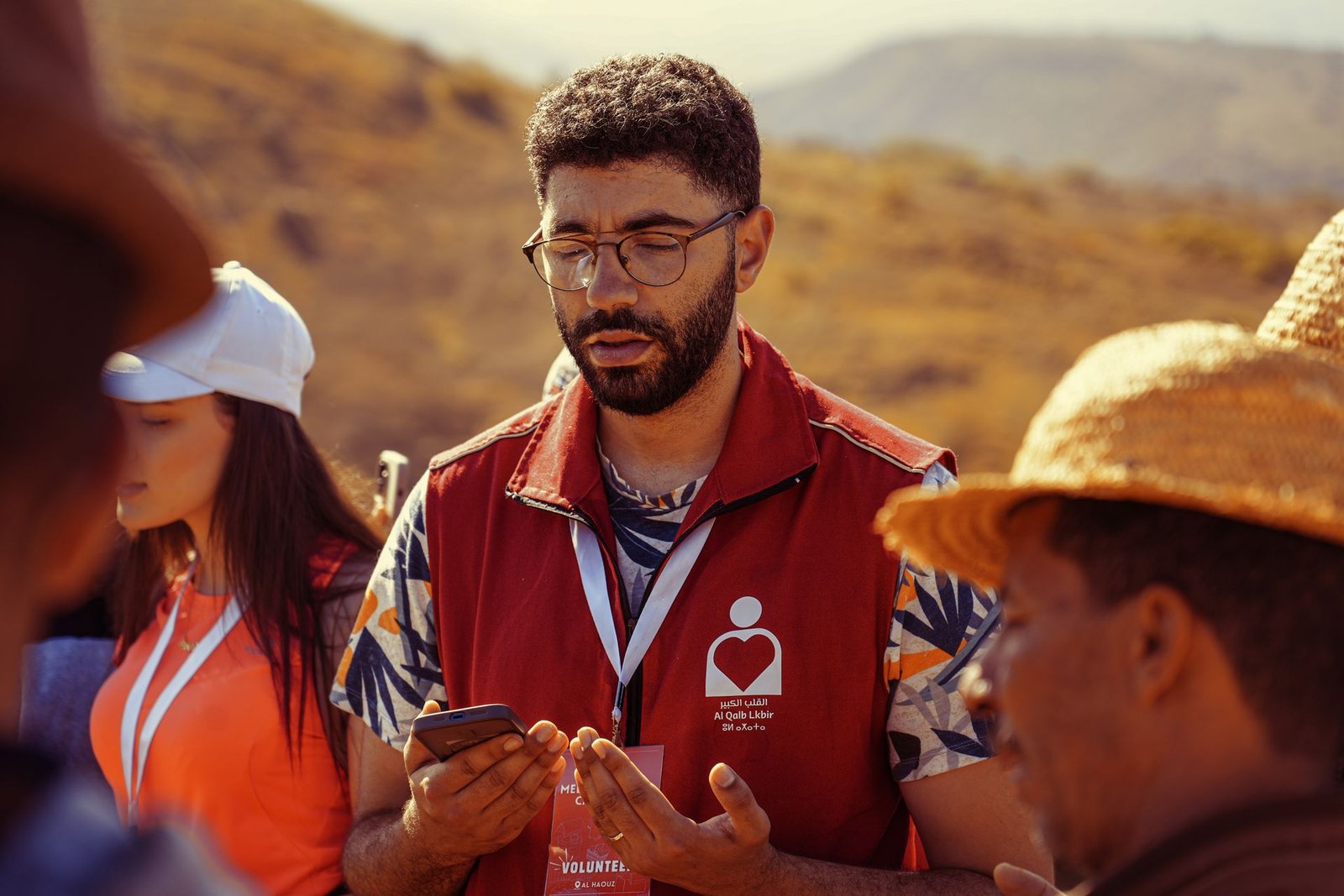
Volunteering abroad can be meaningful, educational and genuinely useful. It can bring people together, support community projects and create opportunities to exchange knowledge, skills and experiences.
But good intentions alone do not guarantee a positive impact.
Responsible volunteering abroad requires some research before you travel. A project may look inspiring online while still having unclear working conditions, weak supervision, questionable safeguarding practices or activities that primarily benefit visitors rather than the people, animals or communities the project claims to support.
This guide is not intended to tell travellers which organisations are “good” or “bad”. Instead, it offers practical questions that can help you evaluate a volunteering opportunity for yourself.
1. Start by asking who actually benefits 🤝
A useful first question is simple: why does this volunteer role exist?
Ideally, the activity responds to a real need identified by the organisation or community rather than being created mainly because international visitors want a particular experience.
Before committing, try to understand:
- who identified the need for volunteers;
- what problem the volunteer role is supposed to help address;
- whether local people participate in planning or managing the project;
- whether the role requires particular skills or experience;
- what happens when international volunteers are not present;
- how the organisation evaluates whether the work is useful.
The Global Volunteering Standard, developed by the International Forum for Volunteering in Development, provides a useful reference. Among its principles is the idea that volunteering programmes should respond to community needs and be developed with the participation of the communities involved.
2. Independent volunteering is not automatically more ethical 🧭
Travelling independently can have many advantages. You may communicate directly with local organisations, avoid unnecessary intermediaries and learn much more about the place where you are staying.
But removing an agency or platform from the process does not automatically make a project responsible.
A small local organisation can still have poor working conditions, weak safeguarding or unclear finances. At the same time, an organised volunteering programme can sometimes provide useful screening, preparation, training, insurance or support.
The important question is therefore not simply whether an intermediary exists, but what value each organisation involved actually provides.
The UK government’s current guidance for overseas volunteers recommends checking an organisation’s registration where applicable, its history and track record, its local partnerships and the support available to volunteers before agreeing to a placement.
3. Check whether volunteers are replacing paid work 💼
One important question is whether an unpaid volunteer is supporting a project or filling a role that would normally require an employee.
This distinction is not always simple, especially because employment and volunteering rules differ between countries. However, some situations deserve additional questions.
Be cautious when an unpaid volunteer is expected to:
- cover essential commercial shifts;
- take full responsibility for a business operation;
- work very long schedules with few days off;
- replace permanent local staff;
- perform skilled professional work without appropriate qualifications;
- manage risky activities without supervision.
Voluntouring.org’s current Safety and legality guide uses the same principle: unpaid exchanges should not disguise regular employment or replace essential paid staff.
Read our safety and legality guide
4. Understand fees and where the money goes 💰
A volunteering fee is not automatically evidence of exploitation.
Some programmes have genuine costs. These may include accommodation, meals, transportation, training, insurance, staff coordination, permits, equipment or direct project expenses.
What matters is transparency.
Questions to ask about a participation fee
- Is the fee mandatory?
- What exactly does it include?
- Who receives the money?
- How much supports the project itself?
- Are accommodation and meals included?
- Are there additional payments after arrival?
- Is the refund or cancellation policy clear?
A high price does not prove that a project has a greater impact, just as a free opportunity does not automatically mean that everything is well managed.
5. Be particularly careful with volunteering involving children 🛡️
Projects involving children require much stronger safeguards than ordinary travel or work exchange arrangements.
Easy access to children should never be marketed as a benefit of volunteering.
Organisations working responsibly with children should be able to explain their safeguarding procedures, volunteer screening, supervision, training, privacy rules and reporting mechanisms.
Residential childcare and orphanage volunteering require particular caution.
The Transforming Children’s Care Collaborative and Better Care Network have documented how orphanage tourism and volunteering can contribute to incentives that keep children in institutional care and, in some contexts, can intersect with exploitation and orphanage trafficking.
Short-term volunteers can also create repeated attachment and separation for children, while poorly controlled access increases safeguarding risks.
Voluntouring.org has separate resources dedicated to this subject:
Explore safer ways to volunteer with children
You can also read our guide to the orphanage business, orphanage tourism and common red flags.
6. Animal volunteering needs its own welfare checks 🐾
Animal rescue, wildlife rehabilitation and conservation projects can also look very different from their marketing.
The word sanctuary is not a guarantee.
When wildlife is involved, ask what animals are expected to do for visitors and volunteers. Activities based around touching, holding, riding, washing, posing for photographs or other close interactions deserve careful scrutiny.
ABTA’s animal-welfare guidance identifies several unacceptable wildlife tourism practices, including situations where captive wild animals are used for physical interaction or photographs without being able to move away.
A stronger rescue or sanctuary project should place animal welfare before entertainment. Volunteer activities may instead involve food preparation, habitat restoration, maintenance, cleaning, research, enrichment, conservation, administration or education.
Voluntouring.org maintains a more detailed guide explaining how to recognise a genuine animal sanctuary and research wildlife projects.
Read the animal sanctuary ethics guide
7. Look for real safeguarding and supervision 🔎
Safeguarding is not relevant only to children.
Projects may involve vulnerable adults, people with disabilities, displaced communities, survivors of violence or other situations where volunteers need clear professional boundaries.
Good supervision also protects volunteers themselves.
Depending on the activities, a stronger organisation should be able to explain:
- who supervises volunteers;
- what training is provided;
- what volunteers are and are not allowed to do;
- how concerns can be reported;
- what happens if a volunteer behaves inappropriately;
- how personal information and photographs are managed;
- what health and safety procedures apply.
The Global Volunteering Standard treats safeguarding and duty of care as fundamental parts of responsible volunteering practice.
8. Match the role to your actual skills 🧰
Wanting to help does not automatically make somebody qualified to carry out every task.
A volunteer should be particularly cautious when asked to perform work that would normally require professional training, certification or substantial experience.
This can include medical care, psychological support, structural construction, teaching without supervision, wildlife handling and other specialised activities.
A useful project should be able to explain why your skills are appropriate for the role.
Sometimes the most useful contribution is less dramatic than the one a traveller originally imagined. Administration, translation, communications, maintenance, grant research, data work, food preparation or logistical support can allow trained local professionals to concentrate on the work only they are qualified to perform.
9. Check visas, insurance and local rules 🛂
An organisation describing an activity as volunteering does not automatically determine how immigration or labour authorities will classify it.
Rules depend on the destination, nationality, activities, length of stay and sometimes the benefits received in exchange for the work.
Accommodation, food, pocket money or other benefits can matter in some immigration systems.
Before travelling, check official government information rather than relying only on what a host, organisation or booking platform tells you.
Insurance deserves the same attention. A normal travel insurance policy may not cover every kind of volunteering, manual work, animal activity or professional task.
Read the work exchange and volunteer visa guide
10. Understand the everyday conditions before arriving 🏡
An inspiring mission statement will not tell you what daily life at the project is actually like.
Ask practical questions before committing:
- How many hours are expected each week?
- How many days off are there?
- What are the specific tasks?
- Who will supervise you?
- Where will you sleep?
- Are meals provided?
- Are there additional costs?
- How far is the project from transport, medical care and shops?
- What safety equipment is provided for practical work?
- What happens if you decide to leave early?
Try to receive the important conditions in writing rather than depending on vague conversations or assumptions.
11. Research beyond social media and reviews 🔍
Beautiful photographs and enthusiastic testimonials are useful pieces of information, but they should not be your entire research process.
When possible, check several sources.
- Read the organisation’s own website carefully.
- Check its legal or charitable status where relevant and publicly available.
- Look at how long it has been operating.
- Search for independent information rather than only testimonials selected by the organisation.
- Check whether staff members and partner organisations can be identified.
- Ask specific questions about tasks, fees and supervision.
- Request a video call if important details remain unclear.
- Look for recent information because management and conditions can change.
Reviews also need context. One traveller can have an excellent experience while another person performs a completely different role. A collection of positive reviews does not replace questions about safeguarding, animal welfare, local employment or legal compliance.
12. Know when not to volunteer 🚦
Sometimes the responsible decision is not to take a particular volunteer placement.
If an organisation cannot explain what you will be doing, how you will be supervised or where your fee goes, you can choose another project.
If a child-focused organisation offers inappropriate direct access, you can support family-based or community services instead.
If you do not have the qualifications required for a specialised role, you can contribute in another way.
If an animal project seems designed mainly around visitor interaction, you can support a different welfare or conservation initiative.
And sometimes a local organisation may benefit more from funding local expertise than from receiving an international visitor.
This does not make volunteering pointless. It simply means that the experience of the volunteer should not automatically be the centre of the project.
Questions to ask before choosing a volunteer project ✅
Before confirming a placement, consider asking the host or organisation:
- Why do you need international volunteers?
- Who designed the volunteer role?
- What will I actually do on a normal day?
- What skills or qualifications are required?
- Who supervises volunteers?
- How many hours and days are expected?
- Does this role replace work normally done by paid staff?
- What does any participation fee cover?
- What safeguarding or welfare policies apply?
- What insurance do I need?
- What visa or immigration status is required?
- Can I speak with someone who has volunteered recently?
You do not necessarily need a perfect answer to every question. Different projects have different levels of administration and resources. What matters is whether the answers are clear, credible and proportionate to the risks involved.
What responsible volunteering means to Voluntouring.org 🌍
Voluntouring.org was created to make volunteering and cultural exchange opportunities easier to discover without requiring travellers to pay a subscription simply to browse listings.
Over time, the project has also developed a stronger focus on transparency, responsible travel, safeguarding and helping travellers ask better questions before making a commitment.
Publishing an opportunity can provide a starting point for research, but travellers should still check current conditions directly with the host or organisation and make their own informed decision.
You can read more about the ideas behind the project on our Voluntouring philosophy page.
If you discover a concrete concern involving a project published on Voluntouring.org, you can also use our report a listing or unsafe content page.
Further reading and sources 🔎
On Voluntouring.org
- Voluntouring philosophy: free and responsible volunteering
- Safety and legality
- Volunteering with children: safer alternatives
- Orphanage business and orphanage tourism: red flags
- How to spot a real animal sanctuary and avoid misleading rescue projects
- Ethical elephant volunteering: programs around the world
- Work exchange and volunteer visa guide
- Report a listing or unsafe content
External references
- International Forum for Volunteering in Development: Global Volunteering Standard
- UK Government: volunteering and adventure travel guidance
- Transforming Children’s Care Collaborative / Better Care Network: volunteering, voluntourism, tourism and trafficking in orphanages
- ABTA: advice for travellers on activities involving animals
- UNICEF: child safeguarding guidance
Volunteer projects, organisations, laws and welfare practices can change over time. Use the resources above as starting points and verify current information directly before travelling, paying a fee or accepting a placement.