


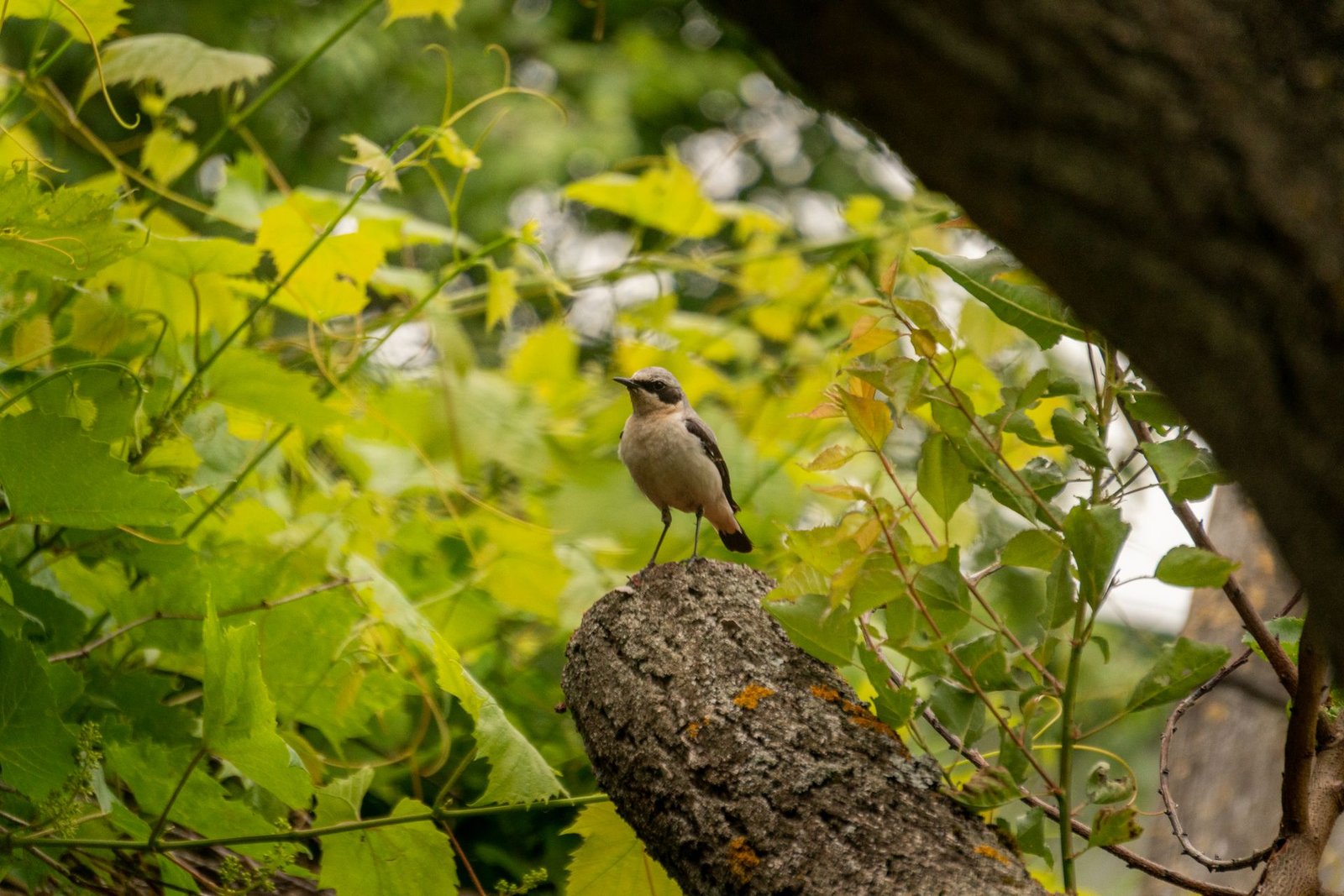
Spend seven months living on a tiny Welsh island, counting migrating birds, monitoring seabirds and helping run a wildlife observatory
Bardsey Bird & Field Observatory is recruiting two paid assistants for its 2027 season. The roles offer £396.30 gross per week for 30 hours, with basic accommodation provided and certain boat transfers covered. But this isn’t an entry-level wildlife experience: applicants need strong bird identification skills, fieldwork experience, and practical maintenance skills. Applications close on 7 December 2026.
Information reviewed: 14 November 2026. This article concerns two advertised seasonal positions for 2027. Recruitment remains advertised on the observatory’s official website, but applicants should check whether both vacancies are still available.
On a small island off the coast of North Wales, seabirds return to their nesting burrows, migrating birds stop during their long journeys, and a handful of people share their home with thousands of animals. This is Bardsey Island, known in Welsh as Ynys Enlli, a remote island at the western end of the Llŷn Peninsula. In September 2026, BBC Wales reported how two journalists, Gwyndaf Hughes and Georgina Rannard, were preparing to leave their usual lives behind to take over the island’s farming responsibilities. They would join a permanent community of about 12 people, along with around 200 sheep and 30,000 breeding pairs of Manx shearwaters.
Another opportunity has appeared on the same island, though it involves a different kind of work. Bardsey Bird & Field Observatory is looking for two Lodge & Bird Observatory Assistants to join its team for the 2027 season. Unlike a short volunteer placement, these are paid seasonal positions that combine wildlife monitoring, visitor engagement, and the practical, day-to-day work of maintaining an observatory in an isolated environment.
Two paid positions for the 2027 season
The observatory is advertising two assistant roles, expected to run from approximately 20 March to 5 November 2027. Gross weekly pay is stated as £396.30 for 30 hours, with accommodation provided. The application deadline is 7 December 2026 at 12:00 noon. Candidates must meet demanding ornithological and practical requirements.
What makes Bardsey Island so special?
Bardsey is a small island approximately two miles off the Llŷn Peninsula in Gwynedd, North Wales. Despite its size, it has a remarkable natural and cultural heritage. Its landscape includes steep hillsides, coastal grasslands, rocky shores and a distinctive lighthouse. The island is an important breeding ground for seabirds and lies on migration routes used by birds travelling between different parts of the world. The Bardsey Island Trust helps protect its wildlife, historic buildings and Welsh-speaking island community.
In 2023, Ynys Enlli became Europe’s first International Dark Sky Sanctuary, recognising its exceptionally dark night skies. For someone interested in ornithology and conservation, however, the island’s most significant feature may be its birdlife. The Bardsey Bird & Field Observatory was established in 1953 and has monitored bird migration and the island’s wildlife for more than seven decades. Among its best-known inhabitants are the Manx shearwaters, seabirds that spend much of their lives at sea and return to their nesting burrows during the breeding season.

What will the two observatory assistants do?
The positions combine scientific fieldwork, wildlife education and general observatory responsibilities. Successful candidates will contribute to long-term monitoring projects, helping the observatory maintain records of bird migration, breeding populations, and other wildlife. The main duties include:
- Conducting daily bird migration censuses and breeding bird surveys.
- Monitoring seabirds and breeding landbirds.
- Taking part in the third year of a three-year Manx shearwater census, including work on the island’s steep eastern slopes.
- Operating moth traps, identifying species and recording results.
- Assisting with bird ringing operations and data entry.
- Leading guided wildlife walks and giving introductory talks to visitors.
- Writing daily updates for the observatory’s wildlife blog and contributing to its annual report.
- Maintaining observatory buildings, equipment, grounds and visitor facilities.
There is also an important educational dimension to the work. Assistants help visitors understand the island’s wildlife, including during the observatory’s popular Meet the Manxies guided walks. The job therefore involves more than identifying birds. It requires clear communication of observations, accurate record-keeping, and confident interaction with guests and volunteers.
What about maintenance and physical work?
The observatory makes it clear that practical maintenance is a significant part of the position. Assistants may need to repair bird-monitoring equipment, maintain net rides, help construct hides, service compost toilets, mow grass, paint buildings and clean visitor accommodation. Some tasks are physically demanding. The announcement mentions lifting 19 kg gas bottles and carrying 25-litre fuel containers, as well as dealing with blocked drains and maintaining generators. The job also includes weekly lodge cleaning, particularly when guests arrive or leave.
These are genuine working positions, not opportunities to spend the entire season birdwatching for leisure.
Who can apply for these jobs?
The observatory seeks candidates with substantial practical knowledge of birds and wildlife monitoring. Excellent bird identification skills, both by sight and sound, are essential. Applicants should also have experience with bird census techniques and be able to identify rare or scarce species. Other important requirements include:
- Experience conducting bird surveys and recording field observations.
- Good physical fitness and confidence working on steep slopes.
- Practical maintenance and habitat management skills.
- A brush cutter certificate (required).
- Good communication skills for interacting with visitors and volunteers.
- Reliability, independence and the ability to work as part of a small team.
Climbing experience is preferred, while First Aid and ATV certificates are desirable. Previous work at a bird observatory, seabird monitoring experience and a British Trust for Ornithology (BTO) ringing permit are all considered advantages, but the ringing permit is not listed as compulsory. For applicants with fieldwork experience who want to build a career in ornithology or conservation, Bardsey could offer valuable professional experience. For beginners with little bird identification knowledge or no relevant practical skills, the position is unlikely to be suitable.
How much do the Bardsey observatory jobs pay?
The official job announcement states a gross weekly salary of £396.30 for 30 hours of work. It describes the pay as based on the UK minimum wage, with an accommodation offset applied. The announcement also gives an annualised equivalent of £20,607.60, described as pro rata. This figure should not be interpreted as the amount an assistant will earn during the seasonal contract. Actual earnings will depend on the agreed contract period, payroll arrangements and applicable deductions.
What does the accommodation offset mean?
Under UK minimum wage rules, employer-provided accommodation can affect how minimum wage compliance is calculated. The accommodation offset is a statutory calculation mechanism. It does not necessarily mean that rent is automatically deducted from an employee’s wages. The official UK accommodation offset for the period beginning April 2026 is £11.10 per day, or £77.70 per week. The applicable rules and rates can change. Because the Bardsey advertisement does not provide a detailed pay calculation, applicants should ask the employer to explain how the stated weekly gross salary relates to accommodation and what they can expect to receive after any applicable deductions.
They should also confirm how paid leave, additional working hours and any changes to statutory wage rates during the 2027 contract will be handled. More information is available through official UK government guidance on accommodation and minimum wage rules.
Is accommodation included?
Yes. Basic sleeping accommodation is provided as part of the position. According to the announcement, assistants may stay in a simple annex near the southern end of the island, approximately three-quarters of a mile from the lodge, or in a small room closer to the observatory. Both arrangements include access to the observatory’s lodge facilities. These are practical living arrangements, not private holiday accommodation. Cooking facilities are shared with other staff and guests, and all residents are expected to keep communal spaces clean and respect others using them.
Are meals included?
The advertisement does not state that meals or food allowances are provided. Applicants should therefore ask how groceries are normally organised, whether supplies can be purchased on the island and what arrangements exist for transporting food from the mainland. The island has a small community and limited services, so food planning is an important practical consideration for anyone spending several months there. Accommodation is confirmed, but free meals should not be assumed.
Does the employer cover transport?
The observatory states that it will cover boat fares and luggage transport between the mainland and Bardsey Island at the beginning and end of the season, as well as for one holiday period. Statutory holiday entitlement is also included. However, the announcement does not say that travel from an applicant’s home to North Wales, international flights or all personal journeys will be covered. Applicants should clarify these costs before accepting the position.
What is life on Bardsey Island really like?
Living on Bardsey means adapting to a small community, limited services and weather conditions that can disrupt transport between the island and the mainland. The landscape is spectacular, but the environment can be challenging. The observatory’s work continues through changing weather, while essential maintenance and wildlife monitoring must be carried out reliably. There are no typical city conveniences, and opportunities to leave the island depend partly on boat availability and weather conditions.
Living and working with a small group of colleagues also requires cooperation, patience and respect for shared spaces. In return, residents can experience an unusual combination of coastal wildlife, island community life and exceptionally dark night skies. The island’s importance extends well beyond tourism. It supports breeding seabirds, marine mammals, rare habitats and long-running scientific monitoring programmes. This makes the observatory roles especially interesting for people who value conservation work and are comfortable living remotely.
When does the 2027 contract begin?
The observatory gives the following provisional dates:
- Starting date: approximately 20 March 2027, to be confirmed.
- End date: approximately 5 November 2027.
- Working hours: 30 paid hours per week.
- Final week: paid work on the mainland after assistants leave the island with the final guests of the season.
This means the appointment lasts for most of the spring, summer and autumn, rather than just a few weeks. The exact start date and final employment arrangements should be confirmed directly with the observatory.
Can applicants from outside the UK apply?
The official job advertisement does not specify a nationality restriction, but applicants must have the legal right to work in the United Kingdom. There is no mention of employer-sponsored visas in the announcement. For European applicants, including Italian citizens, this distinction is particularly important. An EU passport alone generally does not grant permission to take up paid employment in the UK.
Applicants without UK work rights should clarify their eligibility with the employer and consult the official UK right-to-work guidance before making plans. The listing also does not establish a formal English-language requirement. Nevertheless, the duties involve speaking with visitors, leading walks, writing reports and maintaining records, so confident communication in English would be necessary in practice.The island has a Welsh-speaking community, but the announcement does not list Welsh language skills as compulsory.
How to apply before 7 December 2026
Applications are handled directly by Bardsey Bird & Field Observatory. Interested candidates must complete the official application form linked from the 2027 job announcement and email it together with their CV to Steve Stansfield, the observatory’s Director of Operations.
The application deadline is 12:00 noon on 7 December 2026.
According to the announcement, initial interviews will take place online through Microsoft Teams in December. Successful candidates will then be invited to further in-person interviews in North Norfolk. Applicants travelling from outside the area should clarify whether any interview travel expenses will be covered, as these are not specified. Before submitting, review the full job description and ensure your application clearly demonstrates the required bird identification experience, census skills, practical abilities, and relevant certifications.
Could Bardsey Island be your workplace in 2027?
There are not many jobs that combine daily wildlife observation, research, visitor education and life on a small island. The two assistant positions at Bardsey offer precisely that combination, but with responsibilities that go well beyond the attractive surroundings. The observatory needs skilled people who can monitor birds accurately, maintain essential facilities, work in difficult terrain and contribute to a small, close-knit team. For experienced birdwatchers and conservation fieldworkers, the opportunity could provide months of valuable experience at one of Britain’s established bird observatories.
For the right candidates, the chance to call a tiny Welsh island home for much of 2027 may be another reason to apply.
Contact details 📧🔍
Bardsey Bird & Field Observatory, an established wildlife monitoring organisation on Bardsey Island, North Wales, advertises the two seasonal assistant positions directly.
- Organisation: Bardsey Bird & Field Observatory.
- Location: Bardsey Island / Ynys Enlli, Gwynedd, Wales, UK.
- Positions: Two Lodge & Bird Observatory Assistants.
- Employment: Paid seasonal roles.
- Weekly gross pay: £396.30 for 30 hours, with accommodation offset applied.
- Accommodation: Basic accommodation provided.
- Meals: Not specified as included.
- Dates: Approximately 20 March to 5 November 2027, subject to confirmation.
- Application deadline: 7 December 2026, 12:00 noon (UK time).
- Contact: Steve Stansfield, Director of Operations.
- Email: warden@bbfo.org.uk.
How to apply: Complete the official application form available through the recruitment announcement and email it with your CV to the address above.
Before accepting a position, clarify the accommodation offset, actual cash pay, food arrangements, exact contract dates and any applicable UK work authorisation requirements.
This is an independent informational article about a publicly advertised employment opportunity. It does not represent a partnership, endorsement or recruitment request from Bardsey Bird & Field Observatory. Voluntouring.org does not manage applications or guarantee employment.
Sources and further reading
- Bardsey Bird & Field Observatory: Official 2027 assistant recruitment announcement.
- Bardsey Bird & Field Observatory: Official website.
- BBC Wales, 29 September 2026: Couple’s ‘slightly mad’ new life farming on remote Welsh island.
- Bardsey Island Trust: About the island and its conservation.
- Bardsey Island Trust: International Dark Sky Sanctuary.
- UK Government: Accommodation offset and minimum wage rates.
- UK Government: Right-to-work requirements.
- Wikimedia Commons: Bardsey Island photograph by Sojourner in the earth, CC0 1.0.
Editorial review: 14 November 2026. This article is based on the observatory’s public recruitment announcement and supporting sources. Job availability, salary arrangements, accommodation and contract details should be confirmed with the employer before accepting an offer.