


The European Union is exploring a new way to finance conservation through “Nature Credits”. On 27 October 2026, it launched an international initiative at the UN Biodiversity Conference in Armenia to encourage investment in protecting and restoring ecosystems. The idea is promising, but the system is still being developed.
Information reviewed: 8 November 2026. This article explains the EU’s Nature Credits initiative following its launch at COP17. Nature credit methodologies, governance arrangements and potential funding opportunities are still evolving.
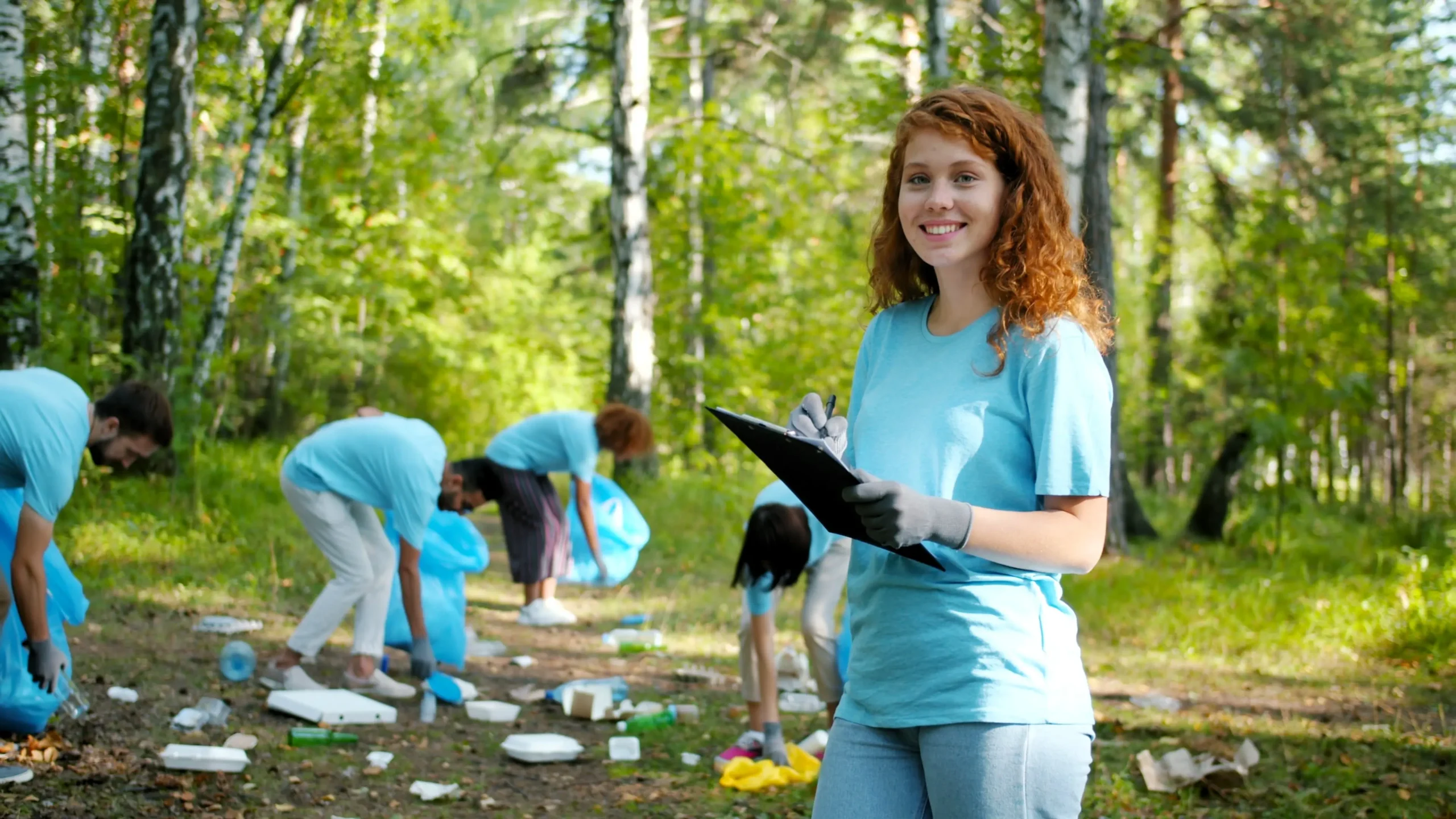
Imagine a small community working to restore a damaged wetland. Volunteers spend weekends removing invasive plants, local farmers change the way they manage surrounding land, and conservation specialists monitor the return of birds, insects and native vegetation. The ecological benefits may be significant, but keeping the project alive costs money. Equipment needs replacing, specialists must be paid and long-term monitoring requires resources. What if some of those environmental improvements could attract additional financial support?
That is one of the ideas behind Nature Credits, an emerging approach to financing biodiversity conservation and ecosystem restoration. The European Commission believes these instruments could help reward people and organisations that protect nature, while encouraging businesses and investors to finance measurable environmental improvements.
At the United Nations Biodiversity Conference in October 2026, the EU took another step towards developing this idea internationally.
Nature Credits are not a new payment programme for volunteers.
The initiative launched at COP17 is an international cooperation platform, not an operational EU-wide payment or grant scheme. There is currently no general entitlement to receive Nature Credits for planting trees, volunteering or protecting wildlife. Future arrangements will depend on independently verified environmental results, agreed methodologies and the rules of individual schemes.
What did the European Union announce at COP17?
On 27 October 2026, European Commissioner Jessika Roswall launched the Friends of Credits for Nature and Biodiversity initiative during the 17th Conference of the Parties to the Convention on Biological Diversity (COP17). The conference took place in Yerevan, Armenia, from 19 to 30 October 2026. The European Union, France, and Peru co-hosted the launch event.
According to the European Commission’s announcement of 28 October 2026, the new initiative is an informal, government-led platform intended to strengthen international cooperation on financing biodiversity.
Several countries were welcomed to the initiative, including Australia, Botswana, Canada, Chile, Finland, Indonesia, Japan, Luxembourg, the Netherlands, New Zealand, Portugal and Spain. The initiative is designed to bring governments and international organisations together to exchange experience, develop cooperation and encourage credible investment in nature. It is not a new international treaty or a compulsory market. Its immediate purpose is cooperation and policy development rather than distributing credits or making payments.
What exactly are Nature Credits?
Nature Credits are proposed financial instruments intended to connect investment with measurable positive outcomes for ecosystems and biodiversity. In simple terms, the idea is that an organisation or land manager undertaking credible conservation or restoration activities could eventually receive financial support linked to verified environmental results.
Examples of activities that might be relevant under future schemes include:
- Restoring wetlands and other damaged ecosystems.
- Improving habitats for native animals and plants.
- Supporting forest conservation and responsible land management.
- Restoring degraded agricultural landscapes.
- Improving the ecological condition of rivers and freshwater habitats.
- Protecting or restoring coastal and marine ecosystems.
These are examples of the kinds of activities being explored, not a confirmed list of actions that automatically qualify for credits.
Under the European Commission’s Roadmap towards Nature Credits, published on 7 July 2025, the proposed system could involve two related stages. First, a project could receive certification confirming that its activities meet recognised environmental standards. Later, demonstrated improvements in nature could potentially be represented by credits, using appropriate scientific indicators and independent verification.
The goal is to make it easier for investors to support credible environmental activities while giving conservation projects access to additional financial resources.
How could a Nature Credit work in practice?
Consider a hypothetical example. A farming cooperative decides to restore a degraded wetland. It improves water management, allows native vegetation to recover and works with ecological specialists to monitor the site’s condition.
Under a suitable future credit scheme, the process might involve:
- Assessment
- documenting the initial ecological condition of the site.
- Restoration
- carrying out activities designed to improve biodiversity and ecosystem health.
- Monitoring
- collecting evidence of changes over time.
- Verification
- having qualified independent parties assess the reported outcomes.
- Financing
- potentially receiving investment or payments associated with recognised conservation outcomes.
This is an illustrative scenario, not an existing EU application procedure.
There is no universal Nature Credit price, and a successful restoration project would not automatically generate a particular number or value of credits. Different ecosystems require different scientific measurements. Improvements in a wetland cannot necessarily be compared directly with those in a forest, grassland or coral reef.
Who could benefit financially from Nature Credits?
The European Commission identifies several groups that may eventually benefit from well-designed nature credit systems:
- Farmers and agricultural cooperatives.
- Foresters and forest managers.
- Fishers and people managing marine or freshwater resources.
- Landowners and land managers.
- Conservation area managers.
- Local communities involved in protecting or restoring ecosystems.
Conservation organisations and community initiatives could also have a role in developing or delivering eligible projects, depending on the eventual rules of individual schemes. However, there are important questions about ownership, rights to environmental benefits, the costs of certification and how revenues would be distributed. A project might require specialist ecological assessments, legal agreements, monitoring equipment and years of documented work before it can demonstrate qualifying outcomes.
That could make participation difficult for small organisations unless financial and technical support is available.
Could environmental volunteers receive Nature Credits?
This is an especially interesting question for people involved in volunteering and conservation projects.
At present, there is no EU scheme that automatically pays individual volunteers through Nature Credits.
The fact that someone plants trees, cleans a beach or helps restore an ecosystem does not, by itself, create a tradable credit or establish a right to financial compensation. Nature Credits are being developed primarily as instruments to recognise verified environmental outcomes, rather than as payments for individual hours of voluntary work.
Nevertheless, the concept could become relevant to the wider volunteering sector.
Imagine a small non-profit organisation that coordinates volunteers to restore local habitats. If the organisation were eventually able to participate in a credible conservation financing programme, additional resources might help cover equipment, training, scientific monitoring or the employment of qualified staff. Such support could make projects more sustainable and reduce their dependence on donations alone.
But that possibility remains conditional. It should not be presented as a current financial opportunity or a guaranteed future benefit.
What this means for volunteers and environmental projects
- For individual volunteers:
- there is no automatic Nature Credit payment for volunteering activities.
- For conservation organisations:
- future schemes could create additional financing opportunities, subject to eligibility and verification requirements.
- For community projects:
- the approach may encourage investment in long-term ecosystem protection, but access for small groups is not guaranteed.
- For businesses:
- nature credits may offer a way to finance documented environmental improvements, provided credible safeguards are in place.
The new international initiative does not change the legal distinction between genuine volunteering and paid employment. Any future paid role or placement would still need to comply with applicable national laws.
Why is the EU interested in this approach?
Nature conservation often produces benefits that are essential to society but difficult to finance.
Healthy ecosystems can help protect water supplies, support food production, maintain pollinator populations, reduce flood risks and provide habitats for wildlife. Yet many of these benefits are not directly reflected in the income received by the people managing those ecosystems. Conservation organisations frequently rely on public funding, donations, grants and voluntary work. Meanwhile, the cost of restoring damaged ecosystems and protecting biodiversity worldwide remains enormous.
The European Union hopes that Nature Credits could attract additional private investment alongside existing public programmes. The initiative also contributes to the objectives of the Kunming-Montreal Global Biodiversity Framework, adopted in December 2022, which seeks to halt and reverse biodiversity loss and substantially increase financing for nature by 2030. However, the European Commission acknowledges that private finance cannot replace the responsibilities of governments.
Nature Credits are intended to complement environmental legislation, public conservation funding and other established financing mechanisms.
Are Nature Credits already being tested?
Yes. Although the broader framework is still developing, pilot initiatives are exploring how nature credits might work in practice. The European Commission’s Nature Credits information page describes work involving research, technical advice and practical experiments.
Examples include:
- France: work exploring how wetland restoration could be supported through nature-positive financing.
- Estonia: exploratory work examining approaches related to sustainable forest management and nature credits.
- Peru: initiatives considering how international investment could support biodiversity conservation and restoration.
Some of this work receives support through Green Assist, an EU advisory initiative helping projects explore the practical and financial requirements for environmental investment. These projects are testing methodologies, financing approaches and governance models. They should not be confused with an established EU-wide scheme available to all landowners or environmental organisations.
In addition, the Commission has established an Expert Group on Nature Credits, bringing together government representatives, specialists and stakeholders.
The group has been examining scientific methodologies, market infrastructure, monitoring requirements and safeguards. Under the Commission’s 2025 roadmap, further work and a review of progress are scheduled for 2027.
Could Nature Credits become another form of greenwashing?
Despite their potential, Nature Credits raise difficult environmental, economic and ethical questions. One concern is that businesses might use environmental credits to improve their public image without adequately reducing the damage caused by their own activities.
Another problem is measurement: unlike carbon emissions, which can be expressed in common units such as tonnes of carbon dioxide equivalent, biodiversity is highly dependent on local ecological conditions. A restored wetland, an ancient forest and a coastal reef cannot simply be treated as interchangeable units of nature.
Can companies use Nature Credits to compensate for environmental damage?
The distinction between financing positive conservation outcomes and compensating for environmental destruction is crucial. A company financing habitat restoration is not necessarily entitled to claim that it has cancelled out damage caused somewhere else. Biodiversity credits and biodiversity offsets are related concepts, but they are not identical. Their uses depend on the rules and objectives of each scheme. The European Economic and Social Committee, in an opinion adopted in February 2026, called for strong environmental safeguards, scientific integrity, transparency and measures to prevent speculation and land grabbing.
It also emphasised that nature credits must not undermine environmental legislation or replace adequate public funding. Environmental law organisation ClientEarth published a briefing for COP17 examining the legal, ecological and human rights questions surrounding biodiversity credit schemes.
These concerns are particularly relevant when conservation projects involve Indigenous Peoples, local communities or land managed under traditional rights.
For Nature Credits to produce meaningful benefits, important safeguards will be needed:
- Scientific evidence that environmental improvements are genuine.
- Independent monitoring and verification.
- Protection against counting the same environmental benefit more than once.
- Clear rules on ownership, land rights and revenue distribution.
- Respect for Indigenous Peoples and local communities.
- Long-term protection against the loss or reversal of environmental benefits.
- Transparency about how credits are purchased and what claims buyers can make.
Without credible safeguards, a system intended to protect nature could produce misleading claims or unfair outcomes.
Why could this matter for the future of conservation volunteering?
For many small environmental initiatives, one of the greatest challenges is not finding people who care about nature. It is maintaining enough resources to continue working year after year. Volunteers may provide valuable help with planting, habitat restoration, environmental education, monitoring and practical maintenance. But volunteer enthusiasm alone cannot replace specialised ecological knowledge, appropriate equipment, stable financing or responsible project management.
Nature Credits could eventually become another way for some conservation initiatives to obtain resources for verified environmental outcomes.
However, the administrative and scientific requirements could also favour larger organisations with access to specialist staff and financing. That makes the inclusion of smaller organisations and community-led projects an important question as future systems are developed. There is also a broader principle worth considering: people and communities who have protected nature for generations should not be overlooked simply because their conservation work is difficult to quantify or monetise.
Financial incentives may help strengthen environmental projects, but biodiversity protection also depends on public responsibility, local knowledge and long-term commitment.
What happens next?
The launch at COP17 represents another step in an ongoing process rather than the completion of a new financial market. The European Commission is continuing to develop the Nature Credits roadmap through research, pilot projects, expert consultations and cooperation with international partners. Work following COP17 is expected to include further discussions during international climate and biodiversity events, including a planned EU side-event at the UN Climate Change Conference COP31 in November 2026.
For farmers, conservation organisations and community groups interested in potential future opportunities, the best approach is to follow official developments and examine the requirements of specific programmes when they are announced.
At present, there is no general EU application form allowing individuals to register their environmental volunteering activities and automatically receive Nature Credits.
Should protecting nature become a source of income?
The central idea behind Nature Credits is protecting and restoring ecosystems creates value for society, and the people contributing to that work deserve adequate support. Turning that principle into a credible financial system is much more complicated. Scientific verification, local rights, independent oversight and fair access will be essential if these instruments are to provide genuine environmental benefits. For conservation volunteers and community organisations, the initiative is worth following, even if it does not currently create new paid opportunities.
It raises an interesting question about the future of environmental protection.
Could societies find better ways to support the people who keep forests healthy, restore damaged habitats and care for biodiversity?
Nature Credits are one possible answer, but their real value will depend on whether they deliver measurable benefits for ecosystems and the communities involved in protecting them.
Sources and further reading
- European Commission: EU launches Friends of Credits for Nature and Biodiversity at COP17, 28 October 2026.
- European Commission: EU delivering on COP17 nature and biodiversity targets, 16 October 2026.
- European Commission: Roadmap towards Nature Credits, COM(2025) 374 final, 7 July 2025.
- European Commission: Nature Credits, expert group and pilot initiatives.
- European Climate, Infrastructure and Environment Executive Agency: Nature Credits roadmap and pilot projects.
- European Economic and Social Committee: Opinion on the Roadmap towards Nature Credits, February 2026.
- ClientEarth: Biodiversity Credits, viable solution or work in progress?, 19 October 2026.
- npj Biodiversity: A framework for unit-level biodiversity credit integrity and market-level governance, 2 October 2026.
Editorial review: 8 November 2026. This is an independent informational article based on publicly available institutional and research sources. Voluntouring.org is not affiliated with the European Commission or the Nature Credits initiative. The article does not constitute an offer of employment, volunteering placement, investment or financial advice.