


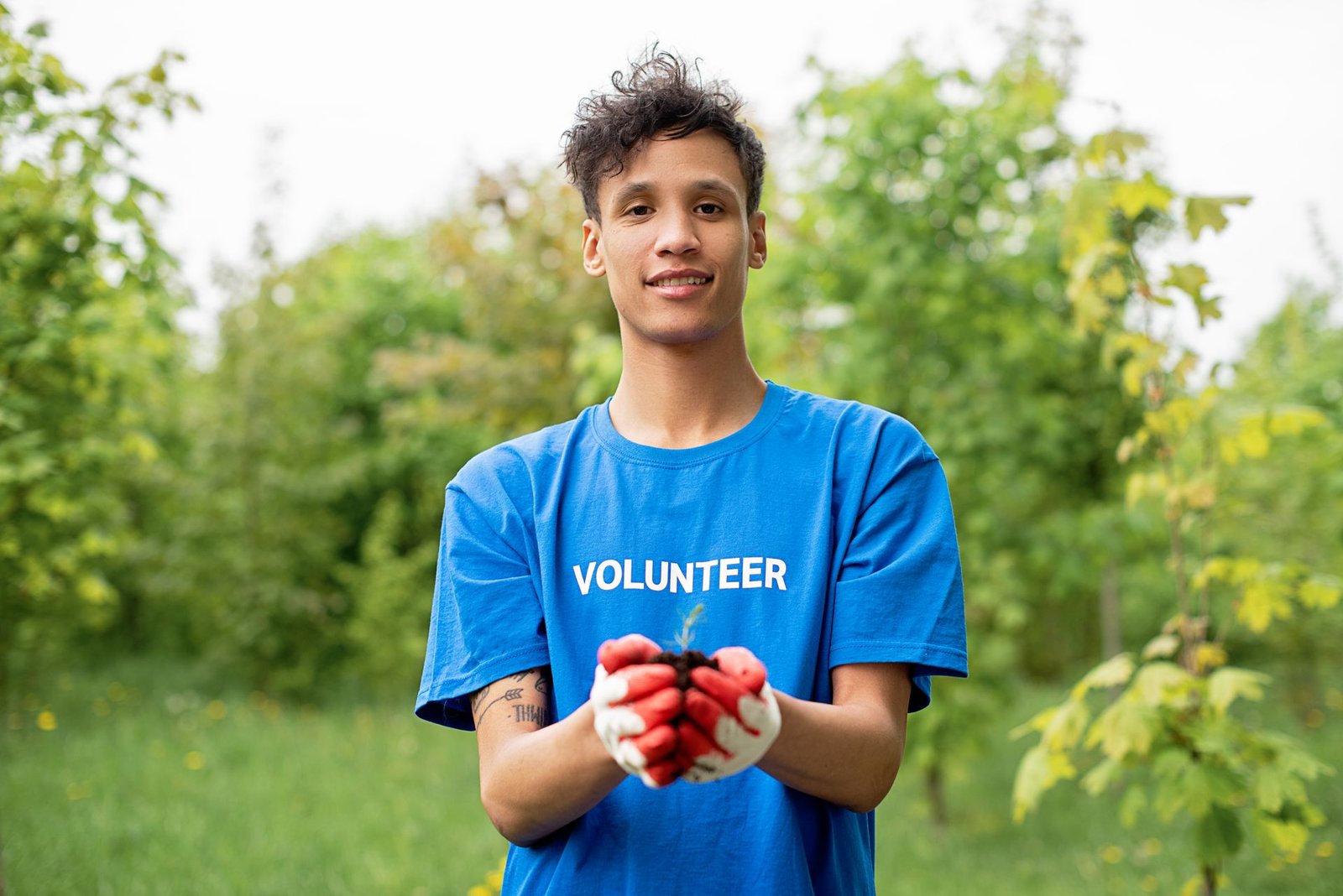
You do not need years of professional experience to volunteer abroad.
Many projects involve practical tasks that can be learned with clear instructions and appropriate supervision. Reliability, curiosity, patience, communication and willingness to learn can all be useful qualities.
At the same time, being enthusiastic does not make somebody qualified for every kind of volunteer role.
If you want to volunteer abroad with no experience, the goal should not be to find a project willing to let you do anything. A better approach is to find a role where beginners are genuinely useful, training is available and the consequences of making a mistake are limited.
1. Start with what you can already do 🧰
Before searching for a volunteer project, think about ordinary skills and experiences you already have.
For example:
- Can you cook simple meals?
- Can you garden or work outdoors?
- Can you use a computer comfortably?
- Can you write, take photographs or help with basic communication?
- Do you speak more than one language?
- Are you comfortable organising materials or keeping spaces tidy?
- Can you follow instructions and work reliably as part of a team?
- Have you helped organise events, clubs or community activities?
These may not feel like professional qualifications, but they can still be relevant to beginner-friendly volunteer roles.
Do not exaggerate your abilities in an application. A host can give you better tasks and training when they understand your actual experience.
2. Look for roles designed for beginners 🌱
Some volunteer activities are much easier to learn safely than others.
Depending on the host and supervision available, beginner-friendly activities may include:
- gardening and basic garden maintenance;
- simple activities on organic farms;
- permaculture projects where training is provided;
- environmental clean-ups;
- food preparation;
- event support;
- basic administrative tasks;
- simple communications or digital tasks;
- maintenance activities that do not require specialist skills;
- community activities carried out alongside experienced staff or volunteers.
The exact activity matters more than the category. A farm, for example, may offer simple harvesting tasks suitable for a beginner or machinery and animal-care responsibilities that require substantial experience.
Read the complete listing and ask what a normal day actually involves.
3. Choose projects where learning is expected 📚
A good beginner opportunity should not assume that you already know everything.
Ask whether the project provides:
- an introduction to the role;
- clear instructions;
- someone who can answer questions;
- demonstrations for practical tasks;
- appropriate safety equipment;
- supervision until you can perform a task safely.
Structured programmes can be particularly useful for first-time volunteers because preparation and support are built into the experience.
The European Solidarity Corps, for example, is designed for young adults and includes volunteering activities with host and support structures. Standard activities are open to eligible participants aged 18 to 30. You can register from 17, but you cannot begin an activity until you are 18.
Voluntouring.org collects current European Solidarity Corps opportunities 🇪🇺 in a dedicated section.
4. Some roles are not suitable for inexperienced volunteers 🛡️
There are activities where enthusiasm is not enough.
Be particularly cautious about roles involving:
- medical treatment;
- psychological counselling or therapy;
- unsupervised childcare;
- direct work with vulnerable people without appropriate training;
- wildlife handling;
- dangerous tools or machinery;
- structural construction;
- driving when specific licences or local experience are required;
- teaching where you would be expected to replace a trained teacher.
If a project immediately gives an inexperienced visitor substantial responsibility for children, patients, vulnerable adults or dangerous activities, easy access should not be interpreted as a special opportunity.
It may instead indicate weak supervision or safeguarding.
The UK government’s current guidance on overseas volunteering warns in particular about placements involving children and vulnerable people, noting that short-term volunteers without relevant training can cause unintended harm and that poor safeguarding can expose both communities and volunteers to serious risks.
5. Two weeks can be useful, but not for every role ⏳
The original version of this article argued that volunteering for two weeks is always better than not volunteering at all.
That is too broad.
A short placement can make sense when the activity is genuinely suited to short-term help, for example:
- a harvest;
- an environmental clean-up;
- event preparation;
- a clearly defined maintenance task;
- team-based practical activities where newcomers can contribute quickly.
Other roles require continuity, relationships and extensive training.
If an organisation needs several days just to train you and you leave immediately afterwards, your presence may create more work than useful support.
Ask the host why they accept short-term volunteers and what somebody can realistically accomplish during the available time.
6. Do not confuse “beginner friendly” with “no supervision needed” 👥
A simple task can still require proper guidance.
For example, gardening may look straightforward, but a new volunteer still needs to know which plants to remove, which tools are safe to use and how the host wants the work done.
A beginner-friendly project should normally make it easy to ask questions without making the volunteer feel that they are causing a problem.
The current Global Volunteering Standard treats good programme design, safeguarding, volunteer management and duty of care as central elements of responsible volunteering. Its 2025 revision strengthened these areas further.
7. Ask whether the project genuinely needs volunteers 🤝
Finding a host willing to accept inexperienced travellers is not enough.
Try to understand why the volunteer position exists.
Ask:
- What problem or activity am I helping with?
- Who normally does this work?
- Why are volunteers useful here?
- Will somebody work alongside me?
- Does the project regularly train beginners?
- Would my role replace somebody who would otherwise be paid?
Voluntouring.org’s Safety and legality guide asks volunteers to pay particular attention to roles that replace paid staff, cover essential commercial shifts or give inexperienced people full responsibility without supervision.
8. Do not choose a project only because the work sounds impressive 🧭
New volunteers can sometimes be attracted to the most dramatic-looking opportunities: wildlife rescue, humanitarian work, teaching children or helping in medical settings.
But the activity that creates the best photograph is not necessarily the activity where you can contribute most responsibly.
Basic work can be genuinely useful.
Preparing materials, translating text, maintaining a garden, helping organise an event, cleaning equipment or supporting experienced staff can free people with specialist skills to concentrate on tasks that only they can perform.
9. Consider a structured programme for your first experience 🇪🇺
If you are 18 to 30 and meet the eligibility conditions, the European Solidarity Corps can be worth exploring.
Current ESC volunteering support normally includes:
- accommodation;
- food or a food allowance;
- eligible travel support;
- insurance;
- training and support services;
- linguistic support where applicable;
- pocket money;
- additional support for some specific needs.
The official European Youth Portal confirms these forms of support for ESC volunteering activities.
Previous volunteering experience is not necessarily required for every ESC opportunity. Individual projects set their own selection criteria, so read each announcement carefully. Current ESC listings can include opportunities explicitly open to participants with no previous volunteering experience.
Browse European Solidarity Corps opportunities
10. If you are under 18, use a different route 🧑🎓
Voluntouring.org currently publishes and promotes volunteering and work exchange opportunities only for adults aged 18 or over.
Our older Under 18 section is now maintained mainly to explain this safeguarding policy and to identify older content that is being reviewed.
If you are under 18 and want to volunteer, a safer starting point is usually a recognised local organisation, school, youth organisation or properly supervised youth programme in your own country.
Some European youth activities are available to younger participants, but eligibility depends on the particular programme. They should be organised through recognised structures with appropriate supervision rather than through informal international host listings.
11. Starting locally can be excellent preparation 🏘️
You do not need to cross an ocean for your first volunteer experience.
Volunteering locally for a few weeks or months can help you discover:
- which activities you enjoy;
- how you respond to instructions;
- what kind of team environment suits you;
- whether you prefer practical or digital tasks;
- which skills you would like to develop;
- how much time you realistically want to commit.
It can also give you a reference and make future international applications more specific.
International travel is an additional layer of complexity. You will already be dealing with transport, accommodation, language, visas and a new environment, so having some familiarity with volunteering itself can make the transition easier.
12. Check the practical conditions before saying yes 🔎
Beginner or not, you should know what the placement involves before travelling.
Ask for clear information about:
- daily tasks;
- weekly hours;
- days off;
- minimum stay;
- training;
- supervision;
- food;
- accommodation;
- fees or contributions;
- transport;
- insurance;
- visa requirements.
If you are looking for exchanges without a mandatory participant fee, Voluntouring.org also maintains a Free volunteering opportunities 🆓 section. On Voluntouring, projects in that archive should include food and accommodation and normally require no more than 30 hours of help per week.
13. Check visa and insurance requirements yourself 🛂
A host calling something “volunteering” does not determine how immigration authorities will classify it.
Rules vary by country, nationality, duration and activity.
Before travelling, use official government information to check what is permitted and make sure your insurance covers the activities you expect to perform.
Voluntouring.org’s work exchange and volunteer visa guide provides a useful starting point, but official destination-country sources should always have the final word.
14. Be willing to say “I don’t know how to do that” 🗣️
This is one of the most useful habits a new volunteer can develop.
If somebody gives you a task you do not understand, ask them to demonstrate it.
If you are asked to use equipment you have never used, say so.
If a situation feels unsafe or beyond your abilities, stop and ask for help.
A responsible host should prefer an honest beginner to somebody who pretends to be experienced.
15. A simple checklist for first-time volunteers ✅
Before joining your first project abroad, ask yourself:
- Do I understand what I will actually be doing?
- Are these tasks appropriate for a beginner?
- Will somebody train or supervise me?
- Does the project genuinely need this role?
- Am I being asked to do professional work without qualifications?
- Are the hours reasonable?
- Are food, accommodation and any costs clear?
- Do I know what happens if I want to leave early?
- Have I checked visa requirements?
- Does my insurance cover the activity?
- Do I have enough emergency money to remain independent?
Where can a first-time volunteer start? 🌐
If you are 18 or older and ready to explore opportunities, useful starting points on Voluntouring.org include:
- organic farm volunteering 🌱;
- gardening projects;
- permaculture projects;
- European Solidarity Corps opportunities 🇪🇺;
- free volunteering opportunities with food and accommodation 🆓.
These categories do not guarantee that every individual opportunity is suitable for beginners. Read the complete listing, check its publication date and confirm current tasks and conditions directly with the host.
You can also browse the main volunteer projects directory and search by activity, destination or skill.
Further reading and sources 🔎
On Voluntouring.org
- Safety and legality in volunteering and work exchange
- European Solidarity Corps opportunities
- Free volunteering opportunities with food and accommodation
- Under 18 volunteering and Voluntouring.org’s age policy
- Work exchange and volunteer visa guide
- Organic farm volunteering opportunities
- Browse volunteer opportunities around the world
External references
- European Youth Portal: European Solidarity Corps participation information
- European Youth Portal: volunteering activities and participant support
- International Forum for Volunteering in Development: Global Volunteering Standard
- UK Government: volunteering and adventure travel guidance
Volunteer roles, eligibility rules, programme conditions and immigration requirements vary by organisation and destination. Confirm current information directly with the host or programme and check official government requirements before travelling.