

Christmas can be beautiful, low-waste and creative at the same time. This wall-mounted recycled wood Christmas tree is an example that fits perfectly in volunteer houses, eco hostels, community centers and shared homes. Instead of buying a plastic tree, you reuse driftwood, old planks and small branches to create a unique installation that hangs on the wall and lights up the room with warm fairy lights.
Why a recycled wood Christmas tree is perfect for volunteers
Many volunteer projects already work with limited resources and try to reduce waste. A recycled wood Christmas tree supports the same values. You use materials that might already be around the project: pallets, old boards, broken tools, branches collected after storms or driftwood found on the beach.
Every piece has its history and can start conversations during the holidays.

From an environmental point of view, reusing materials and avoiding plastic decorations helps reduce the footprint of the festive season. Organisations like WWF share simple tips for a more sustainable Christmas, such as choosing long lasting decorations, using natural materials and avoiding unnecessary waste.
For volunteers, building and decorating the tree can also become a team activity. Collecting wood during a clean-up walk, cutting and sanding branches, and preparing handmade ornaments create a relaxed moment of collaboration after a day of work.
How this wall tree is built 🌲
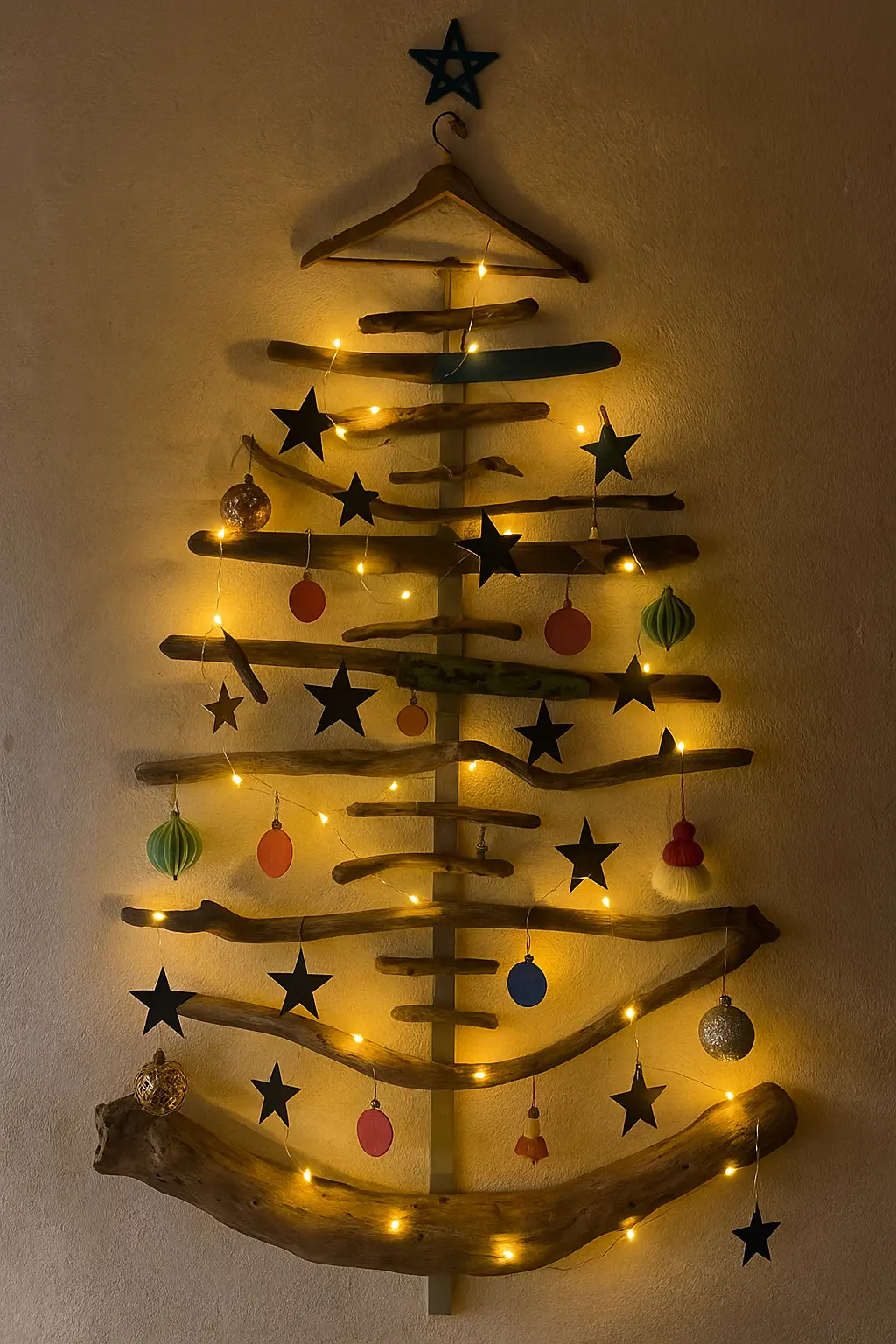
The tree in the photos is attached to a vertical wooden support fixed to the wall. On this support, horizontal pieces of driftwood and reclaimed wood are arranged from the longest at the bottom to the shortest at the top. Together they draw the classic Christmas tree silhouette.
Some of the upper pieces are even old clothes hangers and painted boards. This shows that almost anything can be reused with a bit of imagination.
Driftwood or fallen branches, pallet wood, old shelves, broken tools or handles, hangers, natural cord or string, a vertical support board, warm LED fairy lights, paper or fabric scraps for handmade ornaments.
DIY tips: make your own driftwood Christmas tree
If you want to build something similar in your project, start by collecting pieces of wood in different lengths. Let any wet wood dry well, then sort it from longest to shortest. Many driftwood tree tutorials recommend drilling a hole in the centre of each piece and sliding them onto a vertical dowel or metal rod that stands on a base.
For a wall mounted version, you can screw or tie each piece directly to a vertical board fixed on the wall. Keep enough distance between branches so that fairy lights and ornaments can hang freely.
A simple paper or wooden star at the top finishes the tree.
For more inspiration on sustainable decorations, you can also look at eco-friendly Christmas decor guides that focus on natural and reusable materials like pinecones, herbs and fabric scraps.


This wall-mounted pallet wood Christmas tree is a cozy variation of the recycled driftwood tree, decorated with simple DIY ornaments and warm fairy lights.
Handmade ornaments from upcycled materials
The decorations on this tree are almost entirely homemade.
Stars and circles are cut from coloured cardboard, old packaging or leftover craft paper. Some are painted, others simply kept in their original colour. There are small tassels made from yarn, paper honeycomb balls and tiny figures created from cardboard rolls. This approach matches advice from sustainability experts, who encourage people to replace plastic ornaments with natural or DIY alternatives in order to cut down on unnecessary plastic waste during the holidays.
Volunteers can organise small workshops to make ornaments together. Old magazines, cereal boxes, fabric offcuts or buttons can all become stars, moons or little characters. The result is not only eco-friendly but also personal, since every volunteer leaves a small piece of themselves on the tree.
Safety and practicality in shared spaces
A wall-mounted tree works very well in hostels, volunteer houses or small apartments because it does not occupy floor space. It can be placed above a table or sofa, which keeps it safe from pets and small children.
When using fairy lights, it is important to choose LED lights and to unplug them at night or use a timer to reduce the risk of overheating and fire. After the holidays, disassembling the tree is easy. The wooden pieces can be stored in a small box or even reused in the garden or another DIY project. Many eco design guides recommend this type of long-lasting decoration that can live many lives instead of going to landfill.
Ideas for volunteer projects and eco hosts
A recycled wood Christmas tree can become part of a wider environmental message inside a project.
Hosts can invite guests and volunteers to add a small ornament that represents their country or their wish for the planet. Over the years, the tree becomes a visual archive of stories and encounters.
Projects that work with beach clean-ups, river restoration or forest trails can use collected wood and natural materials from their activities. This closes the circle between daily volunteer work and the celebration of the season.
For eco tourism projects that want to communicate their values, photos of the tree are also perfect for social media and Google Discovery. The combination of handmade details, warm light and a strong sustainability story tends to attract attention and shares, especially when you explain briefly how everything was reused.
You can decorate your project with simple natural elements such as pinecones, small branches, dried citrus slices and herbs from the garden. Reused glass jars can become candle holders (always used safely), and old fabric can turn into ribbons, stars or hearts. These small choices keep the festive atmosphere warm and cosy while reducing waste and plastic.
Also read:
Christmas gifts for slow travellers and international volunteers
This article is meant as inspiration and does not describe a specific volunteer position.If you would like to find real projects, visit our volunteer projects section and always read each listing carefully before making plans.
Visit our blog section 🌐