


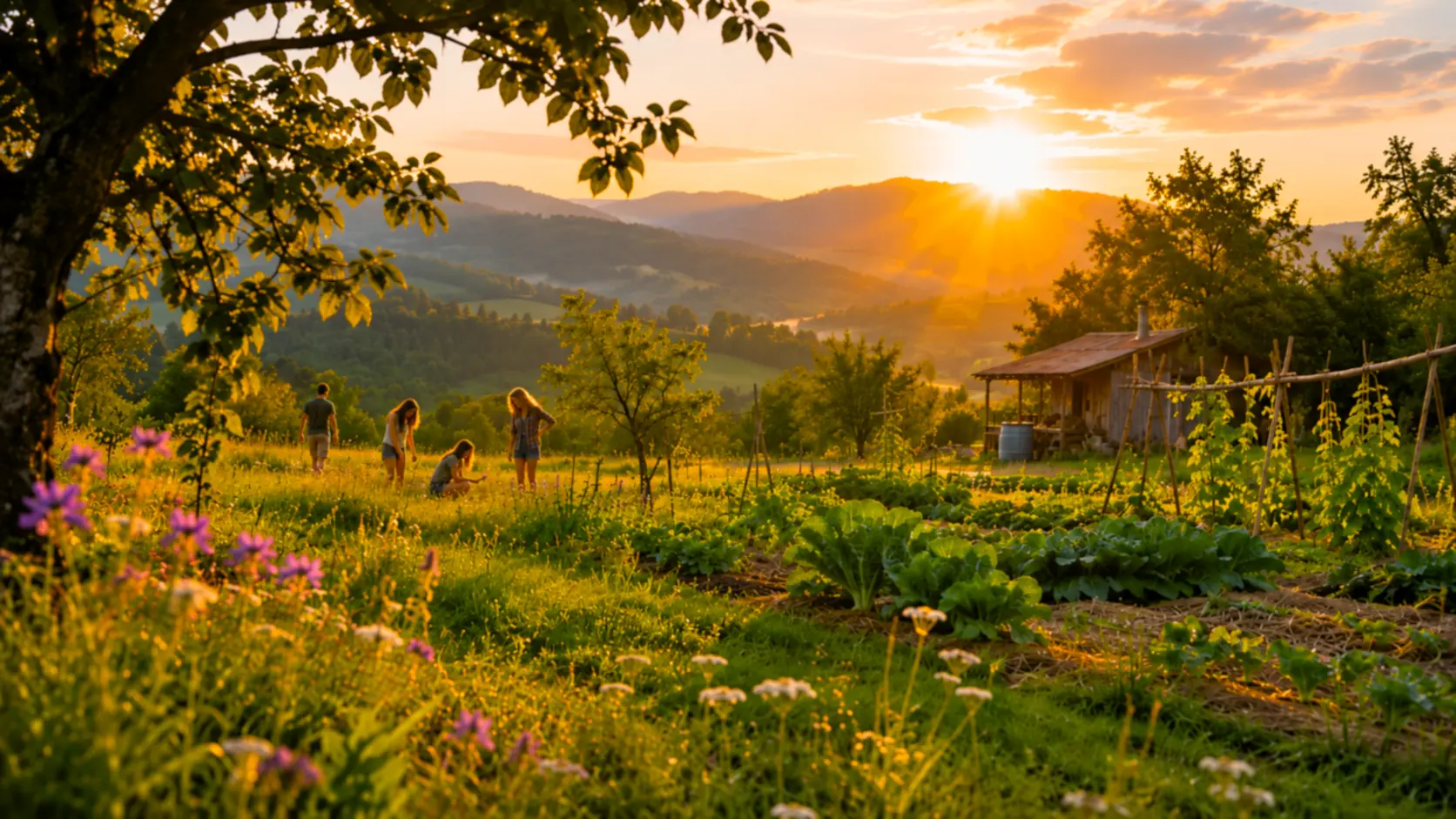
Four volunteers are invited to experience permaculture, natural building and community life on a small off-grid farm in the Slovenian countryside.
Would you like to spend part of 2027 living on a sustainable farm, growing food, learning natural building techniques and sharing everyday life with an international community? Farm Veles, near Šentjanž in Slovenia, is looking for four volunteers through the European Solidarity Corps (ESC). The programme covers accommodation, vegetarian meals and eligible travel expenses, with no participation fee. Applicants must be aged 18–30, and applications close on 15 December 2026.
On a small farm in the Slovenian countryside, sustainable living is part of everyday life. Food is grown using permaculture principles, natural materials are used in construction, and resources such as water and energy are managed with the aim of reducing environmental impact. Volunteers help with these activities while learning how a rural community can organise daily life around more sustainable practices.
This is Farm Veles, also known as Kmetija Veles, a project developed by Petra Jazbec and Janez Jordan in the area of Šentjanž, Slovenia. Through their organisation, Zavod Veles, they host educational activities, international volunteers and projects related to permaculture, natural construction and community living.
For 2027, the farm is advertising a new European Solidarity Corps project called Yes! to Sustainability 2027. Four young people will have the opportunity to join the farm for a flexible period during the warmer months of the year.
Four funded volunteering places in Slovenia for 2027
The project welcomes four ESC individual volunteers aged 18–30. Activities are planned between April and November 2027, with flexible participation periods. Accommodation, vegetarian meals and eligible travel costs are covered. The application deadline is 15 December 2026 at 23:59.
What is Farm Veles?
Farm Veles is a sustainability initiative in rural Slovenia where permaculture, natural building and community learning come together. The people behind the project have spent years developing the property and sharing practical knowledge about living with a smaller environmental footprint. Rather than focusing only on agricultural production, the farm also explores how people can live, learn and cooperate in a rural environment. Its activities include growing food, working with natural building materials, maintaining shared spaces and discussing subjects such as water management, energy resources and social permaculture.
The European Solidarity Corps project offers participants the chance to take part in this environment, contributing to everyday tasks while gaining practical experience.
What will volunteers do?
Most activities are practical and take place on the farm. Volunteers are expected to work with others, learn by doing and contribute to the shared responsibilities of the community. The programme includes:
- Permaculture farming and gardening.
- Natural building and maintenance activities.
- DIY projects and practical work around the farm.
- Learning about sustainable energy and water resources.
- Exploring sustainable lifestyles, social permaculture and social entrepreneurship.
- Participating in local community activities.
- Sharing everyday responsibilities, including cooking and cleaning.
The description also mentions learning about natural cosmetics and other sustainable practices. The precise mix of tasks may depend on the season and the activities underway during each volunteer’s stay. This is a hands-on experience rather than a formal academic course. Participants should expect to spend considerable time outdoors and to help with ordinary farm activities, not only with the subjects they find most interesting.
What is everyday life like on an off-grid farm?
The organisers describe the accommodation and facilities as simple, with many activities taking place outdoors. For some volunteers, this may be one of the most interesting aspects of the project. For others, it could be the main reason to think carefully before applying. An off-grid lifestyle means adapting to practical limits that are different from those of a conventional home. At Farm Veles, volunteers use composting toilets and solar showers, share accommodation and take part in preparing meals and maintaining communal spaces. The farm is also described as a location without public transport access. This could make independent trips and journeys to nearby towns more difficult, particularly for someone who does not have a car.
Participants should be comfortable with basic facilities, outdoor work and sharing their living space with other people. Anyone with specific accessibility, dietary, health or mobility requirements should ask the organisers about the available arrangements before accepting a place.
Where will volunteers sleep, and what will they eat?
Accommodation is provided in a shared off-grid hut. The organisers describe it as simple but pleasant, with dry compost toilets, solar showers and many facilities situated outdoors. The announcement does not specify how many people share each sleeping area, whether volunteers have individual beds in separate rooms or what arrangements are available for privacy. These details are worth clarifying before arrival. Meals are vegetarian and prepared together. The farm aims to use local or ecological ingredients whenever possible.
Food costs are included in the project, but the description does not promise individual meal choices or special dietary arrangements.
How many hours will volunteers work?
The official announcement describes a schedule of seven hours of activity per day, including cooking and cleaning. A typical day is presented as starting at 8:00 am and ending at 4:00 pm, with a one-hour break. The remainder of the day is intended for resting, walking, socialising and personal activities. However, living in a community also means cooperating with others and respecting the shared facilities. The European Solidarity Corps normally provides a structured volunteering programme, including appropriate rest time and days off.
The Farm does not clearly specify the weekly schedule or which days are free, so applicants should ask how working hours, breaks and time off are organised.
Is this really a free volunteering programme?
There is no participation fee for joining this European Solidarity Corps project.
The ESC is a European Union programme supporting young people who participate in volunteering and solidarity activities. These are funded volunteering placements, not salaried jobs or commercial work-exchange packages. The Farm Veles announcement states that food, accommodation and travel costs are covered. Travel support depends on the relevant distance-based funding rules, so applicants should not assume that every possible ticket or travel expense will be reimbursed in full.
ESC volunteering also includes insurance, training and a small allowance for personal expenses, commonly called pocket money. However, the Farm Veles listing does not state the exact pocket-money amount for this project.
Before confirming participation, applicants should ask about the daily or monthly allowance, travel reimbursement limits, payment arrangements and any expenses they may need to cover initially.
Who can apply?
The opportunity is intended for young people aged 18 to 30 who are interested in sustainability and willing to participate actively in farm and community life. Applicants should be prepared to:
- Live simply in shared accommodation.
- Work outdoors and take part in practical activities.
- Cooperate with other volunteers while also completing tasks independently.
- Communicate in spoken English.
- Adapt to a rural location with limited transport options.
The announcement does not require a university degree in agriculture or previous professional permaculture experience. Motivation, adaptability and an interest in sustainable living are important. The official ESC listing accepts participants residing in a wide range of eligible European and neighbouring countries, including Italy, Slovenia, Germany, France, Spain, Portugal, Türkiye and Ukraine, among others. Eligibility depends on the programme’s residence and participation rules, not simply on holding a particular passport. Candidates who need a visa or residence authorisation for Slovenia should confirm the necessary documents and the support available from the organisations involved. Being eligible for an ESC project does not automatically remove national immigration requirements.
When does the 2027 volunteering project take place?
The organisers advertise flexible participation between April and November 2027. Their description mentions stays starting at two months and potentially lasting up to eight months. There is a detail to clarify: the European Youth Portal’s structured activity field also lists a total duration of 20 weeks within the period from 1 April to 1 November 2027. These figures do not describe exactly the same duration. Candidates should therefore discuss their preferred arrival date, departure date and expected length of stay directly with Farm Veles. The number of remaining places for each period should also be confirmed.
The application deadline published on the official portal is 15 December 2026 at 23:59.
How to apply for Yes! to Sustainability 2027
The organisers specify that interested candidates must use the dedicated application form linked from the official project announcement. Applying only through the European Youth Portal may not be sufficient. Applicants should first read the project information pack, check their ESC eligibility and prepare a short explanation of their motivation, interests and availability. It is worth mentioning any experience with gardening, construction, sustainability projects or community living, although the vacancy is not restricted to specialists.
For an individual ESC volunteering placement abroad, a supporting organisation in the participant’s country of residence is normally involved alongside the host organisation. Candidates who do not already have one should ask the organisers about the next steps.
Is off-grid volunteering in Slovenia right for you?
Farm Veles offers a chance to experience sustainable rural life through daily practice, rather than simply reading about it or attending occasional workshops. Participants can learn about permaculture and natural construction while sharing work, meals and living space with others.
However, basic facilities, physically active days and limited transport mean that the experience will not suit everyone. It is important to understand the living conditions and agree on the practical arrangements before travelling.
For young people who are genuinely interested in sustainable living and comfortable with a simple communal lifestyle, Yes! to Sustainability 2027 could be an interesting way to spend several months in the Slovenian countryside without paying a participation fee.
Contact details 📧🔍
The project Yes! to Sustainability 2027 is advertised by Zavod Veles through the official European Youth Portal. Applications are managed by the organising team.
- Organisation: Zavod Veles / Farm Veles (Kmetija Veles).
- Project: Yes! to Sustainability 2027.
- Location: Svinjsko, Šentjanž, Slovenia.
- Programme: European Solidarity Corps, individual volunteering.
- Places: Four.
- Age: 18–30.
- Period: April to November 2027, with individual dates to be agreed.
- Accommodation: Shared off-grid hut, provided.
- Meals: Vegetarian, included.
- Travel: Covered according to ESC funding and distance limits.
- Pocket money: Provided under ESC rules; project-specific amount to be confirmed.
- Participation fee: None.
- Application deadline: 15 December 2026, 23:59.
- ESC project code: 2026-1-SI02-ESC51-VTJ-000403061.
Before applying: Read the organiser’s information pack and consult the official European Solidarity Corps announcement. The organisers explicitly request applications through their dedicated form.
Looking for future opportunities? Visit the Farm Veles website or explore new projects through the European Solidarity Corps.
What if you discover this opportunity after the deadline?
Farm Veles has experience hosting international volunteering and educational activities. Even if the four places for this particular project are filled, interested readers can follow the farm’s website and the European Youth Portal for future opportunities. The European Solidarity Corps regularly publishes new calls covering environmental work, sustainable agriculture, cultural activities and community initiatives. Missing one deadline does not mean missing the chance to take part in a similar project later.
This is an independent informational article about a publicly advertised European Solidarity Corps project. It does not represent a partnership, endorsement or publication request from Farm Veles. Voluntouring.org does not manage applications or guarantee selection.
Sources and further reading
- European Youth Portal: Yes! to Sustainability 2027, official opportunity announcement.
- Farm Veles: Official organisation website and information about the farm.
- European Youth Portal: Volunteering activities, funding, insurance and pocket money.
- European Solidarity Corps: Mission, principles and participation without fees.
Editorial review: 16 November 2026. Dates, available places, travel reimbursements, pocket-money arrangements and accommodation details should be confirmed with the organisers before accepting a placement. The project description and the portal’s structured duration field give different time frames.
4 ESC volunteering opportunities for young Europeans in 2026–27 🇪🇺