


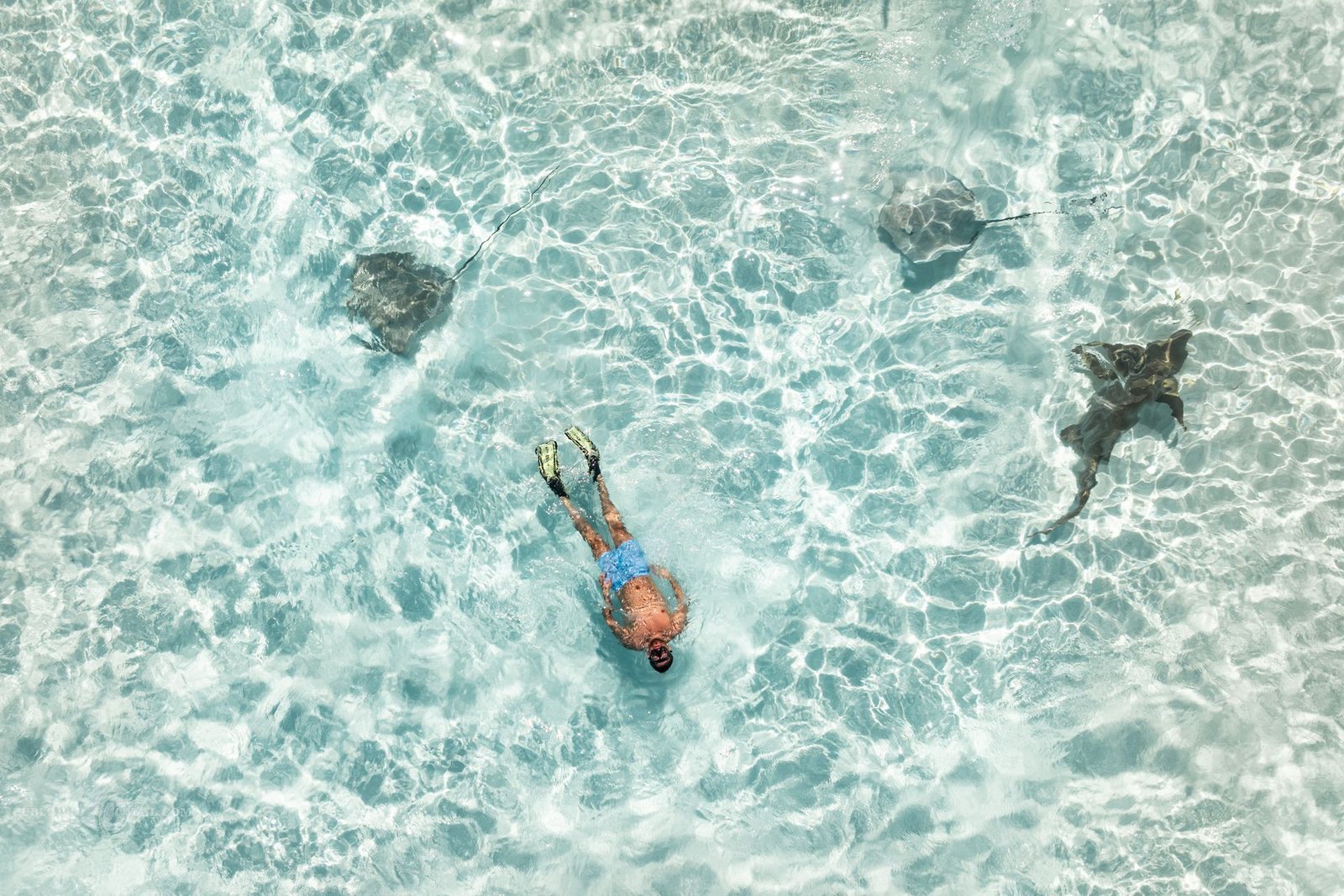
Spend 3 Months in the Maldives Working with Manta Rays, With Food and Accommodation Covered
Would you spend three months in the Maldives helping protect manta rays if your food and accommodation were covered? 🏝️
The Manta Trust is looking for a Research & Guest Engagement Intern to join its Maldives Manta Conservation Programme at a five-star resort in Raa Atoll. The placement runs from January to March 2027, with shared accommodation, meals and domestic flights provided.
International applicants are welcome, although the internship is unpaid for them. Candidates need relevant marine conservation experience and diving qualifications.
Applications close on 22 November 2026.
Information reviewed: 9 November 2026. This article refers specifically to the Manta Trust’s Research & Guest Engagement Internship in Raa Atoll, reference #RAA2027, for January to March 2027. Application requirements and availability may change.
Imagine spending your morning on a boat in the Indian Ocean, watching the water for signs of manta rays. When conditions allow, you might enter the sea to help collect information about these enormous, graceful animals. Later, you could return to a tropical island resort, process underwater photographs and explain manta ray conservation to guests from around the world.
It sounds like an unusual combination of marine biology, island life and luxury tourism.
And for a small number of applicants, it could become a reality.
The Manta Trust, an international marine conservation charity, is currently recruiting an intern for its Maldives Manta Conservation Programme (MMCP), based in Raa Atoll.
The placement combines scientific research, environmental education, communication and guest-facing activities within a five-star resort environment.
However, the opportunity comes with important eligibility requirements, and the financial conditions are different for Maldivian and international applicants.
Applications are open until 22 November 2026.
The Manta Trust is accepting applications for its Research & Guest Engagement Internship, reference #RAA2027, in Raa Atoll, Maldives. The placement requires a minimum three-month commitment from January to March 2027.
Important financial distinction: the advertised USD 500 monthly stipend is offered to Maldivian nationals. A stipend for international applicants is not specified. All accepted interns receive food, shared accommodation and internal flight transfers.
Applications are reviewed as they arrive, and shortlisted candidates may be interviewed before the deadline. Read the official Manta Trust recruitment notice for the latest information.
Who is the Manta Trust?
The Manta Trust is a UK-registered conservation charity founded in 2011, bringing together scientists, conservationists, educators and partner organisations working to protect manta rays, devil rays and their habitats.
Its work includes scientific research, environmental education, collaboration with local communities and support for conservation policies.
One of its flagship projects is the Maldives Manta Conservation Programme, established in 2005 by marine biologist Guy Stevens, who later co-founded the Manta Trust.
Over the years, the programme has collected extensive information about manta ray populations in the Maldives, including individual identification records, sightings, feeding behaviour and movements between important habitats.
The Maldives are particularly important for reef manta rays (Mobula alfredi), and the conservation programme uses long-term research to support better protection of these animals.
The organisation also collaborates with tourism operators, including luxury resorts, to encourage responsible encounters with marine wildlife.
Where would the internship take place?
The advertised position is based in Raa Atoll, a group of islands and coral reefs in the northern Maldives.
The area includes lagoons, channels, coral habitats and locations visited by manta rays.
One of the Manta Trust’s established partners in Raa Atoll is the InterContinental Maldives Maamunagau Resort.
The resort has collaborated with the Manta Trust since 2019 and hosts a research base where scientists study local manta populations and provide conservation education for guests.
Its lagoon is particularly interesting because juvenile reef manta rays use the area as a feeding habitat during parts of the year, especially around the northeast monsoon season.
Although the advertised internship refers to a five-star resort-based project in Raa Atoll, the specific resort is not explicitly named in the current recruitment notice. Applicants should confirm the precise placement location directly with the Manta Trust.
What would you actually do during the internship?
The internship is called Research & Guest Engagement, and both parts of that title are important.
This is not simply a position for someone who wants to spend every day swimming with manta rays.
According to the official announcement, the successful candidate will help with a combination of scientific, educational and operational activities.
Responsibilities may include:
- Marine research: participating in manta ray surveys, snorkelling activities and opportunistic field observations when conditions allow.
- Photo identification: reviewing underwater photographs to help identify individual manta rays.
- Data management: processing research information, updating databases and maintaining accurate records.
- Guest education: delivering presentations, informal discussions and conservation talks to resort visitors.
- Guided experiences: helping with manta-related snorkelling or diving excursions where appropriate.
- Educational activities: supporting structured programmes such as Mini Manta Biologist sessions.
- Communication: preparing educational materials, social media content and presentations.
- Project support: assisting with administration, planning and everyday research logistics.
Guest engagement is a significant component of the role.
The intern is expected to communicate confidently with visitors, explain marine science in accessible language and represent the conservation programme professionally.
Someone who enjoys research but dislikes public speaking might therefore find the position more demanding than expected.
How do researchers recognise individual manta rays?
One of the most interesting parts of manta ray research involves identifying individual animals without capturing or disturbing them.
Every manta ray has a distinctive pattern of spots on the underside of its body, somewhat like a human fingerprint.
These markings generally remain stable throughout the animal’s life.
Researchers can photograph a manta’s underside, compare the pattern with existing records and determine whether the animal has been documented before.
This technique is called photo identification, or photo-ID.
The Manta Trust uses these observations to build long-term datasets through its MantaBase research platform.
Over time, repeated sightings help scientists understand individual movements, population characteristics and the importance of particular feeding or cleaning areas.
For interns, this means that part of the work takes place behind a computer rather than underwater.
Sorting photographs, entering information and checking identification records can be repetitive, but these activities are essential to maintaining reliable scientific data.

What is it like to work at a five-star resort in the Maldives?
For many readers, the resort setting is probably the most surprising part of this opportunity.
Luxury resorts in the Maldives are famous for their turquoise lagoons, tropical islands and overwater villas.
But working at a resort is very different from staying there as a paying guest.
The Manta Trust describes the internship as a professional, guest-focused position within a small team.
Interns are expected to combine practical conservation work with regular interaction with resort visitors.
They may need to adapt their schedules to planned presentations, guest activities, research opportunities and operational requirements.
The advertisement provides shared accommodation, not a private luxury villa.
It does not promise access to guest facilities, private swimming pools, resort restaurants or the amenities associated with an expensive holiday package.
The precise living arrangements, working hours, days off and access to facilities should be confirmed with the organisation before accepting a position.
Will you see manta rays every day?
No daily manta ray sightings are guaranteed.
Although the Maldives provide excellent opportunities to study these animals, sightings depend on location, season, weather, ocean conditions and manta ray behaviour.
The official internship description states that fieldwork will take place when opportunities arise.
Some days may involve snorkelling surveys or accompanying an educational excursion. Other days may be dedicated mainly to data entry, presentations, preparing materials or administrative tasks.
Successful applicants should therefore be enthusiastic about the entire conservation programme, not only the possibility of seeing manta rays.
How much does the Manta Trust internship pay?
The financial conditions require particular attention.
The Manta Trust’s current announcement specifies a monthly stipend for Maldivian nationals but does not advertise an equivalent payment for international interns.
Internship compensation and included benefits
Maldivian nationals: USD 500 per month internship stipend.
International applicants: no monthly stipend or salary is specified in the official advertisement.
The following are included for accepted interns:
- Food during the placement.
- Shared accommodation.
- Internal flight transfers within the Maldives.
- Scientific training and practical marine conservation experience.
The following costs or arrangements are not included in the advertised benefits:
- Insurance: interns must arrange their own insurance, including travel and personal liability cover.
- International flights: the advertisement does not state that flights to and from the Maldives are covered.
- Personal equipment: applicants must provide specified items, including snorkelling gear and a waterproof timepiece.
- Other personal expenses: applicants should request clarification about costs not explicitly covered.
The stipend should not be interpreted as a salary available to all applicants. International candidates should confirm the financial arrangement and their legal status directly with the organisation before making travel commitments.
For Maldivian applicants, the stipend and covered living costs could make the internship an accessible professional development opportunity.
For international candidates, the placement may be attractive because of the research experience and covered accommodation and meals, but they should plan for expenses without assuming they will receive an income.
Who can apply for the Manta Trust internship?
The position is intended for people who already have relevant scientific or practical experience and can work confidently in open water.
The official recruitment notice lists the following requirements:
- A bachelor’s degree in Marine Biology, Environmental Science or a related discipline, or equivalent relevant experience.
- For Maldivian nationals, a bachelor’s degree is not mandatory, although previous marine conservation experience is preferred.
- Availability for the full three-month period, with the possibility of an extension.
- At least an active PADI Rescue Diver certification or equivalent.
- Freediving experience and confidence reaching depths of approximately 10 to 15 metres.
- Strong swimming and snorkelling skills in open-ocean conditions.
- Excellent spoken and written English.
- Confidence in public speaking and communicating with different audiences.
- Basic computer literacy, including Microsoft Excel and data handling.
- The ability to live and work with a small team in a remote resort environment.
These requirements make the internship unsuitable for beginners who have never scuba-dived or practised freediving.
Applicants should accurately describe their qualifications and experience rather than assuming they can obtain all the necessary training after arriving.
Are international applicants welcome?
Yes. The Manta Trust explicitly welcomes suitably qualified applicants of different nationalities.
However, it particularly encourages applications from Maldivian nationals, reflecting its commitment to building local conservation capacity.
Fluency in Dhivehi is considered valuable for Maldivian applicants involved in community engagement.
Additional languages may also improve an applicant’s chances.
The announcement specifically highlights Mandarin and Russian, because these languages can help the programme communicate with important groups of resort visitors.
They are advantages rather than universal requirements.
What equipment would you need to bring?
Accepted interns are expected to provide some personal equipment.
The current recruitment notice lists:
- A personal laptop with suitable photo-editing software, such as Lightroom. This requirement does not apply to Maldivian nationals.
- Personal fins, mask and snorkel.
- A waterproof watch or other suitable waterproof timepiece for in-water activities.
Applicants should confirm whether any additional equipment is required and whether other specialist research equipment is provided by the project.
Marine conservation requires more than enthusiasm
Although manta rays are often described as gentle giants, working around large marine animals in open water requires training, physical ability and careful risk management.
Currents, sea conditions, boat activity and changing weather can make snorkelling or diving demanding.
The minimum Rescue Diver qualification reflects the importance of safety, while the freediving requirement shows that participants must already be comfortable underwater.
The internship also involves responsibility towards the animals being studied.
Manta rays can be disturbed by inappropriate tourist behaviour, including touching, chasing or obstructing their movements.
The Manta Trust promotes responsible manta ray tourism and interaction guidelines, encouraging visitors and marine operators to minimise disturbance.
For interns working with resort guests, teaching these principles is an important part of marine conservation education.
What about visas, insurance and health requirements?
International applicants should clarify the appropriate immigration and work authorisation arrangements before travelling.
Maldives Immigration operates a formal work permit and visa system for foreign nationals undertaking employment. The correct status for this specific internship should be confirmed with the Manta Trust and the relevant Maldivian authorities.
Applicants should not assume that admission as an ordinary tourist automatically authorises a three-month working internship.
Official information is available from Maldives Immigration.
Insurance is another essential consideration.
Because the placement includes marine activities, applicants should confirm that their chosen policy covers the actual tasks they may perform, including diving, snorkelling, freediving and appropriate medical evacuation arrangements.
The Manta Trust specifically requires interns to arrange their own insurance, including travel and personal liability cover.
Any medical assessments, diving fitness requirements and additional safety conditions should be discussed directly with the programme.
When does the internship start, and how long does it last?
The advertised internship covers a minimum of three months:
- Start: January 2027.
- End of initial placement: March 2027.
- Minimum commitment: three months.
- Possible extension: subject to the programme’s needs and agreement with the successful applicant.
- Application deadline: 22 November 2026.
The Manta Trust has not published a fixed daily timetable or a detailed working-hours schedule for this position.
Applicants should ask about expected working hours, rest days, supervision and the balance between research, guest activities and administration.
How to apply for the Manta Trust internship
Applications must be submitted directly to the Manta Trust.
According to the official recruitment notice, candidates must prepare:
- A CV or resume: maximum two pages.
- A cover letter: maximum one page.
- An email subject: including the internship reference #RAA2027 and the applicant’s name.
The application email address is raa@mantatrust.org.
For example, an applicant could use the subject:
Internship Application #RAA2027 Your Name
The cover letter should explain why the candidate is interested in manta ray conservation and demonstrate how their qualifications, marine experience and communication skills match the requirements.
Experience with scientific data, marine wildlife photography, public presentations or conservation education may be particularly relevant.
The Manta Trust describes the recruitment as highly competitive.
Applications are reviewed on a rolling basis, meaning interviews may take place before the official deadline.
Because of limited capacity, the organisation states that only successful candidates will be contacted.
Completing an internship may also create possibilities for future collaboration, although the organisation does not guarantee subsequent employment.
Three months combining science and island life
Marine conservation careers often require a combination of skills that are not immediately obvious to people outside the field.
Scientific knowledge matters, but so do communication, patience, organisation and the ability to work with others.
The Manta Trust’s internship illustrates this combination particularly well.
Accepted candidates may have opportunities to contribute to manta ray research while helping visitors understand why these animals and their habitats need protection.
But the attractive location should not distract from the responsibilities involved.
Interns must be comfortable in open water, meet professional expectations, maintain accurate records and participate in guest-focused activities.
The financial conditions also vary by nationality, and shared accommodation is not equivalent to staying in a luxury hotel suite.
For suitably qualified applicants who want to build experience in marine conservation, the placement offers a rare opportunity to connect research, education and responsible tourism in the Maldives.
With applications closing on 22 November 2026, interested candidates should read the official requirements carefully and apply through the Manta Trust.
Explore Raa Atoll on Google Maps 📍
Sources and further reading
- Manta Trust: Official Research & Guest Engagement Internship announcement, Raa Atoll, reference #RAA2027.
- Maldives Manta Conservation Programme: Official project website.
- Maldives Manta Conservation Programme: Careers, internships and previous participant experiences.
- Maldives Manta Conservation Programme: Resort partnerships and research collaborations.
- InterContinental Maldives Maamunagau Resort: Manta Trust research partnership in Raa Atoll.
- Manta Trust: MantaBase and manta ray photo-identification research.
- Manta Trust: Responsible manta ray tourism and interaction guidelines.
- Maldives Immigration: Official work visa information.
- Wikimedia Commons: Reef manta ray photograph by Tchami, CC BY-SA 2.0.
Editorial review: 9 November 2026. This article is based on publicly available information and the Manta Trust’s official recruitment announcement. It is an independent informational publication, not a listing submitted through the Voluntouring.org Host Form. Voluntouring.org is not affiliated with the Manta Trust or its resort partners and does not manage applications or guarantee placements.
Recruitment conditions, availability and compensation should always be confirmed directly with the Manta Trust. After 22 November 2026, readers should consult the official careers page to check whether new recruitment opportunities have been announced.
Contact details 📧🔍
Organisation: Manta Trust, Maldives Manta Conservation Programme.
Opportunity: Research & Guest Engagement Internship, Raa Atoll.
Reference: #RAA2027.
Application deadline: 22 November 2026.
Email for applications: raa@mantatrust.org
Send a CV or resume of no more than two pages and a cover letter of no more than one page. Include reference #RAA2027 and your name in the subject of the email.
Applications are handled directly by the Manta Trust. Check the official announcement before applying, particularly the eligibility requirements, financial conditions and current recruitment status.