

Hitchhiking in Europe is still alive
Hitchhiking in Europe has become less visible than it used to be, yet it continues through races, maps, clubs, gatherings and informal traveller communities. While many travellers now rely on trains, buses, rideshare apps, cycling routes or long-distance walking trails, there are still people crossing borders with a backpack, a sign and a thumb raised by the road.
For many alternative travellers, hitchhiking is more than a cheap way to move from one place to another. It can be a way to meet local people, understand roads and regions from a human perspective, and travel with more patience. It also belongs to the wider world of low-budget travel, hospitality exchange, volunteering, slow travel and informal traveller networks.
Recently, the hitchhiking community around Hitchwiki has been trying to connect more race organizers, clubs and travel groups across Europe. People who already organize hitchhiking races, gatherings or related projects can share experience, promote each other’s events and help new initiatives appear in countries where the scene is less visible.
For organizers and travel clubs
If you organize a hitchhiking race, a traveller club, a slow travel event or a related community project, the public Hitchwiki page about hitchhiking races is a useful starting point to discover other initiatives and connect with the wider European scene.
Races, gatherings and traveller networks
Some European hitchhiking events are surprisingly well organized.
Tramprennen, for example, is an annual hitchhiking race across Europe that has been running since 2008. Participants travel for about two weeks, often in a loose community atmosphere where the journey matters as much as the destination.
In Poland, Auto Stop Race is one of the best-known examples. It is connected to the traveller and student scene in Wrocław, and participants travel in pairs to a European destination using hitchhiking only. Events like this show that hitchhiking can also be a social and educational experience, especially for people who are trying it for the first time.
There are also hitchhiking clubs, informal meetups and international gatherings. Hitchgathering, for example, has brought hitchhikers together in different countries over the years. These spaces allow people to exchange practical knowledge, talk about safety, compare routes and keep alive a culture that often exists outside mainstream travel media.
European hitchhiking events to explore
These pages can help you discover how organized hitchhiking races and gatherings work in practice. Always check dates, rules, registration status and safety information directly on the official websites.
Visit Tramprennen
Tramprennen race info
Visit Auto Stop Race
Auto Stop Race registration panel
Why maps matter for hitchhikers
One useful tool for this community is Hitchwiki Maps.
It collects hitchhiking spots, community ratings, waiting-time information and recent rides. The map also includes a heatmap that helps travellers understand where waiting times may be shorter or longer. Like every collaborative tool, the map is not perfect. It depends on people adding data, updating old information and sharing real experiences from the road. Still, it is valuable because hitchhiking is built on local knowledge. A good starting point outside a city, a safer place to stand, or a note about a difficult road can make a big difference.
For volunteer travellers, this kind of information can be especially useful: some people use hitchhiking as part of a longer journey to farms, community projects, eco-villages, hostels, cultural spaces or rural volunteer opportunities. Good planning does not remove uncertainty, but it can make the trip safer and more realistic.
Hitchhiking and volunteering: shared values, different responsibilities
Hitchhiking and volunteering often attract similar kinds of travellers: people who enjoy simple journeys, cultural exchange, low-impact travel and direct contact with local communities. Both can teach patience, flexibility and trust. At the same time, hitchhiking should never be romanticized without care. It involves real decisions about personal safety, road conditions, local laws, weather, visibility and communication. Adult travellers should research the country they are in, avoid unsafe places, keep someone informed when possible, and trust their instincts if a situation feels wrong.
Volunteer hosts should also be careful when giving transport advice. If a project is remote, it is better to explain realistic arrival options clearly. Hitchhiking may be part of someone’s journey, but it should never be presented as the only safe or expected way to reach a host.
Planning to hitchhike during a volunteering journey?
Before using hitchhiking as part of a longer trip, read practical safety advice, check local rules and make sure your arrival plan is realistic. Remote hosts should also give clear transport information, especially when public transport is limited.
A chance to reconnect European hitchhiking communities
The new effort around Hitchwiki is interesting because it does not try to control hitchhiking from above. It tries to connect people who are already active: race organizers, travel clubs, map contributors, experienced hitchhikers and people who want to start something new.
This could help small events become more visible. It could also help people who attend one race discover another event in a different country. For countries where hitchhiking is less organized, it may offer examples, contacts and practical ideas.
Italy is one example. The country appears on hitchhiking maps and has been reached by foreign hitchhiking races, but a stable Italian hitchhiking race or national community is not easy to find online. That does not mean nothing exists. It may simply mean that stories, groups and local experiences are scattered, private or not well documented.
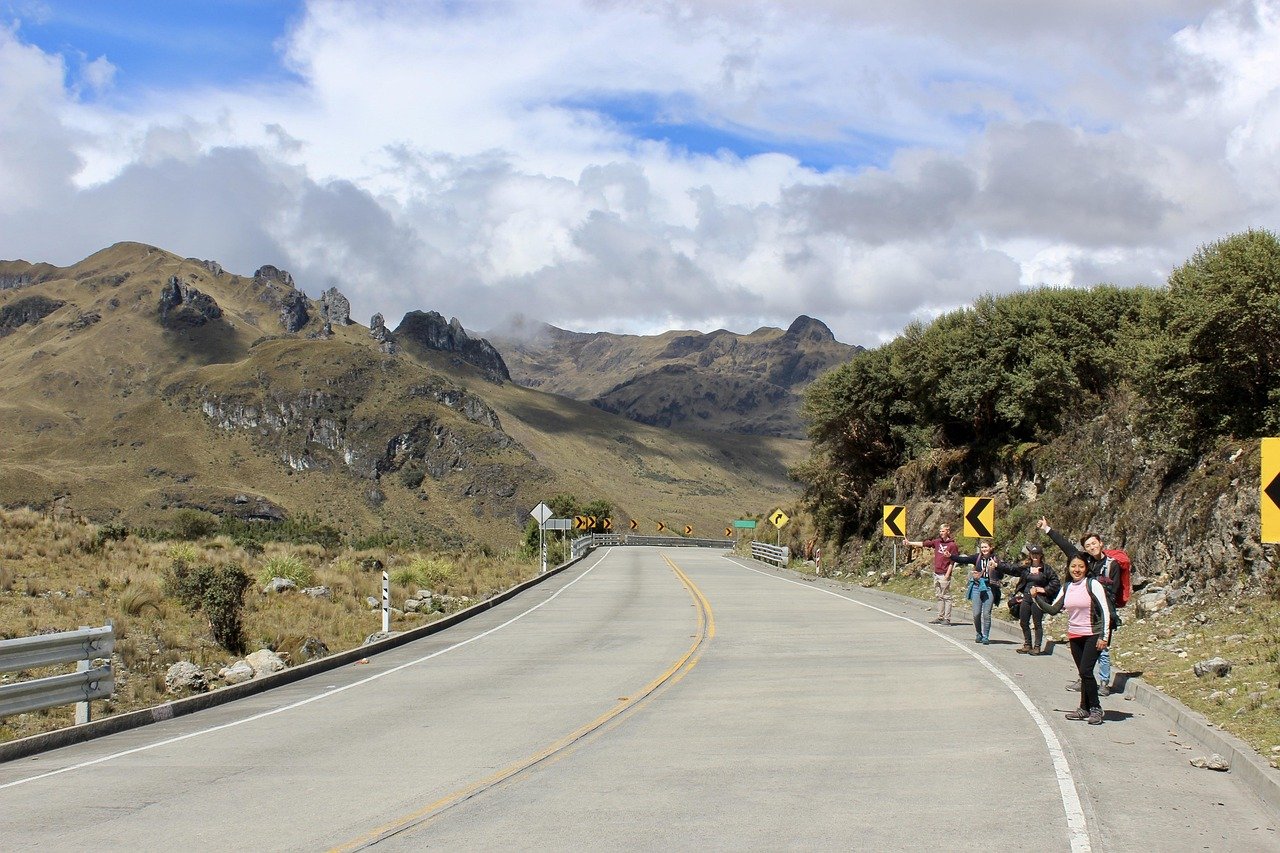

An invitation to hitchhikers, organizers and slow travellers
If you organize a hitchhiking race, a travel club, a slow travel event or a community connected to alternative travel, this may be a good moment to connect with the wider European hitchhiking network.
If you are a volunteer traveller, Hitchwiki and its maps can also be useful tools to explore. They can help you understand how other hitchhikers move across Europe, where people wait, which places are active and how community knowledge is shared.
Hitchhiking remains unpredictable. It is not suitable for every route, every person or every situation. But when approached with care, patience and responsibility, it can still be one of the most direct ways to experience the road and the people who move along it.
In a travel world increasingly shaped by platforms, bookings and algorithms, hitchhiking keeps a small space open for trust, uncertainty and human encounter.
Explore more hitchhiking resources
Voluntouring.org also has a small hitchhiking section with practical articles and related travel stories. It can be useful for volunteer travellers who want to combine low-budget travel, slow movement and responsible planning.
Visit the Voluntouring hitchhiking section
Discover European hitchhiking races
Useful links
- https://hitchwiki.org/en/Hitchhiking_races
- https://maps.hitchwiki.org/?heatmap=true
- https://hitchwiki.org/en/Hitchgathering
- https://tramprennen.org/
- https://tramprennen.org/home/tramprennen-2026/join-the-race/
- https://autostoprace.pl/english/
- https://autostoprace.pl/panelzapisow/