


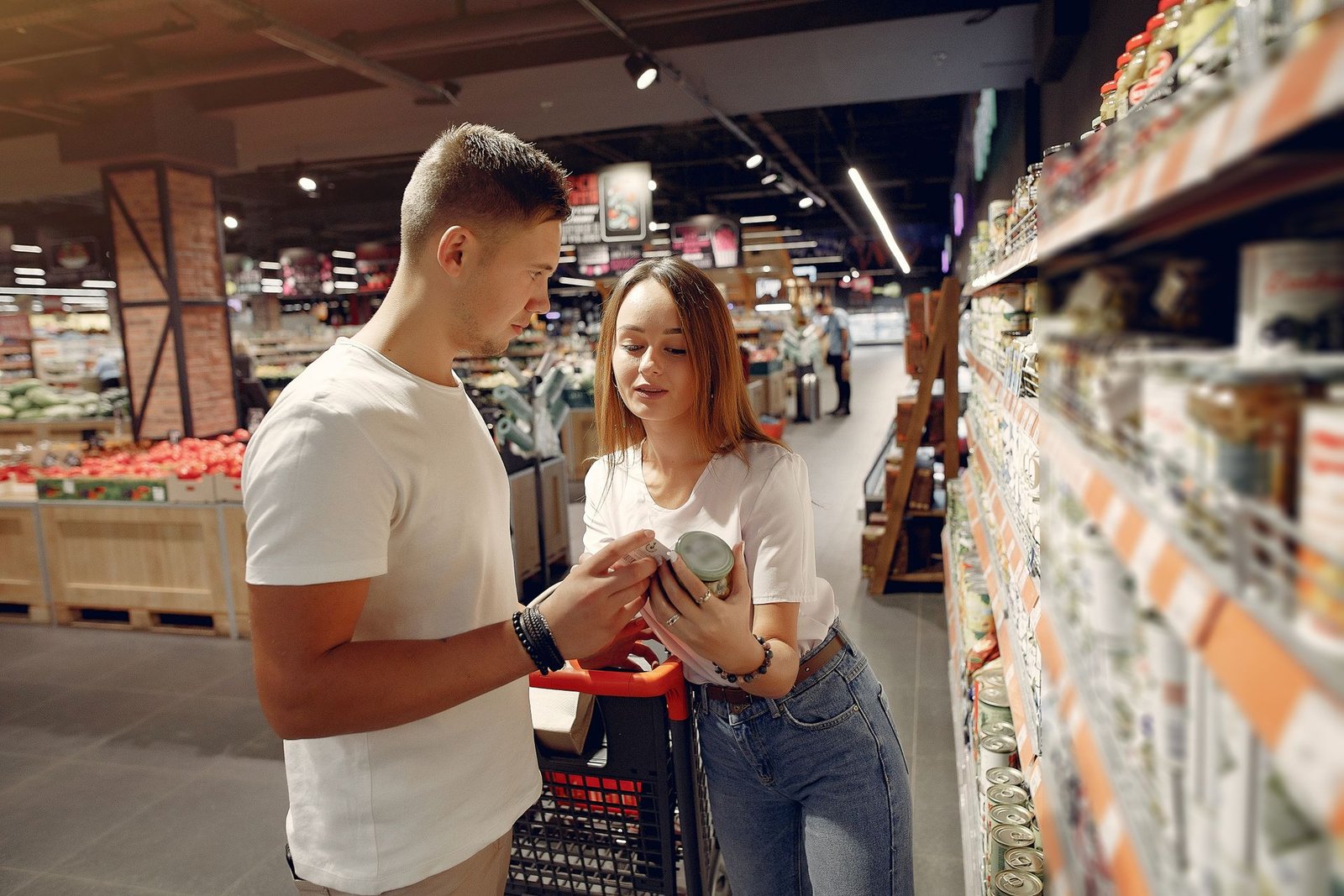
Insect dyes, calf rennet, animal secretions and ingredients with surprising origins. What is really behind those complicated names on food labels? Discover 14 substances and production methods, why they are used and how understanding their origins can help us make more conscious choices.
Some ingredient names sound like the dullest part of a chemistry lesson. Translate them into their origins, however, and the shopping list becomes rather more… interesting.
You turn over a packet and find words such as carmine, L-cysteine and cholecalciferol. They look technical and easy to ignore. But what would happen if the label also explained where they came from? For example, a red dye extracted from insects, an enzyme obtained from a calf’s stomach. A flavouring made from the contents of a beaver’s scent sacs. Coffee beans collected from an animal’s droppings and processed before brewing. Suddenly, those uninteresting words have your attention. [1] [3] [7] [8] .
Some ingredients can come from animals, plants or fermentation, depending on the manufacturer. [4] [6] [8]
The interesting question is not only what an ingredient does but whether knowing its origin would change what you choose.
Some useful distinctions to make
An ingredient becomes part of the recipe. A processing aid helps make or clarify a product and may be removed afterwards. A raw material can be transformed into a purified substance with a very different appearance and purpose. E numbers are standardised identifiers for food additives. In the EU, additives must undergo safety assessment before authorisation. Ethical suitability is a different question. [15]
Click or tap a name to open its explanation. Each panel includes what the substance does, where it can come from and what to check.
Food, supplements and a rather unusual coffee
1. Carmine and cochineal (E120): the red colour with an insect origin
A lovely shade of red does not necessarily begin with a berry. Cochineal-derived colouring comes from insects. Carmine is one preparation of that colouring, used in certain foods and cosmetics. The EU identifier E120 covers carminic acid and carmine. [1]
Its job is to give products colour. Its use varies between products, and it is one example of a “natural colour” with an animal origin. In the United States, foods containing carmine or cochineal extract must identify them by name. [1]
What to check: look for carmine, cochineal extract, carminic acid or E120. For someone avoiding animal-derived ingredients, this is a useful name to recognise.

2. Gelatine: the animal collagen behind the wobble
That cheerful gummy sweet can have a rather less cheerful origin story. Gelatine, also spelled gelatin, is produced from collagen-rich animal materials, including skins and bones. Sources include pigs, cattle and fish. Processing turns those materials into an ingredient that can form gels and give foods their texture. [2]
You may encounter it in gummy sweets, jellies, desserts and capsules. Its animal origin, including when it comes from fish, makes it relevant to anyone choosing vegetarian or vegan products. [2]
What to check: look for gelatine or gelatin. Pectin- or agar-based products offer different ways to make a sweet or dessert set. Check the full ingredient list for other animal-derived ingredients too. [2]
3. Rennet: the calf-stomach connection in the cheese aisle
Rennet sounds much more abstract than “enzymes extracted from a stomach”. Traditional animal rennet contains enzymes obtained from the abomasum, the fourth stomach of ruminants such as calves. Those enzymes help milk coagulate into curds. [3]
The link is not merely historical: Parmigiano Reggiano PDO must be made using calf rennet. Other cheeses can use microbial coagulants or fermentation-produced chymosin instead. The type of coagulant matters to vegetarians; vegans also avoid the milk used to make dairy cheese. [3]
What to check: ask which coagulant was used, or look for a clear vegetarian or vegan statement appropriate to your diet. “Traditional” and “artisan” tell you very little about animal-free suitability.

4. L-cysteine (E920): feathers, fermentation and softer dough
Feathers can be the starting point for an ingredient used in baking. L-cysteine is an amino acid used to soften dough and make it easier to process. It can be extracted from keratin-rich materials such as feathers and animal hair. The extraction process produces a purified amino acid. [4]
Animal-free fermentation routes also exist: manufacturer WACKER documents commercial vegan cysteine production from glucose. EU specifications explicitly prohibit using human hair as a source of E920. Neither the word L-cysteine nor the code E920 alone tells you which permitted source a particular producer used. [4]
What to check: ask whether the L-cysteine is animal-derived or produced through an animal-free process. Its use and source depend on the product and manufacturer.
5. Milk solids and whey: dairy where you did not expect it
You expected a savoury snack, not another encounter with the dairy industry. Conventional whey is the liquid left when milk is separated into curds during cheesemaking. It can be processed into powders and other ingredients. Milk solids are also milk-derived. [5]
Dairy ingredients can supply protein and contribute to flavour, texture and other useful properties. Their dairy origin is the relevant detail for someone choosing vegan products. [5]
What to check: read the full list for whey, milk powder and milk solids. In the EU, milk is a declarable allergen and must be highlighted in the ingredient list when applicable. “Lactose-free” does not mean “made without milk”. [15]
6. Lanolin and vitamin D3: a vitamin with a wool connection
A vitamin bottle does not exactly bring sheep to mind. Yet lanolin, the waxy material recovered from sheep’s wool, provides a starting material for a common production route for vitamin D3. Production involves further processing and ultraviolet light. [6]
This is also a good example of why an ingredient name does not settle the question. The US National Institutes of Health notes that animal-free vitamin D3 from lichen is available too. D3 is therefore not automatically animal-derived. [6]
What to check: look for a stated vegan source or ask the supplement manufacturer about cholecalciferol, another name for vitamin D3. Check the capsule ingredients as well. This is a sourcing question, not advice to stop a supplement you have been told to take.
7. Castoreum: a flavouring from a beaver’s scent sacs
A beaver’s scent sacs are an unusual starting point for a flavouring. Castoreum comes from material in a beaver’s castor sacs, scent structures near the base of its tail. Extracts have a documented history in flavouring, and the US FDA lists castoreum extract as a flavouring substance. [7]
The sources linked here do not establish its current market prevalence. A label that says “natural flavouring” may leave the source unspecified. [7]
What to check: seek confirmation of animal-free flavouring when it matters to you.
8. Kopi luwak: coffee beans that have passed through an animal
Here the surprising part is the coffee’s journey. Kopi luwak is coffee made from beans recovered from the droppings of civets after they eat coffee cherries. The beans are processed before brewing. Civetone, discussed below, is a different substance. [8]
The more important question may be what happens to the animal. A study published in 2016 examined 48 civets at 16 tourist-oriented plantations in Bali and found inadequate captive conditions. Those findings concerned the sites studied, not every possible producer, but they give travellers a concrete reason to question the luxury story. [8]
What to check: do not treat a high price or a “wild-sourced” claim as evidence of good welfare. Ask how sourcing is verified. Choosing a coffee that does not depend on civets avoids that particular animal-welfare concern.

What happens during processing can matter too
An animal-derived substance does not have to remain in a product to matter to someone who wants to avoid supporting its use. These examples are about production as well as the final recipe.
9. Isinglass: fish-derived clarification for some drinks
A drink made from plants can still have an animal-related production step. Isinglass is a collagen preparation made from fish swim bladders. Some brewers and winemakers use it as a fining agent: it helps suspended particles gather together and settle, leaving a clearer drink. [9]
Fining is a processing step, with the resulting sediment separated from the drink. But removal does not erase the use of an animal-derived material. Not every beer or wine uses isinglass. [9]
What to check: ask about fining agents, not only ingredients. In the EU, fish gelatine or isinglass used to fine beer and wine has a specific exemption from fish-allergen declaration, so the absence of a fish warning does not resolve vegan suitability. [15]
10. Bone char: animal bones in a sugar-refining process
The sugar started as a plant. The refining process may be another matter. Bone char is a filtering and decolourising material made by heating animal bones. Its use in some cane-sugar refining is documented, alongside alternatives such as other activated carbons and ion-exchange systems. [10]
It acts as a processing aid during refining. Michigan Sugar’s published technical statement explains that the aid does not remain in the finished white sugar. The ethical concern is the use of animal material during production. [10]
What to check: ask the producer whether its sugar is refined without bone char. Practices differ between refineries, so up-to-date information from the producer is the most useful guide.
11. Chitosan: the shellfish story with a fungal twist
Chitosan can come from crustacean shells, but that is not its only source. It can also be produced from fungi. In winemaking, it has uses in clarification and in controlling unwanted microorganisms. Its source matters more than the name alone. [11]
EU rules specify chitosan derived from the fungi Aspergillus niger or Agaricus bisporus for the authorised wine treatment. The International Organisation of Vine and Wine also specifies fungal origin. [11]
What to check: ask about the source and the full production process. Fungal chitosan does not itself make a wine non-vegan, but it does not establish that every other processing aid was animal-free.
And it does not stop at food
The following three examples belong mainly to skincare and fragrance in this guide. They show why similar sourcing questions can follow you from the kitchen to the bathroom.
12. Squalene and squalane: a shark source is not the only source
A moisturiser ingredient can have a connection to shark liver oil. Squalene can be obtained from that oil, but it also occurs in plant oils. Squalane, with an a, is its more stable hydrogenated form and is used as a cosmetic emollient. The two names are related, not interchangeable. [12]
Ingredient producers manufacture olive-derived squalane, for example. The name squalane alone does not tell the full sourcing story. [12]
What to check: look for an explicitly identified plant-derived or vegan source, or request confirmation from the brand.
13. Hyaluronic acid: rooster combs, or fermentation?
That glossy serum name has a less glamorous chapter in its history. Hyaluronic acid has been extracted from rooster combs. It is valued in skincare for its ability to bind water. [13]
Fermentation-derived hyaluronic acid is commercially available; manufacturer dsm-firmenich, for example, explicitly describes a fermentation-derived sodium hyaluronate ingredient. Sodium hyaluronate is a salt form of hyaluronic acid. [13]
What to check: ask about the source and vegan suitability of the particular product. Neither a scientific name nor a premium price reveals whether its production involved animal-derived materials.
14. Civetone: from civet secretions to perfumery
Civetone is a scent molecule associated with civet secretions and the history of perfumery. Historically, it was obtained from African civet glands. That is a separate story from coffee beans passing through a palm civet’s digestive tract. [14]
Synthetic production offers another route. Researchers at the University of Warsaw have described a method for making civetone from vegetable-oil starting materials. The method offers an alternative to obtaining the molecule from animals. [14]
What to check: ask the fragrance brand about animal-derived ingredients.
Why this matters to people who choose veganism
For many vegans, checking a label is part of an ethical choice about how animals are used in production. The origin of an ingredient matters because it connects an everyday purchase with the conditions in which that ingredient was obtained. [16] The Vegan Society describes veganism as an effort to avoid animal exploitation and cruelty wherever doing so is possible and practicable. That is an ethical position, not simply a preference for different flavours, which also explains why a processing aid can matter even when it does not remain in the finished product. [16] The use of animal by-products also raises ethical questions: one person may see efficient use of a resource; another may prefer not to support the system that produced it.
Learning about those systems can make a vegan choice easier to understand, even for readers who do not share it.
You do not need to feel disgust to decide that an ingredient is not for you. And you do not need to adopt a label before asking better questions.
How to use this information without turning shopping into homework
Start with the ingredients you buy regularly. Learn a few useful names, check a certification scheme’s actual standards, and ask specific questions when a source is unclear. “Is your D3 animal-derived?” or “Which fining agents do you use?” is more useful than asking whether something is simply “natural”.
EU labelling rules generally require an additive’s function followed by its name or E number, but the label is not a complete account of every raw material and processing step. Rules also differ between countries. A standardised name can be accurate while still leaving a question that matters to you unanswered. [15]
Vegan suitability and allergy safety are different questions
A vegan-labelled product may still carry a precautionary “may contain milk” warning because of possible cross-contact. The UK Food Standards Agency advises people with allergies not to treat a vegan claim as an allergen-free guarantee. [17]
And do not stop prescribed medicine because you discover an animal-derived ingredient. Ask a pharmacist or prescriber about suitable alternatives. The Vegan Society makes this distinction too. [16]
Taking that curiosity with you when you travel
Food is part of discovering a place, but enjoying local traditions does not require abandoning your own boundaries. Ask hosts about meals before arriving, explain which ingredients you avoid, and discuss what is realistically available without turning the conversation into a judgement on their culture.
For projects and practical starting points, explore our vegan volunteering page and our information for vegetarian volunteers. Confirm the actual meal arrangements with each host rather than assuming that vegetarian and vegan mean the same thing.
Knowing where an ingredient comes from does not dictate your response. It gives you a choice that a technical name alone might not have offered.
Which of these origins surprised you most, and would knowing it change what you buy?
Sources and further reading
Sources checked in October 2026. This guide distinguishes animal-derived ingredients, processing aids and alternative production routes. Manufacturer documents establish examples of production methods, not their market share. Older research and statements are dated below and should not be treated as a current audit of every product or producer.
- Carmine and cochineal:
EFSA: food additives, sources and E numbers;
FDA: naming carmine and cochineal extract on food and cosmetic labels. - Gelatine:
Gelatine Manufacturers of Europe: raw materials and manufacture;
GME: functions and uses;
GME: other hydrocolloids. - Rennet:
EFSA: rennet from calf and cow abomasa (2023);
Parmigiano Reggiano PDO: production specification (2025);
Novonesis: animal, microbial and fermentation-produced coagulants. - L-cysteine:
WACKER: animal-material extraction and vegan fermentation (2022);
WACKER: dough softening;
EU Regulation 231/2012: E920 specifications, consolidated April 2025. - Whey and milk ingredients:
US Dairy: what whey is and how it is made;
American Dairy Products Institute: ingredient functionality. - Vitamin D3 and lanolin:
US National Institutes of Health: vitamin D, including lanolin and lichen sources. - Castoreum:
FDA: castoreum extract in the food-substances inventory;
Burdock: Safety Assessment of Castoreum Extract as a Food Ingredient (2007). - Civet coffee and welfare:
Mitra and colleagues: analysis of civet-derived coffee, Scientific Reports (2025);
Carder and colleagues: The animal welfare implications of civet coffee tourism in Bali (2016). - Isinglass:
Murphy & Son: isinglass origins and brewing use;
OIV: wine fining and processing aids. - Bone char:
Michigan Sugar: technical statement on bone char (2019);
Vegetarian Resource Group: interviews with sugar-industry representatives (2021). - Chitosan:
OIV: fungal chitosan specification;
EU Regulation 2019/934: authorised wine treatments, consolidated December 2024. - Squalene and squalane:
Sophim: squalane production history and olive-derived alternatives (2023). - Hyaluronic acid:
DSM: historical extraction and biotechnology-derived alternatives (2021);
dsm-firmenich: fermentation-derived sodium hyaluronate. - Civetone:
University of Warsaw: civetone synthesis from vegetable-oil starting materials (2025). - Food labels and allergens:
EFSA: E numbers and additive assessment;
EU Regulation 1169/2011: ingredient information, processing aids and allergen exemptions. - Vegan ethics and medicines:
The Vegan Society: definition, ethical aims and advice on prescribed medicines. - Vegan claims and allergy safety:
UK Food Standards Agency: food allergy and intolerance advice for consumers (updated 2026).